World Artifacts › Atlas › India
Indian Elephant
Asian elephants differ from African ones in that only some males have tusks and the females have none, which is why poaching has skewed the sexes. The trunk has no bone and something like forty thousand muscle units.
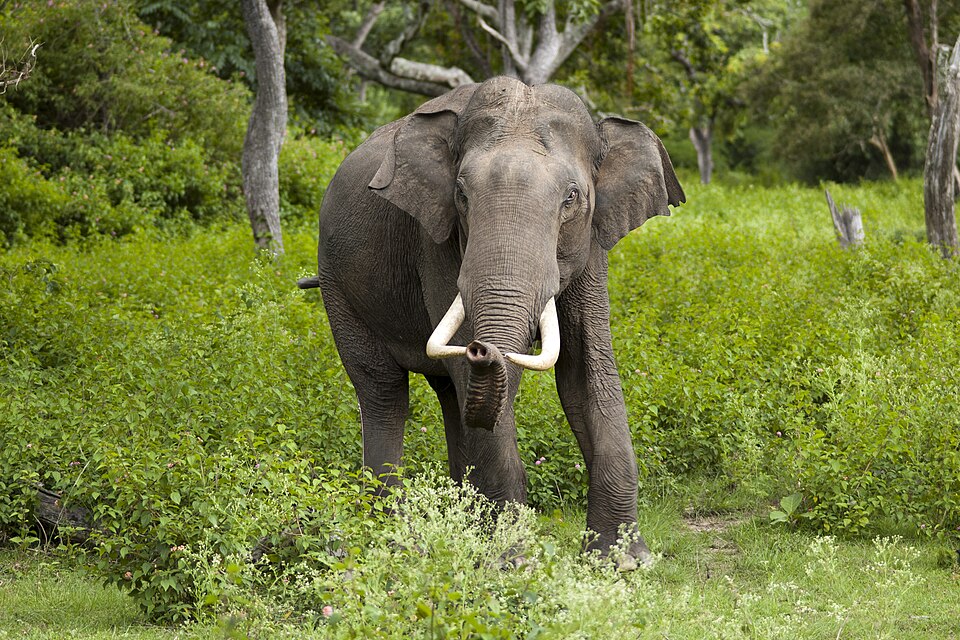
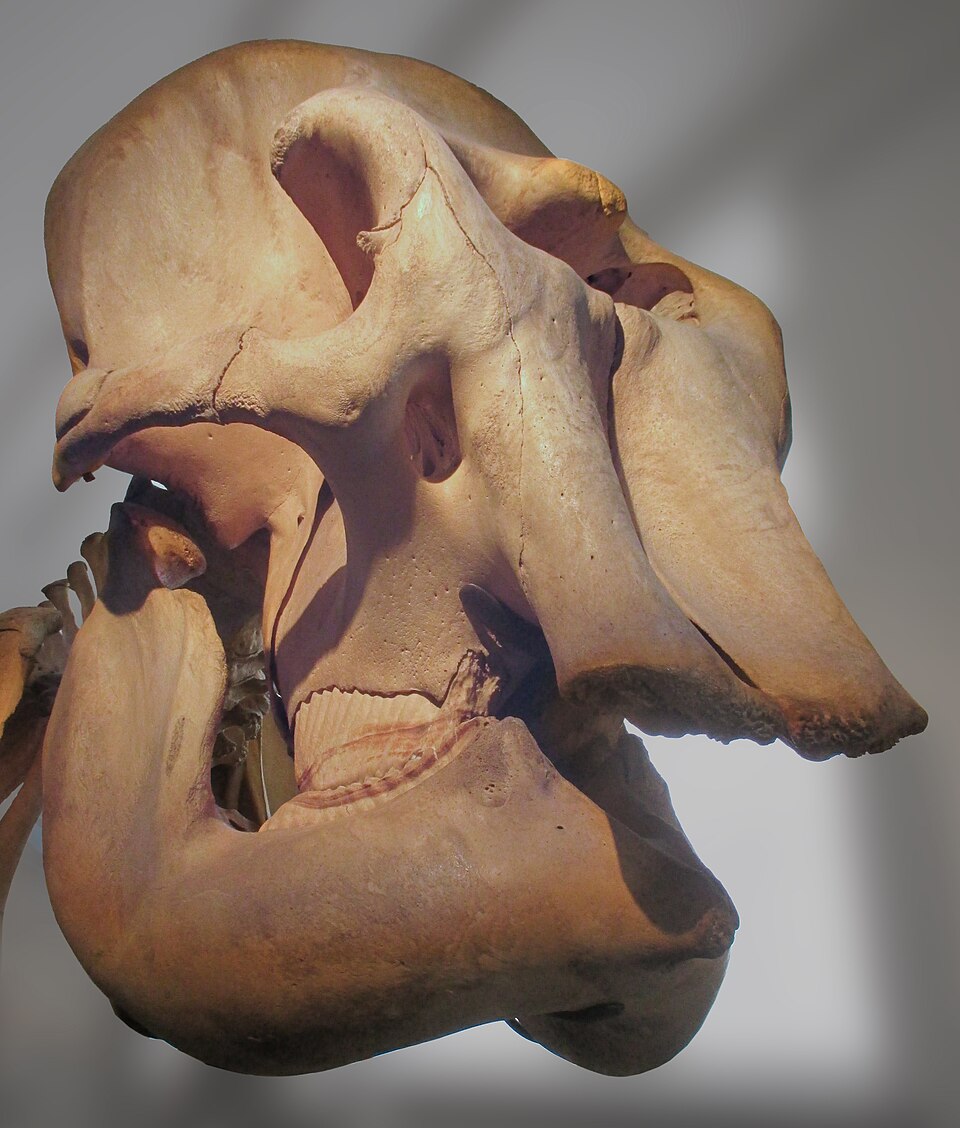
The Indian elephant (Elephas maximus indicus) is one of three extant recognized subspecies of the Asian elephant, native to mainland Asia. It has a convex back and the highest body point on its head, exhibits significant sexual dimorphism with a male reaching an average shoulder height of about 2.75 m (9 ft 0 in) and weighing 4,000 kg (8,800 lb). A female reaches an average shoulder height of about 2.4 m (7 ft 10 in) and weighs 2,700 kg (6,000 lb). It has a broader skull with a concave forehead, two large laterally folded ears and a large trunk. It has smooth grey skin with four large legs and a long tail.
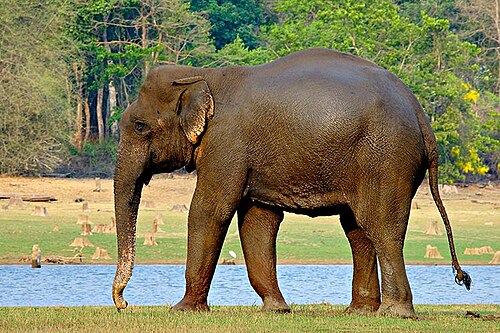
The Indian elephant is native to mainland Asia with nearly three-fourth of the population in India. It also occurs in Nepal, Bangladesh, Bhutan and Southeast Asian countries including Myanmar, Thailand, Malaysia, Laos, Cambodia, and Vietnam with a small population in China. It inhabits grasslands, dry deciduous, moist deciduous, evergreen and semi-evergreen forests across the range. It is classified as a megaherbivore and consumes up to 150 kg (330 lb) of plant matter per day. Its diet depends on the habitat and seasons and includes leaves and twigs of fresh foliage, thorn-bearing shoots, flowering plants, fruits and grass.
Further reading
- The Asian Elephant · Raman Sukumar (1990)Covers the ecology, management and long relationship between people and the Asian elephant.Find a copy: AbeBooks · Amazon · WorldCat
- The Living Elephants · Raman Sukumar (2003)Covers elephant evolution, conservation and both Asian and African elephants.Find a copy: AbeBooks · Amazon · WorldCat
Indian Elephant is one of the 3D puzzles in World Artifacts: turn a cloud of broken pieces until it lines up. For iPhone, iPad, Apple Vision Pro and Android.

