World Artifacts › Atlas › India
Nataraja
Shiva dances in a circle of flame with one foot on a dwarf that stands for ignorance, a drum in one hand for creation and fire in another for destruction. A two-metre copy stands at CERN, given by India.
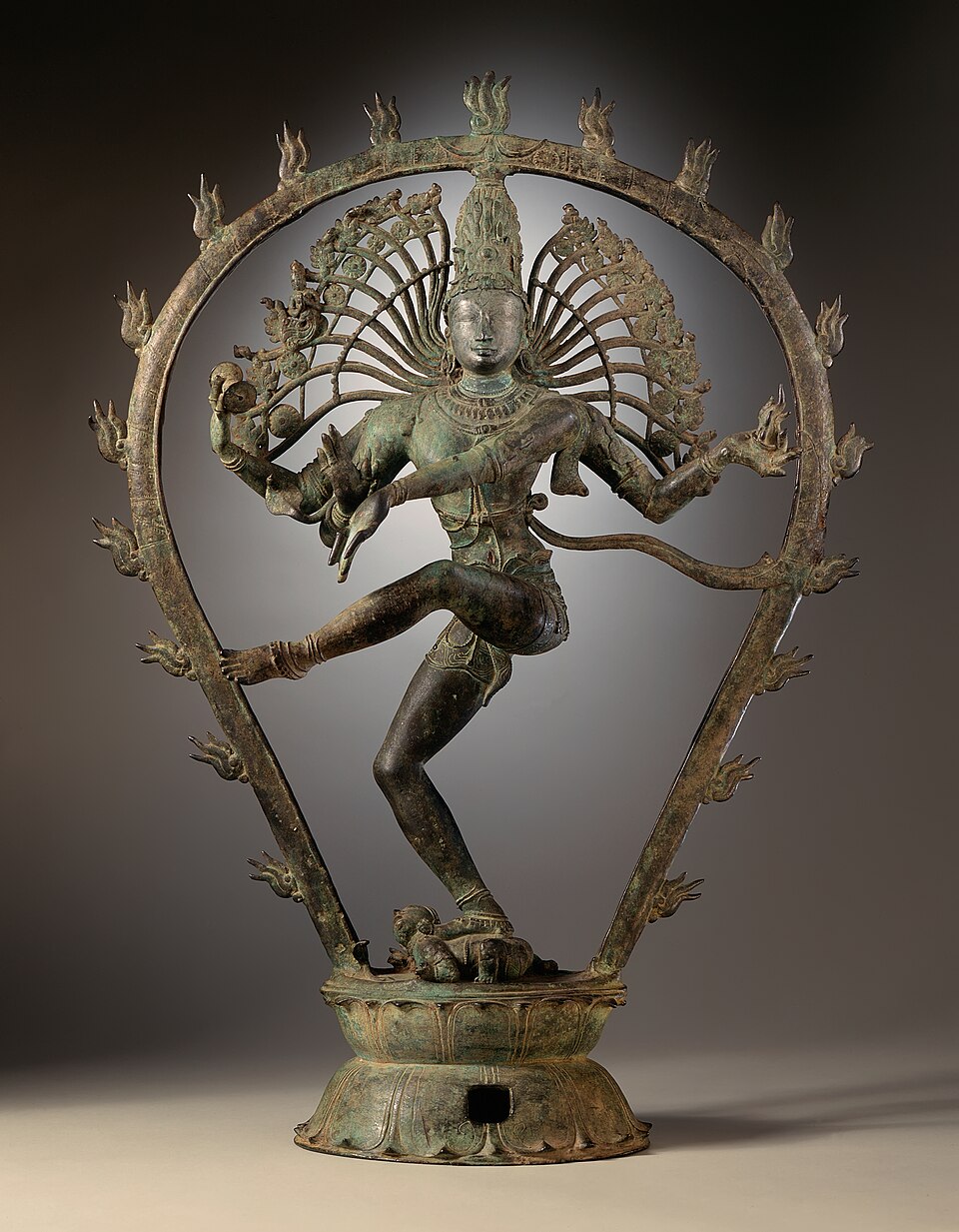
Nataraja (Sanskrit: नटराज, IAST: Naṭarāja; Tamil: நடராஜர், Naṭarājar), also known as Adalvallan (ஆடல்வல்லான், Ādalvallāṉ), is a depiction of Shiva, one of the main deities in Hinduism, as the divine cosmic dancer. His dance is called the tandava.
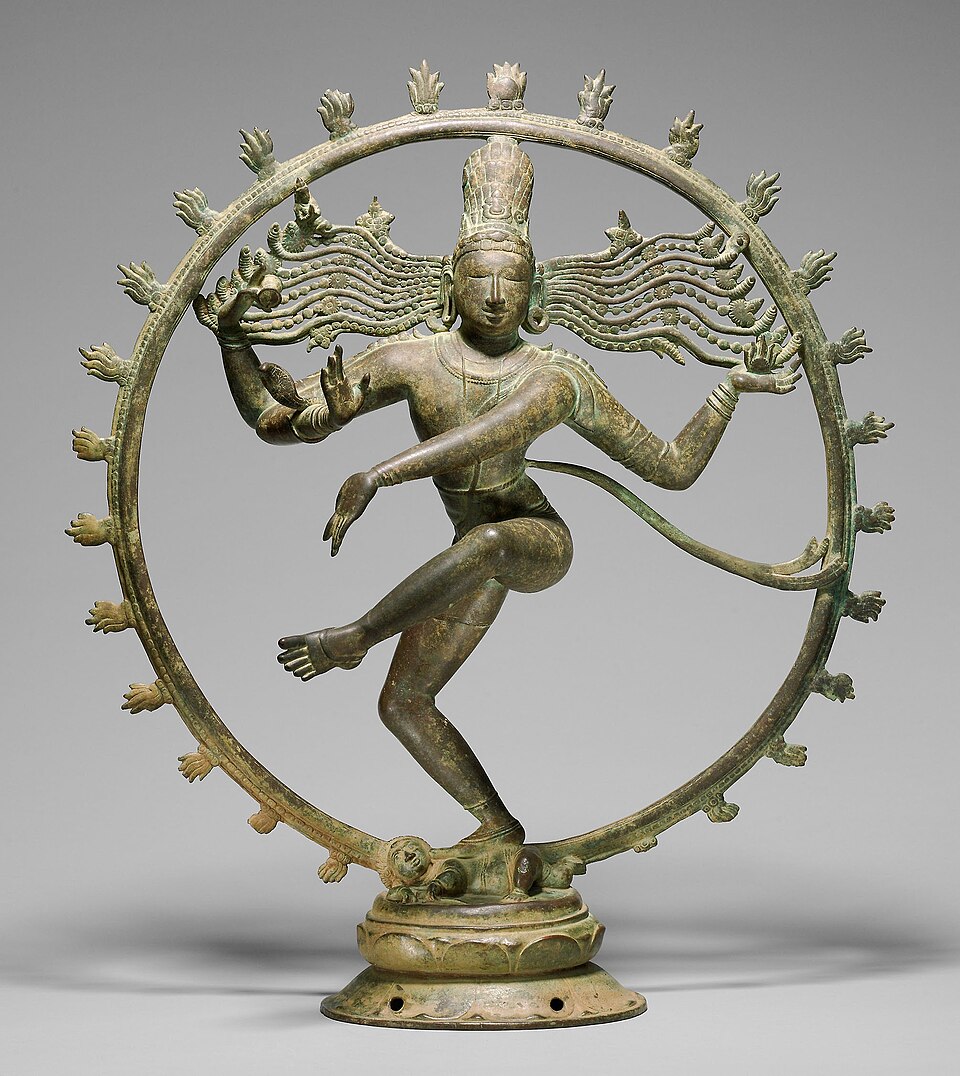
The pose and artwork are described in many Hindu texts such as the Tevaram and Thiruvasagam in Tamil and the Amshumadagama and Uttarakamika agama in Sanskrit and the Grantha texts. The depiction (murti) of his dance is featured in all major Hindu temples of Shaivism, and is a well-known sculptural symbol in India and popularly used as a symbol of Indian culture, as one of the finest illustrations of Hindu art.
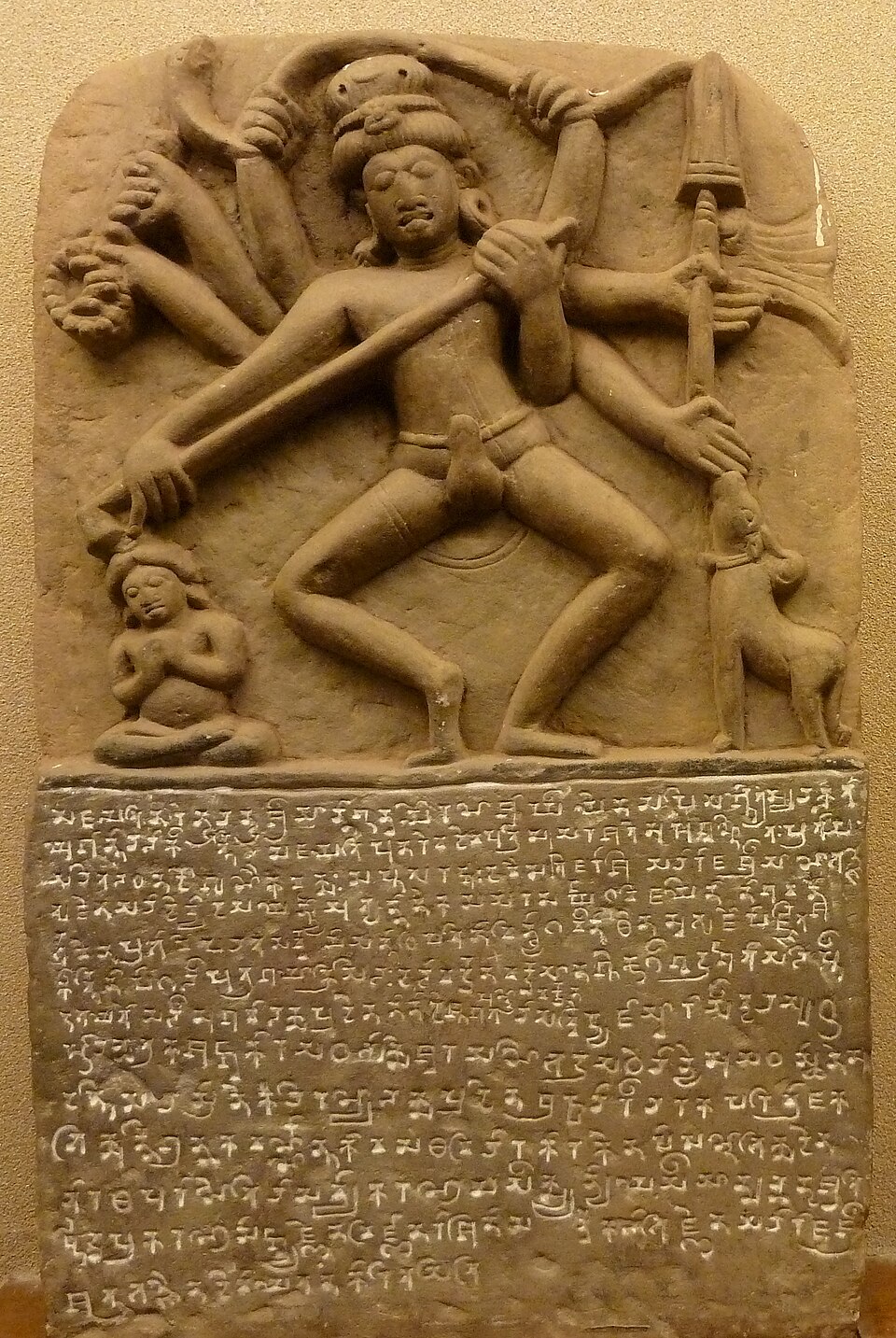
Stone reliefs at the Ellora Caves and the Badami Caves, by around the 6th century, are among the oldest Nataraja sculptures in India. Chola bronze statues emerge in Tamil Nadu around the 8th to 10th century. Nataraja reliefs have been found in many parts of South East Asia such as Angkor Wat and in Bali, Cambodia, and Central Asia.
Further reading
- Nataraja in art, thought, and literature · C. Sivaramamurti (1974)Covers Nataraja in art, thought and literature, including dance in art.Find a copy: AbeBooks · Amazon · WorldCat
- The dance of Shiva · Ananda Coomaraswamy (1817)Coomaraswamy's essays on the dance of Shiva, in Indic art and civilization.Find a copy: AbeBooks · Amazon · WorldCat
Nataraja is one of the 3D puzzles in World Artifacts: turn a cloud of broken pieces until it lines up. For iPhone, iPad, Apple Vision Pro and Android.

