World Artifacts › Atlas › India
Ravana Effigy
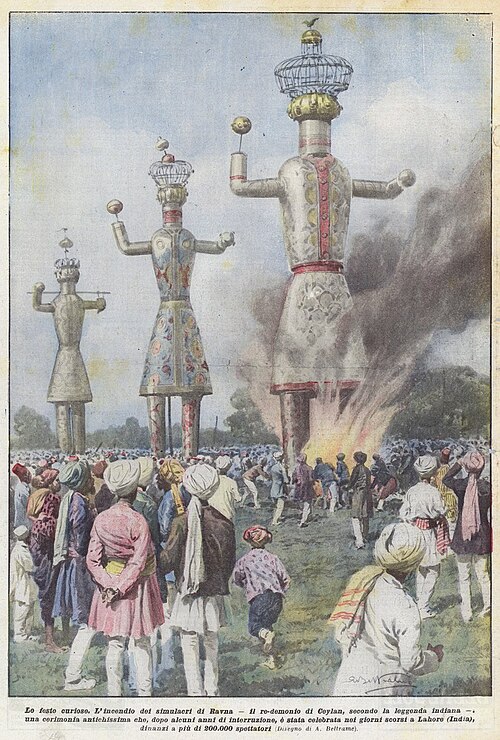
At Dussehra a huge effigy of the ten-headed king is stuffed with fireworks and burned before a crowd. In a few places he is honoured rather than burned: he was a scholar and a devotee before he was a villain.
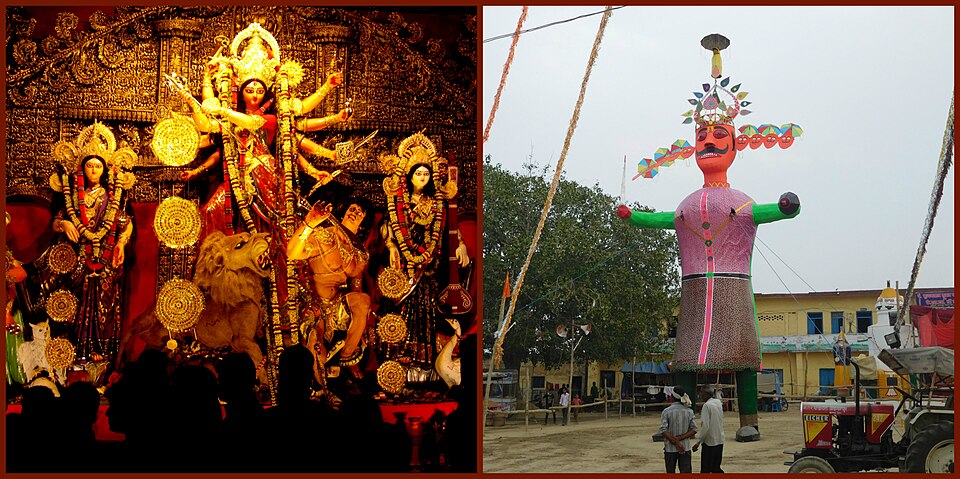
Vijayadashami (Sanskrit: विजयादशमी, romanized: Vijayādaśamī, lit. 'Tenth day of victory'), more commonly known as Dasara, or Dassahra, or Dussehra, and also known as Dashāhra or Dashain in Nepali, is a major Hindu festival celebrated every year at the end of Durga Puja and Navaratri. It is observed on the tenth day of the waxing moon (Shukla Paksha) in the month of Ashvin, the seventh in the Hindu lunisolar calendar, and falls in the Gregorian calendar months of September or October.
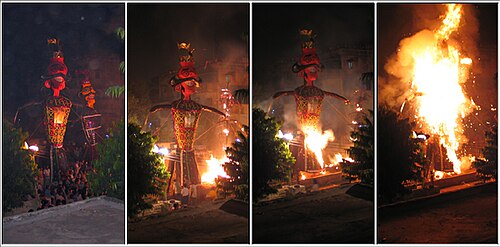
Vijayadashami is observed for different reasons and celebrated in various ways in different parts of India and Nepal. In the southern, eastern, northeastern, and some northern states of India, Vijayadashami marks the end of Durga Puja, commemorating goddess Durga's victory against Mahishasura to restore and protect dharma. In the northern, central, and western states, it marks the end of Ramlila and commemorates the deity Rama's victory over Ravana. Alternatively, it marks a reverence for one of the aspects of Durga.
Further reading
- Many Ramayanas · Paula Richman (1991)Explores the varied tellings of the Ramayana story across Indian traditions.Find a copy: AbeBooks · Amazon · WorldCat
- Actors, Pilgrims, Kings and Gods · Anuradha Kapur (1990)Covers Indian folk drama and theatre on the Rama story.Find a copy: AbeBooks · Amazon · WorldCat
Ravana Effigy is one of the 3D puzzles in World Artifacts: turn a cloud of broken pieces until it lines up. For iPhone, iPad, Apple Vision Pro and Android.

