World Artifacts › Atlas › India
Taj Mahal
The Taj is a tomb, built for a wife who died giving birth to her fourteenth child. The four minarets lean very slightly outward, so that in an earthquake they would fall away from the dome rather than onto it.
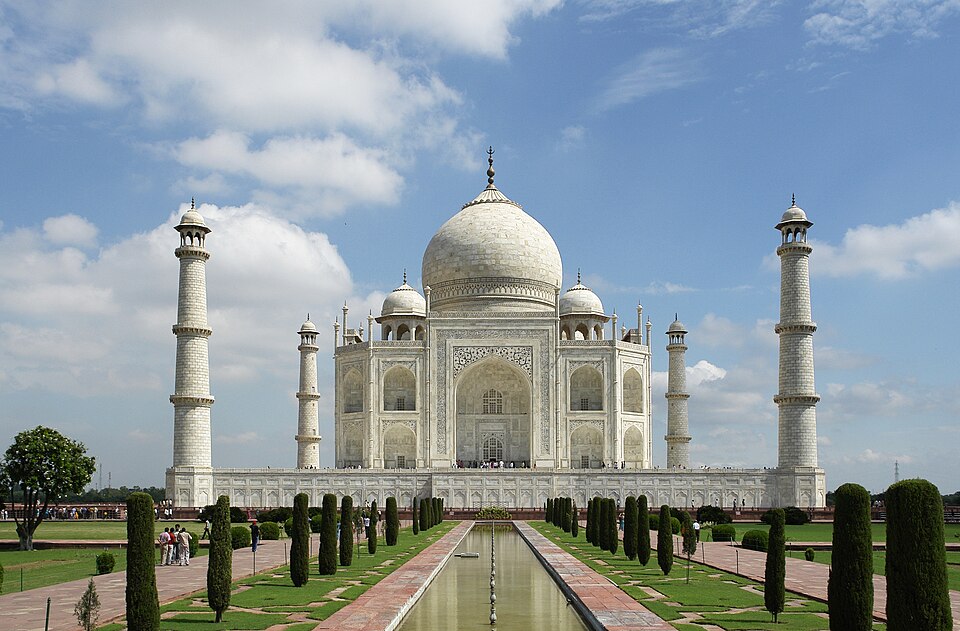
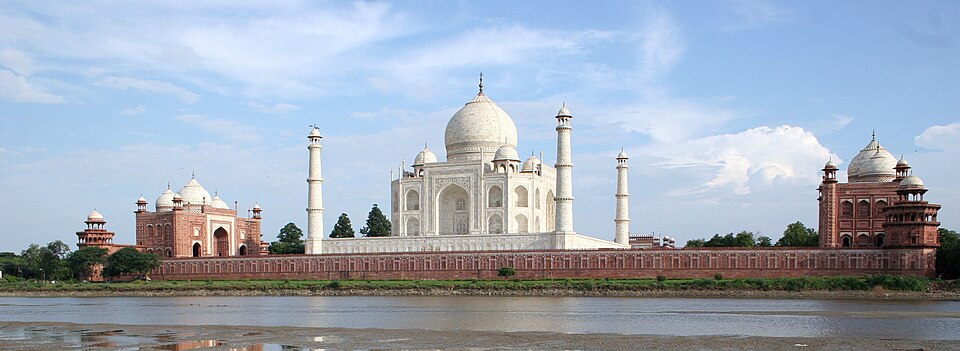
The Taj Mahal ( TAHJ mə-HAHL, TAHZH -; Hindustani: [t̪ɑːd͡ʒ ˈmɛɦ(ɛ)l]; lit. 'Crown of the Palace') is an ivory-white marble mausoleum on the right bank of the river Yamuna in Agra, Uttar Pradesh, India. It was commissioned in 1631 by the fifth Mughal emperor, Shah Jahan (r. 1628-1658), to house the tomb of his late wife, Mumtaz Mahal; it also houses the tomb of Shah Jahan himself. The tomb is the centrepiece of a 17-hectare (42-acre) complex, which includes a mosque and a guest house, and is set in formal gardens bounded on three sides by a crenellated wall.
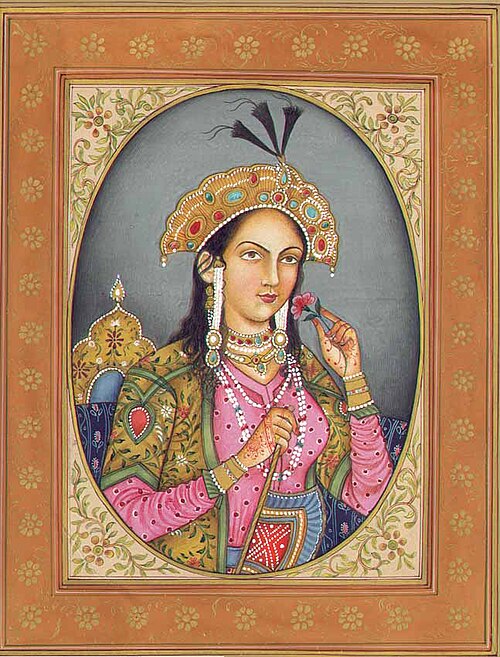
Construction of the mausoleum was completed in 1648, although work on other parts of the complex continued for another five years. The first ceremony held at the mausoleum was an observance by Shah Jahan, on 6 February 1643, of the 12th anniversary of the death of Mumtaz Mahal. The Taj Mahal complex is believed to have been completed in its entirety in 1653 at a cost estimated at the time to be around ₹32 million, which in 2015 would be approximately ₹52.8 billion (US$827 million).
Further reading
- The Complete Taj Mahal and the Riverfront Gardens of Agra · Ebba Koch (2006)A complete study of the Taj Mahal and the riverfront gardens of Agra, with architectural coverage.Find a copy: AbeBooks · Amazon · WorldCat
- Architecture of Mughal India · Catherine B. Asher (2008)A survey of Mughal Indian architecture, the tradition the Taj Mahal belongs to.Find a copy: AbeBooks · Amazon · WorldCat
Taj Mahal is one of the 3D puzzles in World Artifacts: turn a cloud of broken pieces until it lines up. For iPhone, iPad, Apple Vision Pro and Android.

