World Artifacts › Atlas › Iraq
Ishtar Gate
The blue-tiled gate with dragons and bulls.
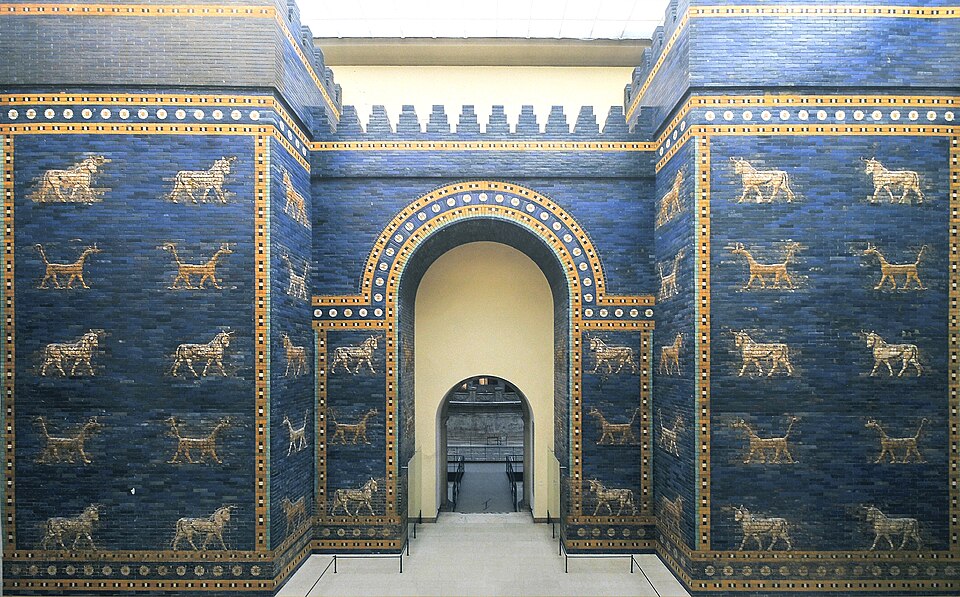
The Ishtar Gate was the eighth gate to the inner city wall of Babylon (in the area of present-day Hillah, Babylon Governorate, Iraq). It was constructed c. 569 BC by order of King Nebuchadnezzar II on the north side of the city. It was part of a grand walled processional way leading into the city.
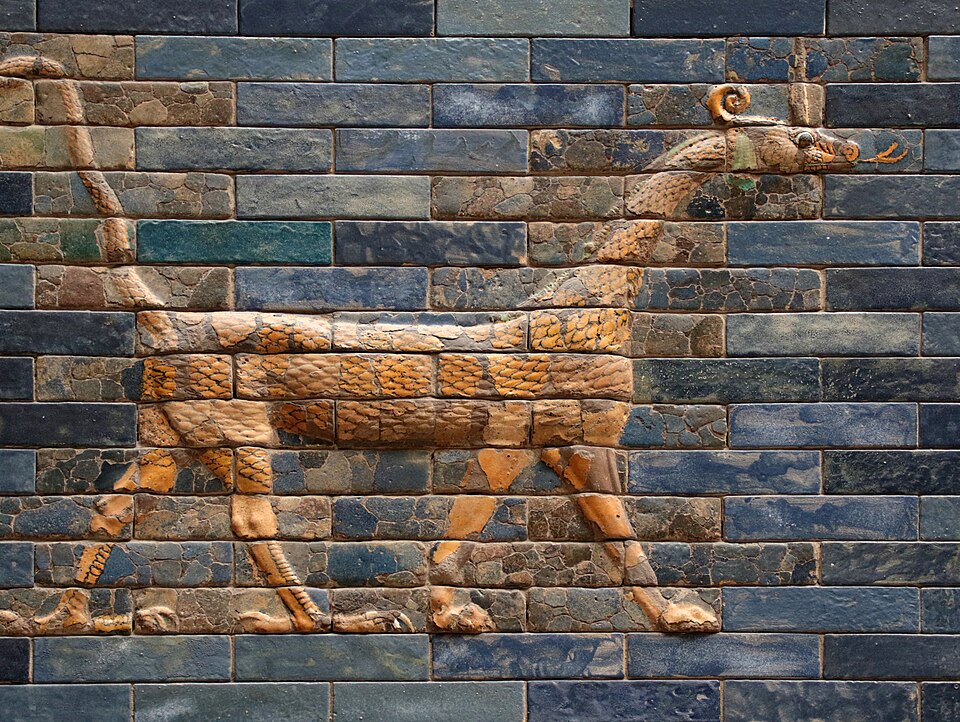
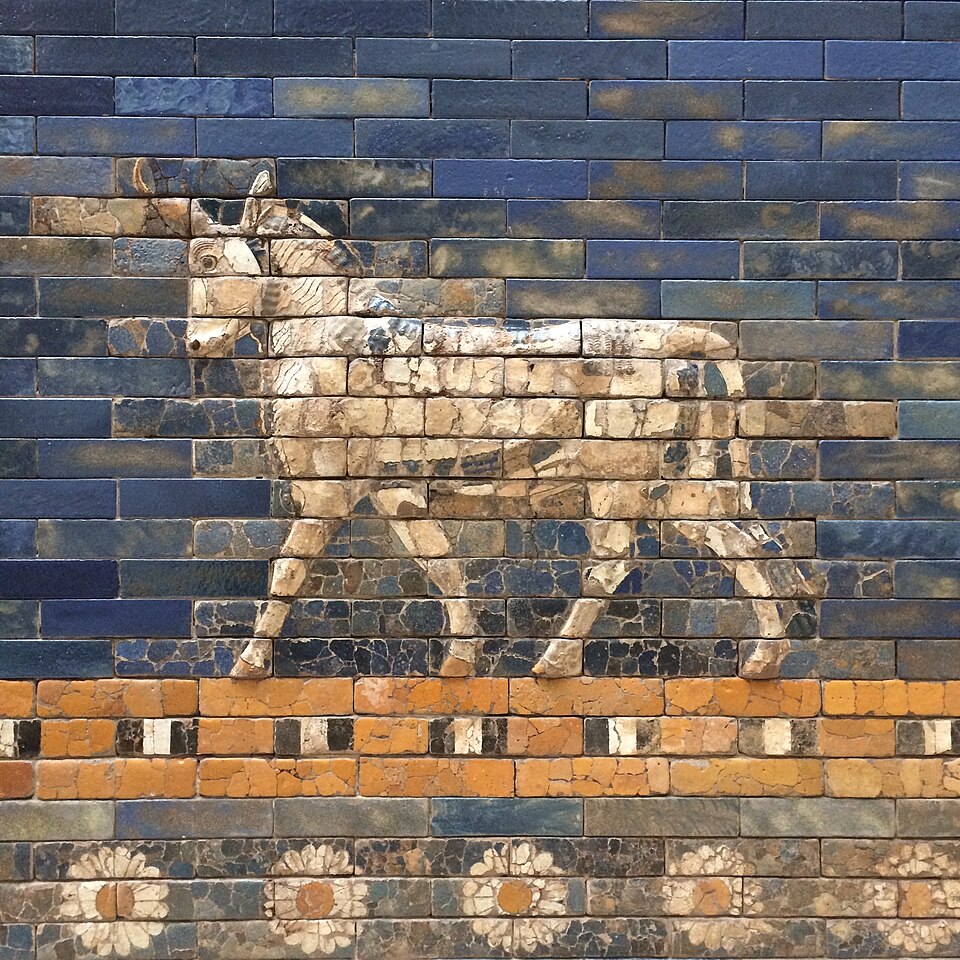
The original structure was a double gate with a smaller frontal gate and a larger and more grandiose secondary posterior section. The walls were finished in glazed bricks mostly in blue, with animals and deities (also made up of coloured bricks) in low relief at intervals. The gate was 15 metres high, and the original foundations extended another 14 metres underground.
German archaeologist Robert Koldewey led the excavation of the site from 1904 to 1914. After the end of the First World War in 1918, the smaller frontal gate was reconstructed in the Pergamon Museum in Berlin.
Other panels from the façade of the gate are located in many other museums around the world.
The façade of the Iraqi embassy in Beijing, China, includes a replica of the Ishtar Gate. The façades of the Iraqi embassies in Amman, Jordan, and Islamabad, Pakistan, also evoke the Ishtar Gate.
Further reading
- The excavations at Babylon · Robert Koldewey (1914)Koldewey's account of the German excavations at Babylon.Find a copy: AbeBooks · Amazon · WorldCat
- Babylon · Joan Oates (1979)A history of Babylon, the extinct city, and its Assyro-Babylonian civilization and antiquities.Find a copy: AbeBooks · Amazon · WorldCat
Ishtar Gate is one of the 3D puzzles in World Artifacts: turn a cloud of broken pieces until it lines up. For iPhone, iPad, Apple Vision Pro and Android.

