World Artifacts › Atlas › Iraq
Lion Hunt Relief
The Assyrian king spearing a lion.
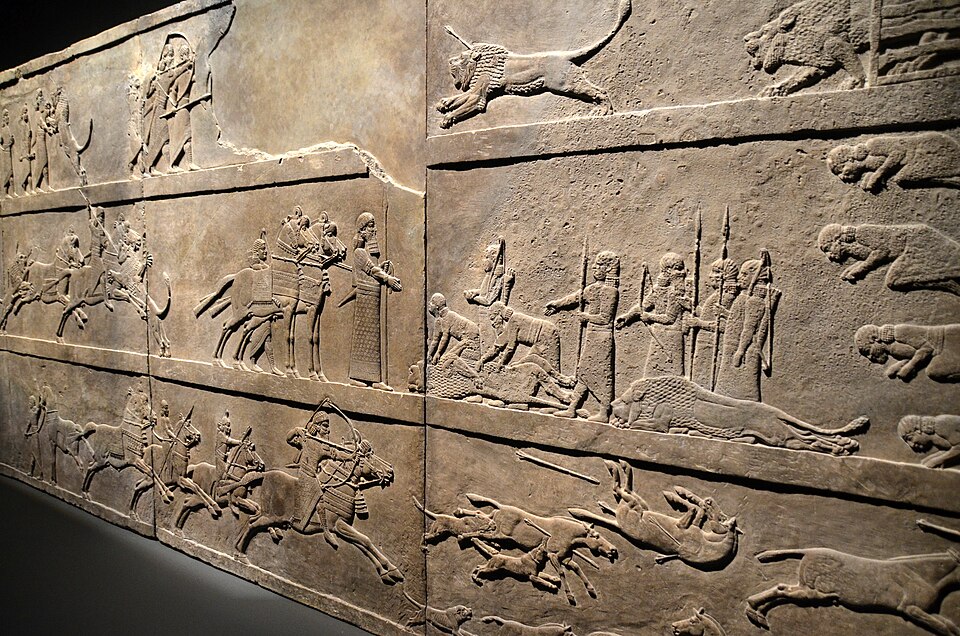
The royal Lion Hunt of Ashurbanipal is shown on a famous group of Assyrian palace reliefs from the North Palace of Nineveh that are now displayed in room 10a of the British Museum. They are widely regarded as "the supreme masterpieces of Assyrian art".
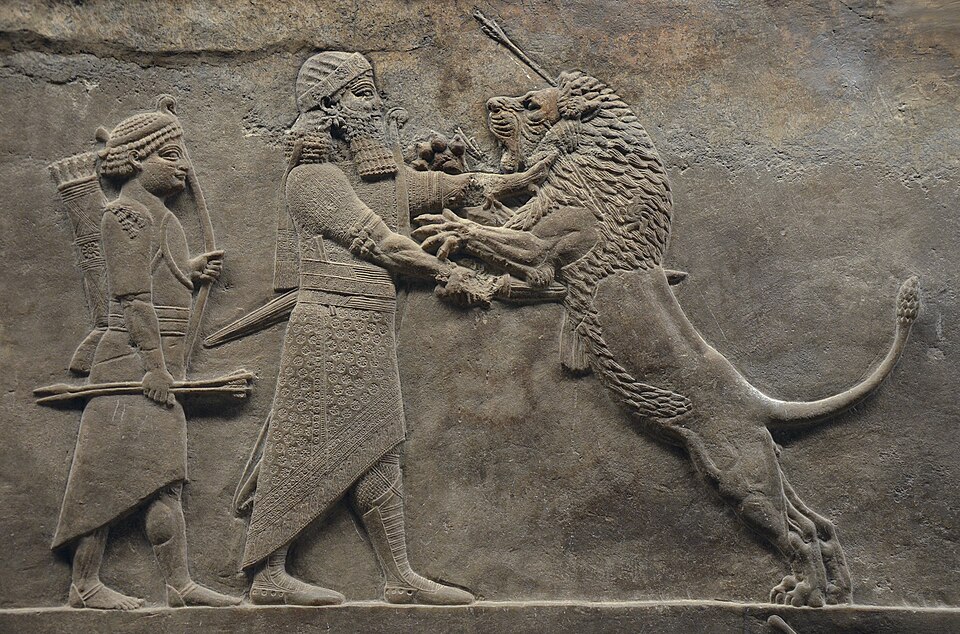
They show a formalized ritual "hunt" by King Ashurbanipal (reigned 669-631 BC) in an arena, where captured Asian lions were released from cages for the king to slaughter with arrows, spears, or his sword. They were made about 645-635 BC, and originally formed different sequences placed around the palace. They would probably originally have been painted, and formed part of a brightly coloured overall decor.
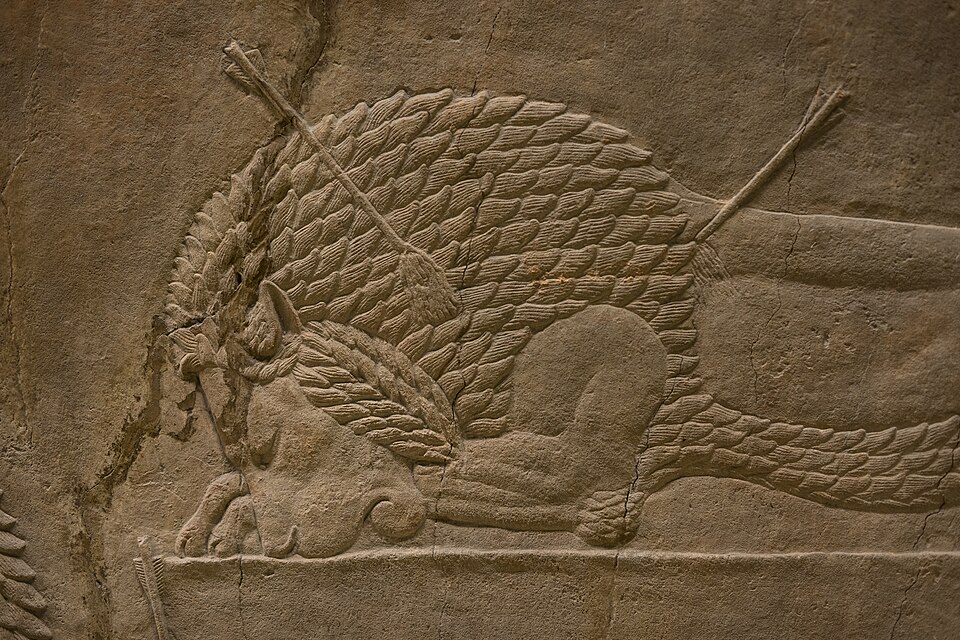
The slabs or orthostats from the North Palace were excavated by Hormuzd Rassam in 1852-1854, and William Loftus in 1854-1855 and most were sent to the British Museum, where they have been favourites with the general public and art historians alike ever since. The realism of the lions has always been praised, although the pathos modern viewers tend to feel was perhaps not part of the Assyrian response. The human figures are mostly seen in formal poses in profile, especially the king in his several appearances, but the lions are in a great variety of poses, alive, dying, and dead.
Further reading
- Sculptures from the north palace of Ashurbanipal at Nineveh (668-627 B.C.) · Richard David Barnett (1976)Covers the sculptures from Ashurbanipal's North Palace at Nineveh, including excavations.Find a copy: AbeBooks · Amazon · WorldCat
- Assyrian Sculpture · Julian Reade (1983)Covers Assyrian sculpture and reliefs, with the British Museum collection.Find a copy: AbeBooks · Amazon · WorldCat
Lion Hunt Relief is one of the 3D puzzles in World Artifacts: turn a cloud of broken pieces until it lines up. For iPhone, iPad, Apple Vision Pro and Android.

