World Artifacts › Atlas › Iraq
Standard of Ur
The mosaic box.
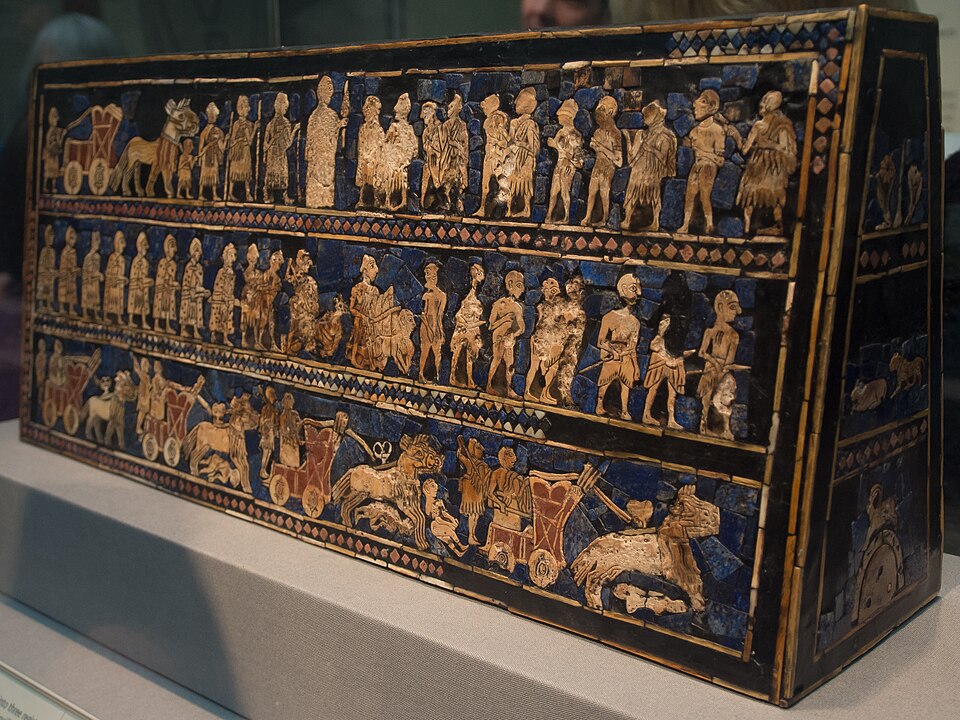
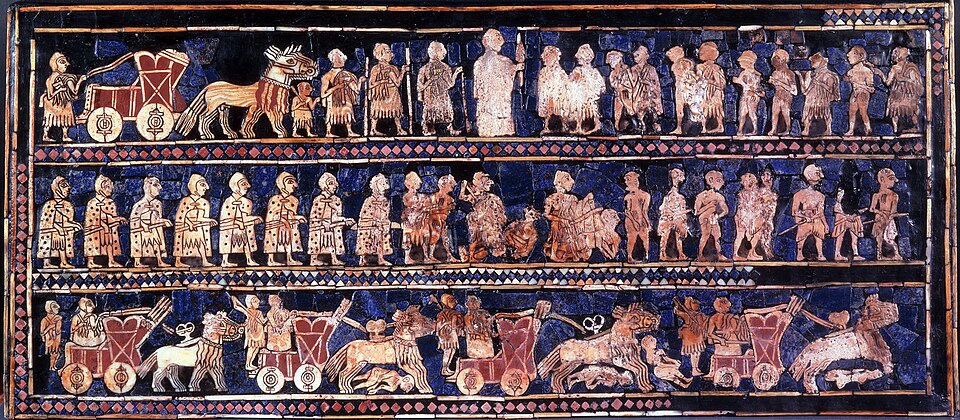
The Standard of Ur is a Sumerian artifact of the 3rd millennium BC that is now in the collection of the British Museum. It is thought to have decorated the outside of a hollow wooden box measuring 21.59 cm (8.50 in) wide by 49.53 cm (19.50 in) long, inlaid with a mosaic of shell, red limestone, and lapis lazuli. It comes from the ancient city of Ur, located in modern-day Iraq west of Nasiriyah. It dates to the First Dynasty of Ur during the Early Dynastic III period and is around 4,600 years old.
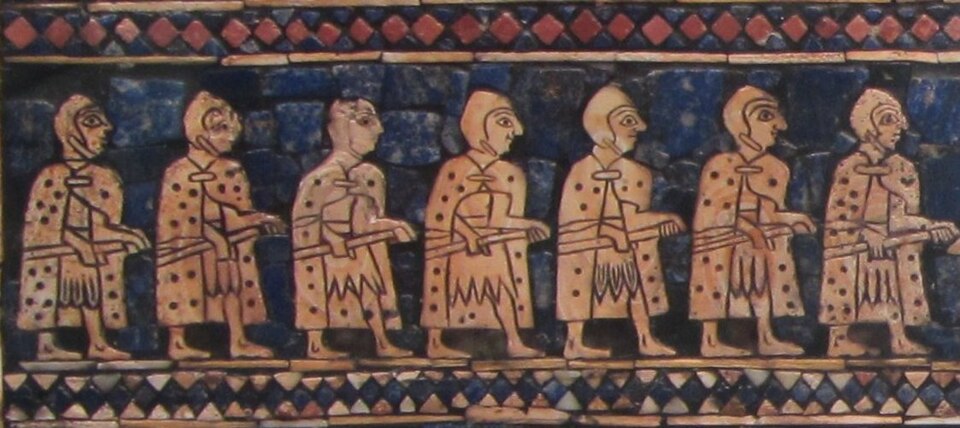
The standard was probably constructed in the form of a hollow wooden box with scenes of war and peace represented on each side through elaborately inlaid mosaics. Although interpreted as a standard by its discoverer, its actual purpose is not known. It was found in a royal tomb in Ur in the 1920s next to the skeleton of a ritually sacrificed man who might have been its bearer "entirely covered with thousands of minute lapis-lazuli ball beads, they lay over and under the broken skull and were thick in the surrounding soil; it appeared that he had worn a cap which was parsemé with beads". A shell cylinder seal with the name "é-zi" was found with the body.
Further reading
Standard of Ur is one of the 3D puzzles in World Artifacts: turn a cloud of broken pieces until it lines up. For iPhone, iPad, Apple Vision Pro and Android.

