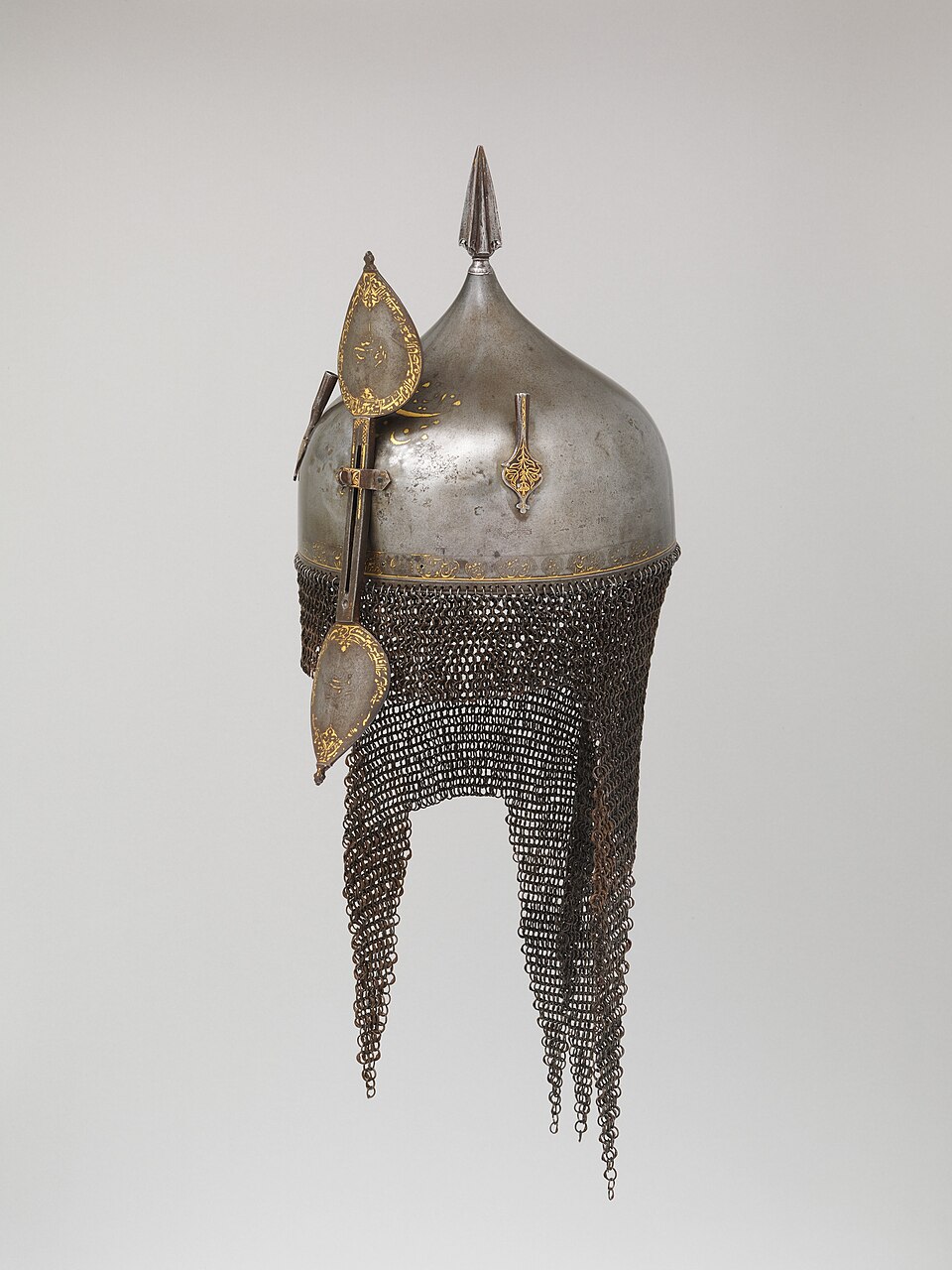
Safavid turban helmets were built to be worn over a wound cloth, with a tall fluted spike and a curtain of mail. They were also inscribed with Quranic verses, so the helmet was armour and prayer at once.
A style of helmet known as top in India. This top came from the Deccan region.This file was donated to Wikimedia Commons as part of a project by the Metropolitan Museum of Art . See the Image and Data Resources Open Access Policy · CC0 · Source
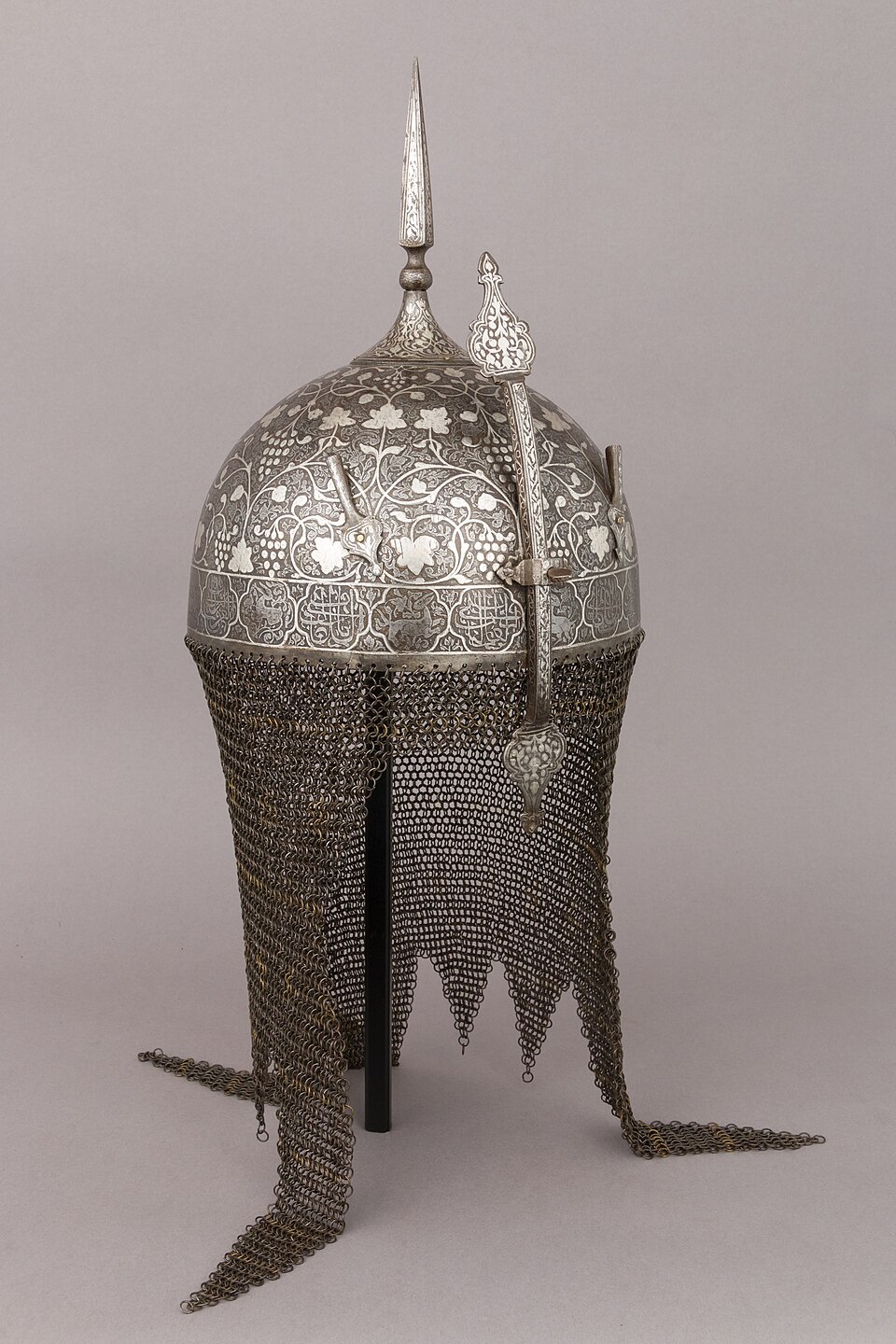
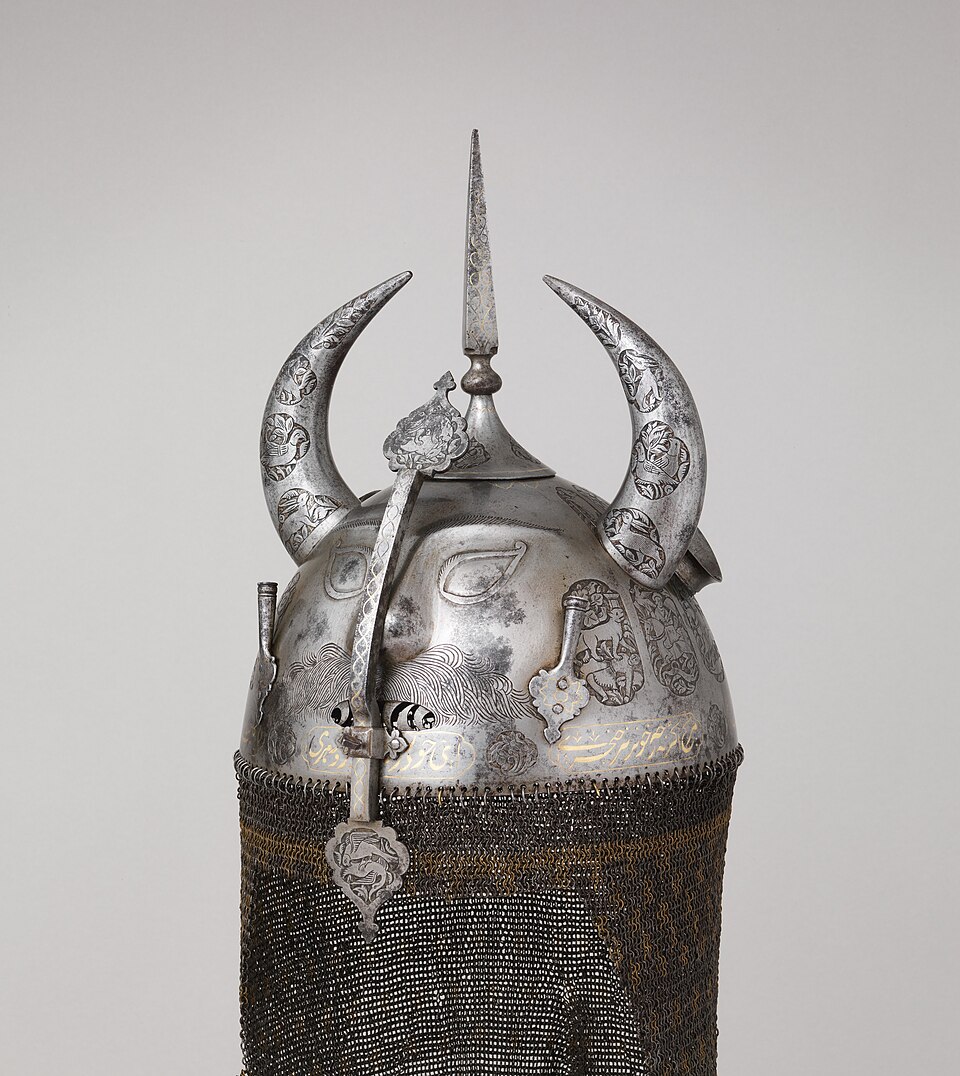
Kulah Khuds (Persian: کلاه خود; also known as top in India and devil masks among English-speaking arms collectors) were used in western Asia for battle and as decorative head pieces.
A highly ornate top from an eighteenth-century Mughal warriorThis file was donated to Wikimedia Commons as part of a project by the Metropolitan Museum of Art . See the Image and Data Resources Open Access Policy · CC0 · SourceAn Iranian devil mask with horns and a face from the Qajar dynastyThis file was donated to Wikimedia Commons as part of a project by the Metropolitan Museum of Art . See the Image and Data Resources Open Access Policy · CC0 · Source
Further reading
Islamic arms and armour · Robert Elgood (1979)A study of Islamic arms and armour.Find a copy: AbeBooks · Amazon · WorldCat
Safavid Helmet is one of the 3D puzzles in World Artifacts: turn a cloud of broken pieces until it lines up. For iPhone, iPad, Apple Vision Pro and Android.