World Artifacts › Atlas › Iran
Samovar and Tea Glass
Tea is drunk from small glasses so the colour can be judged, and traditionally with a sugar cube held between the teeth and the tea drawn through it. The samovar keeps water hot all day, and a concentrated pot sits on top to be diluted glass by glass.
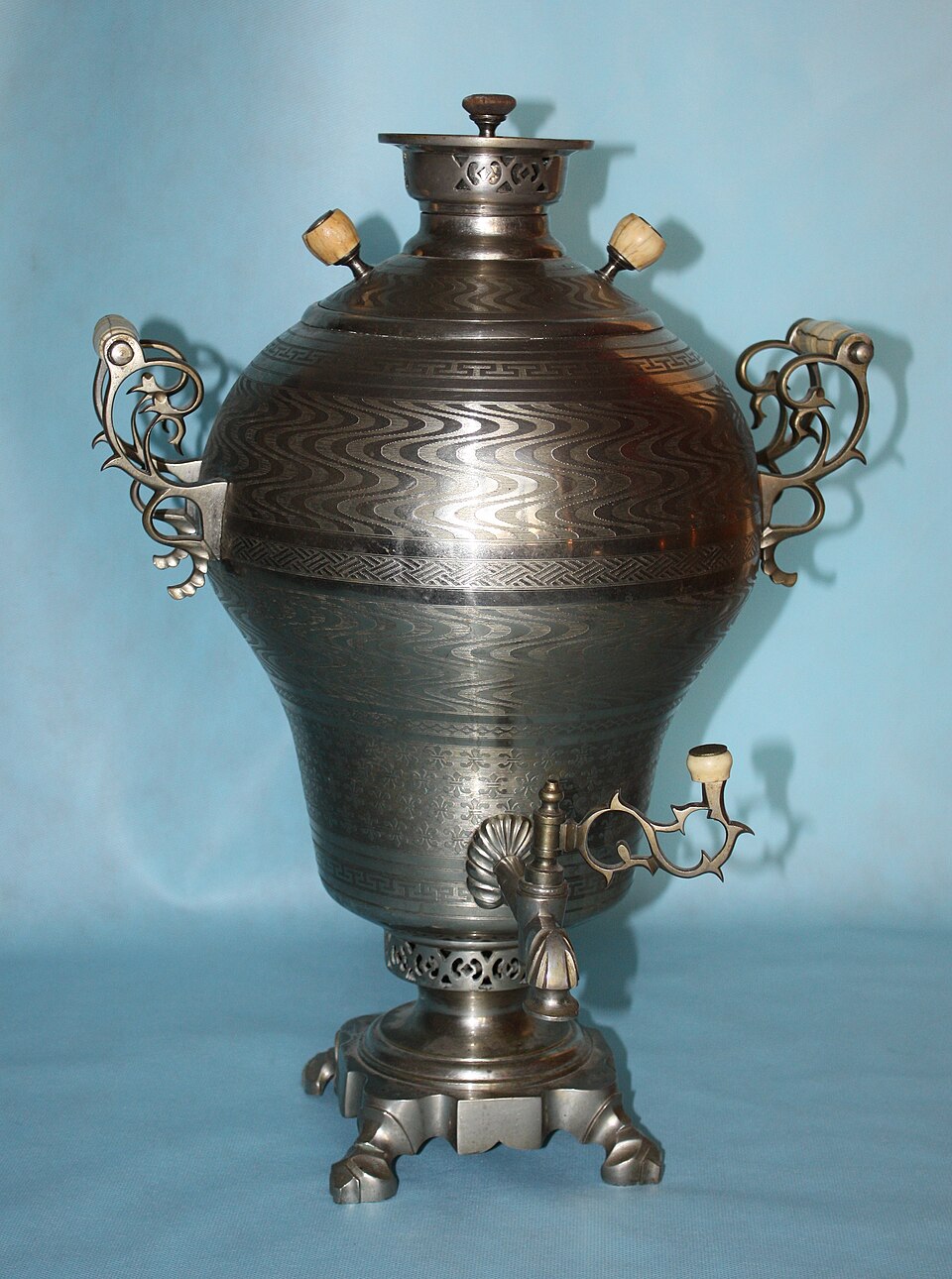
A samovar (Russian: самовар, IPA: [səmɐˈvar] , lit. 'self-brewer') is a metal container traditionally used to heat and boil water. Although originating in Russia, the samovar is well known outside of the country and has spread through Russian culture to other parts of Eastern Europe, as well as West and Central and South Asia. Since the heated water is typically used to make tea, many samovars have a ring-shaped attachment (конфорка, konforka) around the chimney to hold and heat a teapot filled with tea concentrate. Though traditionally heated with coal or kindling, many newer samovars use electricity to heat water in a manner similar to an electric water boiler.
Further reading
Samovar and Tea Glass is one of the 3D puzzles in World Artifacts: turn a cloud of broken pieces until it lines up. For iPhone, iPad, Apple Vision Pro and Android.

