World Artifacts › Atlas › Iran
Shah Mosque
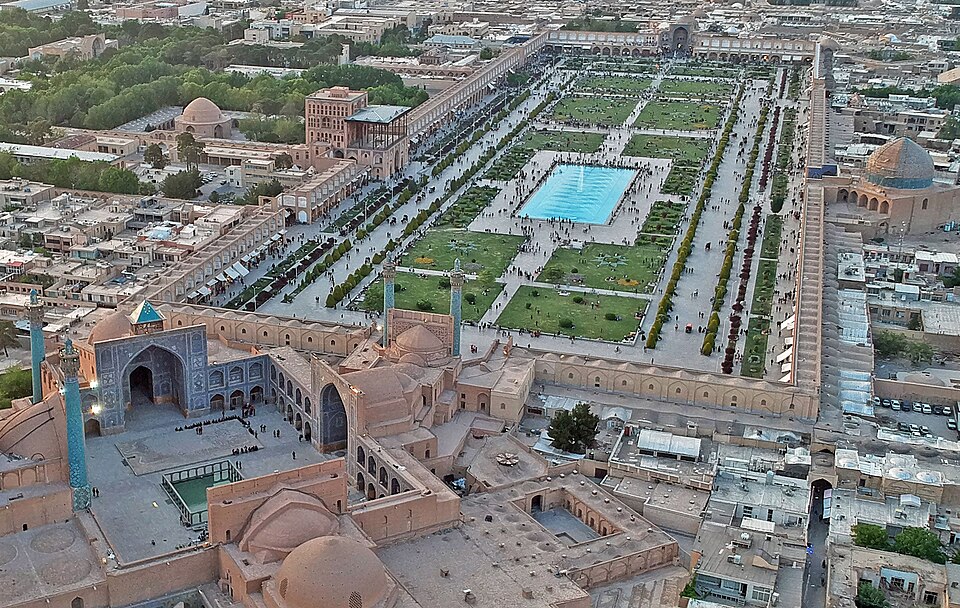
The mosque's entrance faces the main square and its prayer hall faces Mecca, so the building turns forty-five degrees inside itself between the two. Standing on a marked stone under the dome, a single clap comes back several times over.
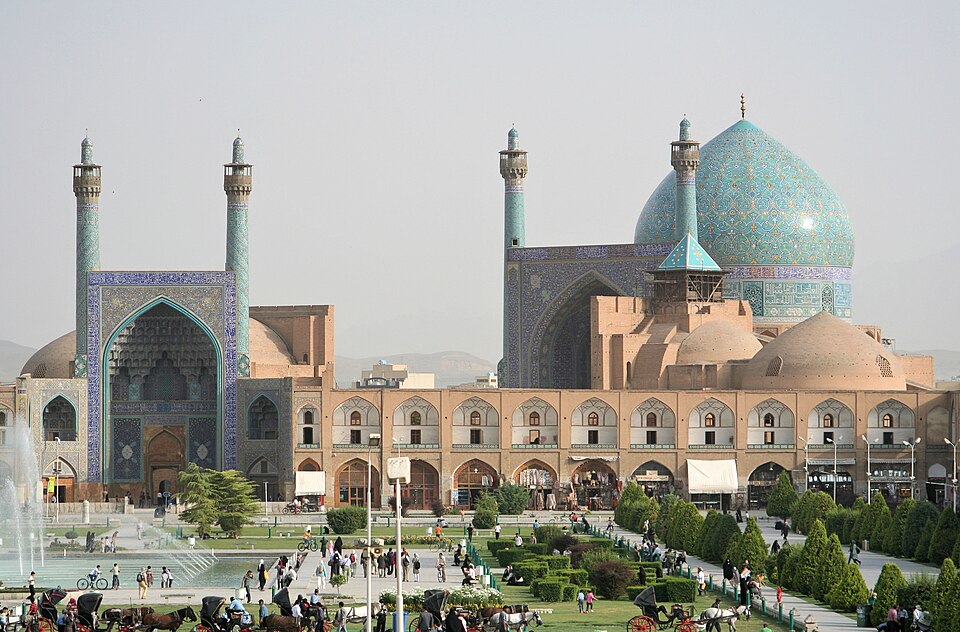
The Shah Mosque (Persian: مسجد شاه, lit. 'Masjed-e Shah'), also officially known as the Imam Mosque or Imam Khomeini Mosque, is a mosque located on the south side of Naqsh-e Jahan Square in Isfahan, in the province of Isfahan, Iran. Its construction began in 1611, during the Safavid Empire under the order of Abbas the Great, and was completed c. 1630.
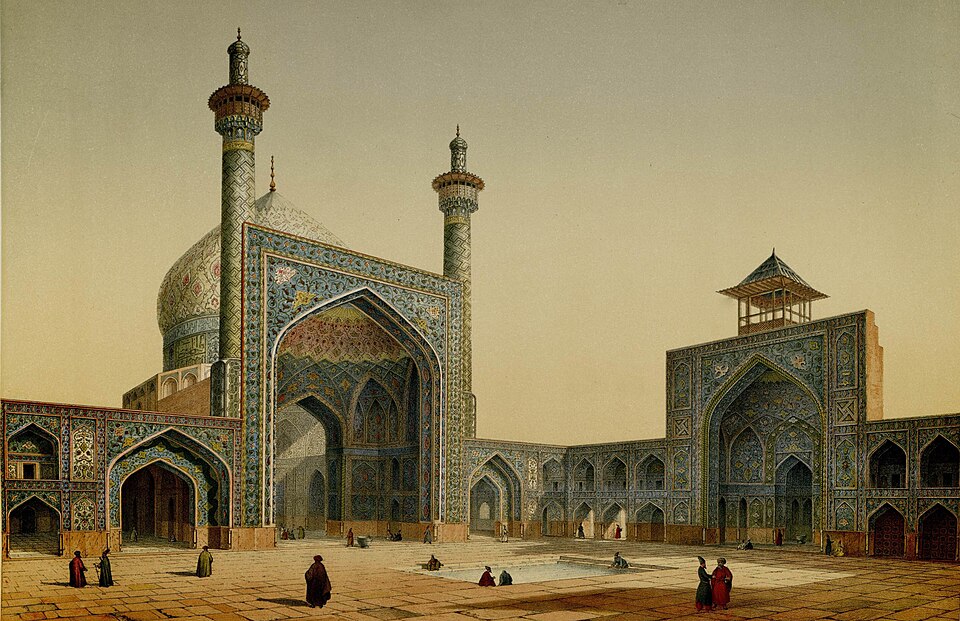
It is regarded as one of the masterpieces of Iranian architecture in the Islamic era. The mosque is registered, along with the Naghsh-e Jahan Square and other surrounding structures, as a UNESCO World Heritage Site. It was added to the Iran National Heritage List on 6 January 1932, administered by the Cultural Heritage, Handicrafts and Tourism Organization of Iran. The mosque is depicted on the reverse of the Iranian 20,000 rials banknote.
Further reading
Shah Mosque is one of the 3D puzzles in World Artifacts: turn a cloud of broken pieces until it lines up. For iPhone, iPad, Apple Vision Pro and Android.

