World Artifacts › Atlas › Iceland
Basalt Columns
When thick lava cools slowly it contracts and cracks into hexagons, the same shape a mud puddle makes when it dries. The columns at Reynisfjara are the result, and they inspired the country's church architecture.
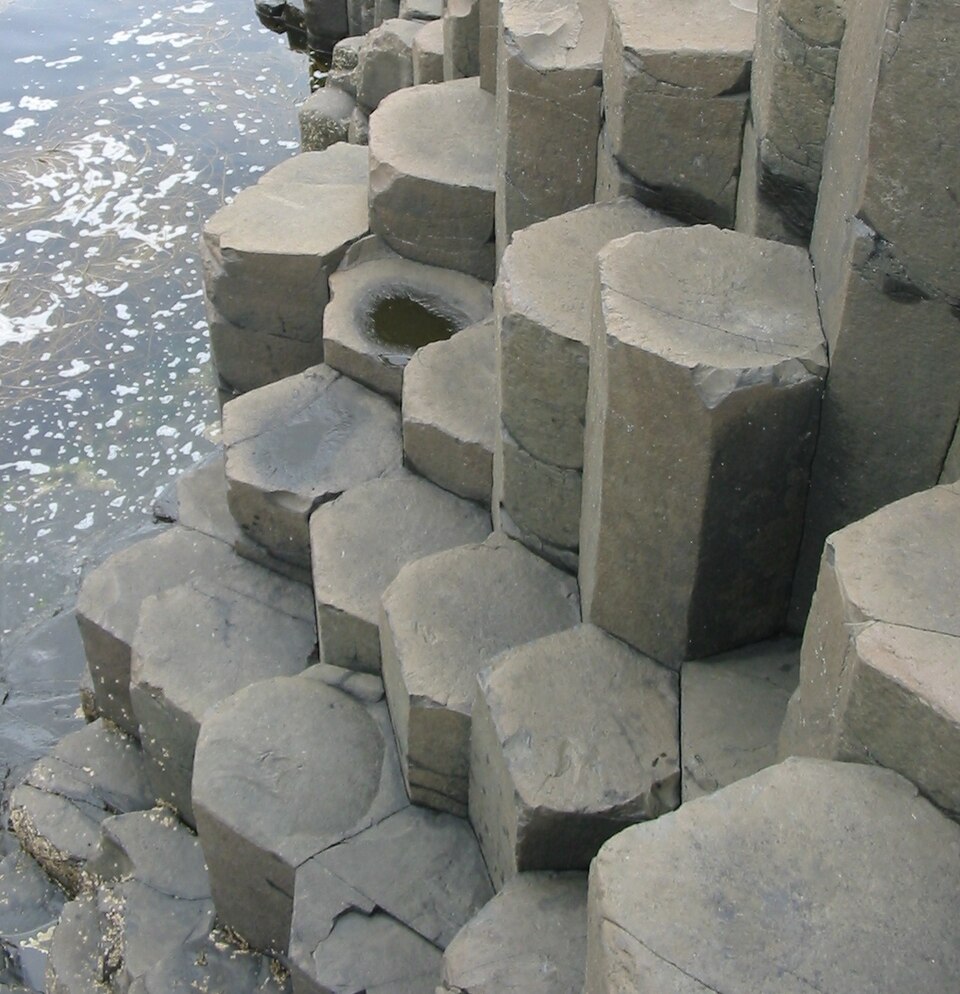
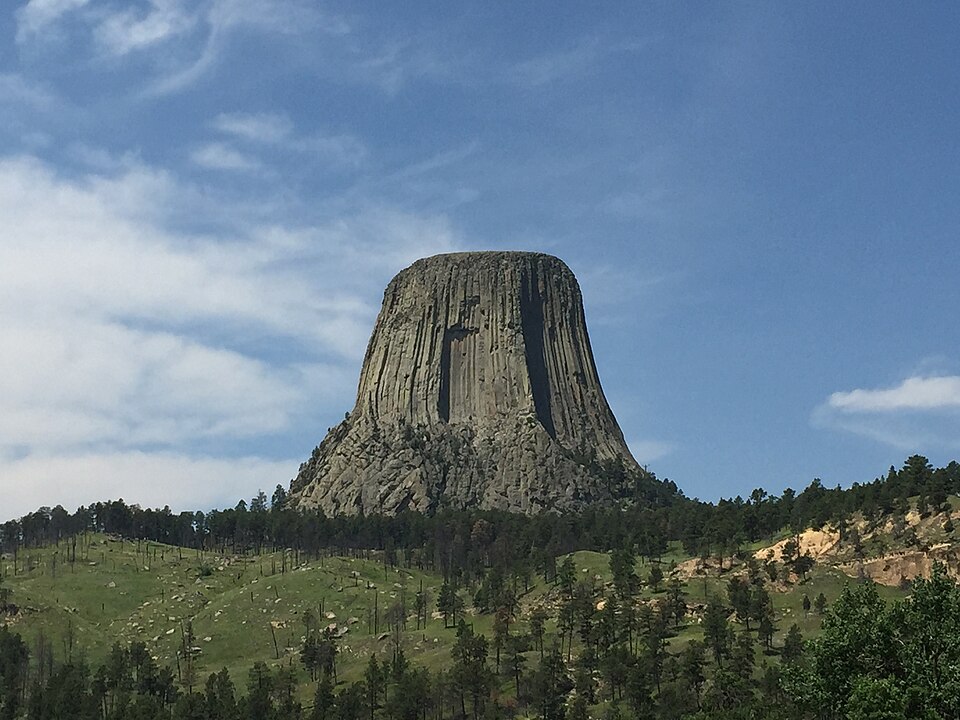
Columnar jointing is a geological structure where sets of intersecting closely spaced fractures, referred to as joints, result in the formation of a regular array of polygonal prisms, or columns. Columnar jointing occurs in many types of igneous rocks (e.g. basalt, andesite, rhyolite, tuff), and forms as the rock cools and contracts. Columnar jointing can occur in cooling lava flows and ashflow tuffs (ignimbrites), as well as in some shallow intrusions. Columnar jointing also occurs rarely in sedimentary rocks, due to a combination of dissolution and reprecipitation of interstitial minerals (often quartz or cryptocrystalline silica) by hot, hydrothermal fluids and the expansion and contraction of the rock unit, both resulting from the presence of a nearby magmatic intrusion.
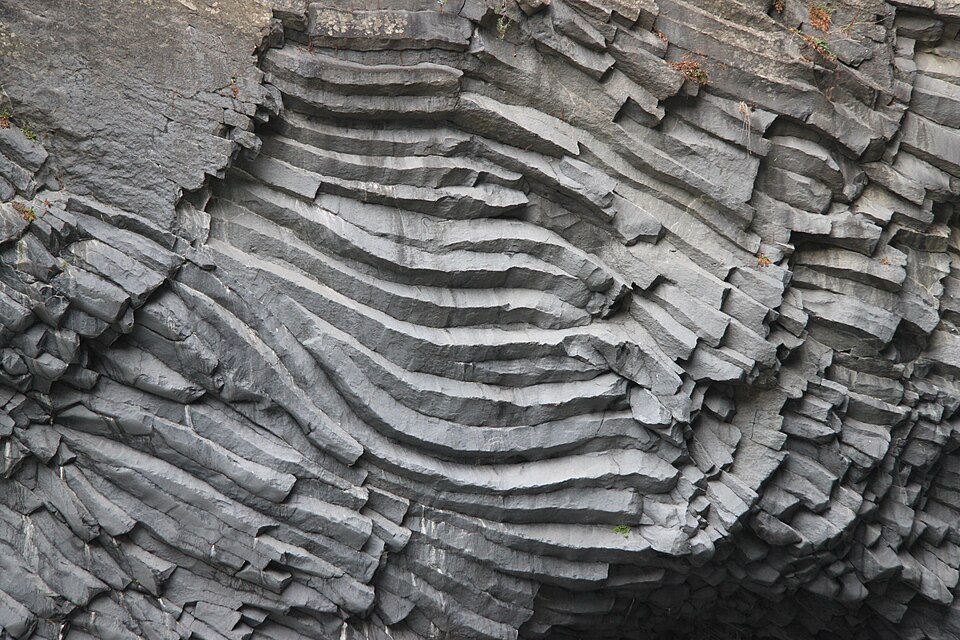
The columns can vary from 3 meters to a few centimeters in diameter, and can be as much as 30 meters tall. They are typically parallel and straight, but can also be curved and vary in diameter. An array of regular, straight, and larger-diameter columns is called a colonnade; an irregular, less-straight, and smaller-diameter array is termed an entablature. The number of sides of the individual columns can vary from 3 to 8, with 6 sides being the most common.
Further reading
Basalt Columns is one of the 3D puzzles in World Artifacts: turn a cloud of broken pieces until it lines up. For iPhone, iPad, Apple Vision Pro and Android.

