World Artifacts › Atlas › Iceland
Settlement Longhouse
A single long room with a fire down the middle and benches along the walls, roofed in turf. The whole household ate, worked and slept in it through winters of near-total darkness.
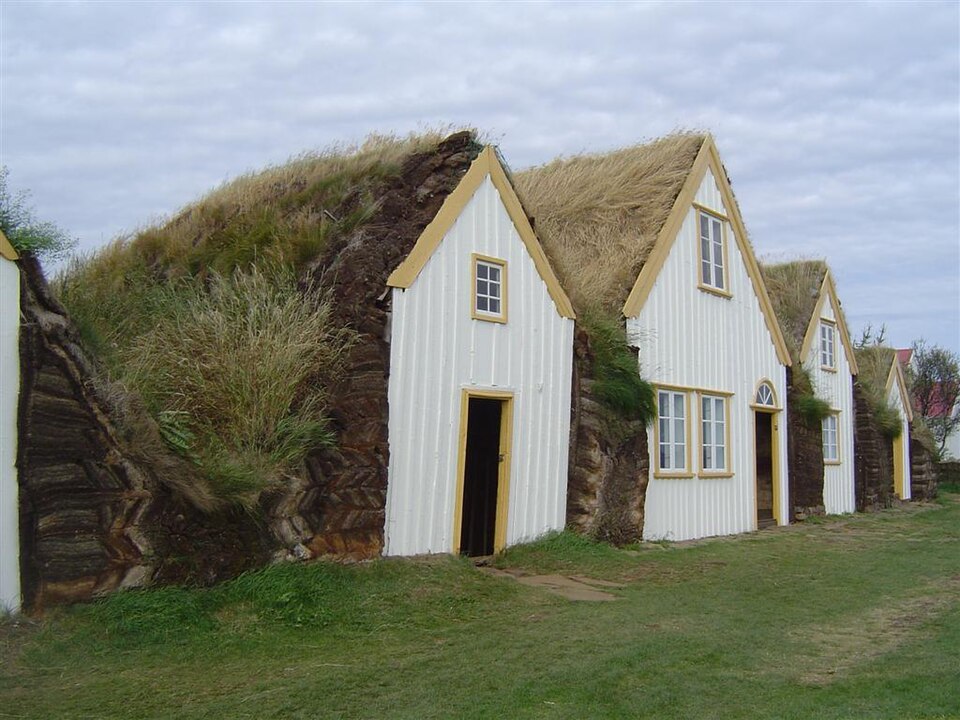
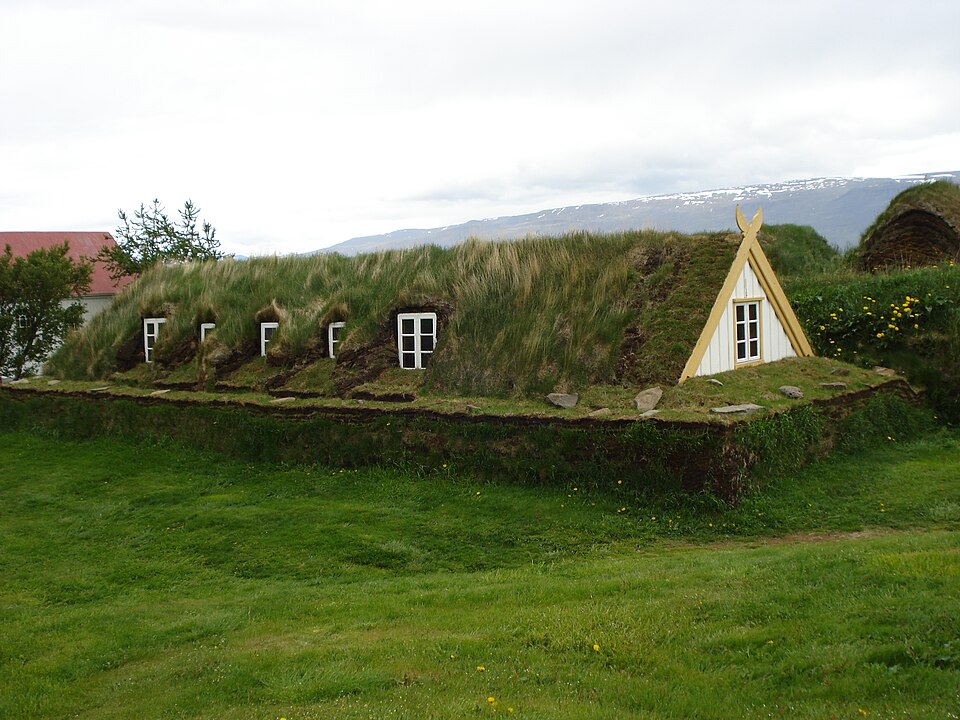
Icelandic turf houses (Icelandic: torfbæir [ˈtʰɔrvˌpaijɪr̥]) are timber structures with turf walls and turf as a cover for the roof. Turf houses have been constructed since Iceland was settled in the 9th century. Turf houses were the product of a difficult climate, offering superior insulation compared to buildings solely made of wood or stone, and the relative difficulty in obtaining other construction materials in sufficient quantities.
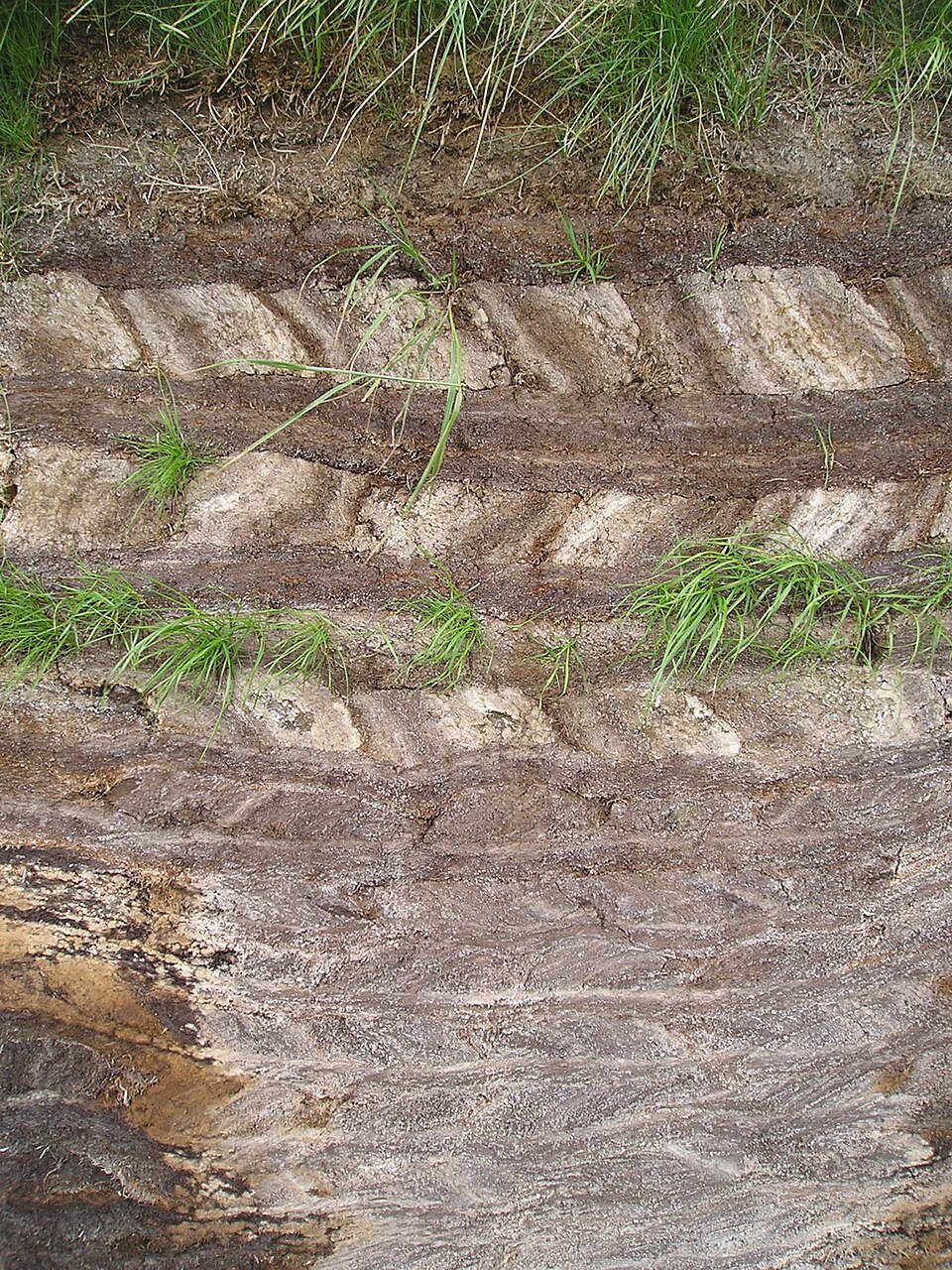
30% of Iceland was forested when it was settled, mostly with birch. Oak was the preferred timber for building Norse halls in Scandinavia, but native birch had to serve as the primary framing material on the remote island. However, Iceland did have a large amount of turf that was suitable for construction. Some structures in Norway had turf roofs, so the notion of using this as a building material would not have been alien to many settlers.
Further reading
Settlement Longhouse is one of the 3D puzzles in World Artifacts: turn a cloud of broken pieces until it lines up. For iPhone, iPad, Apple Vision Pro and Android.

