World Artifacts › Atlas › Italy
Commedia Harlequin
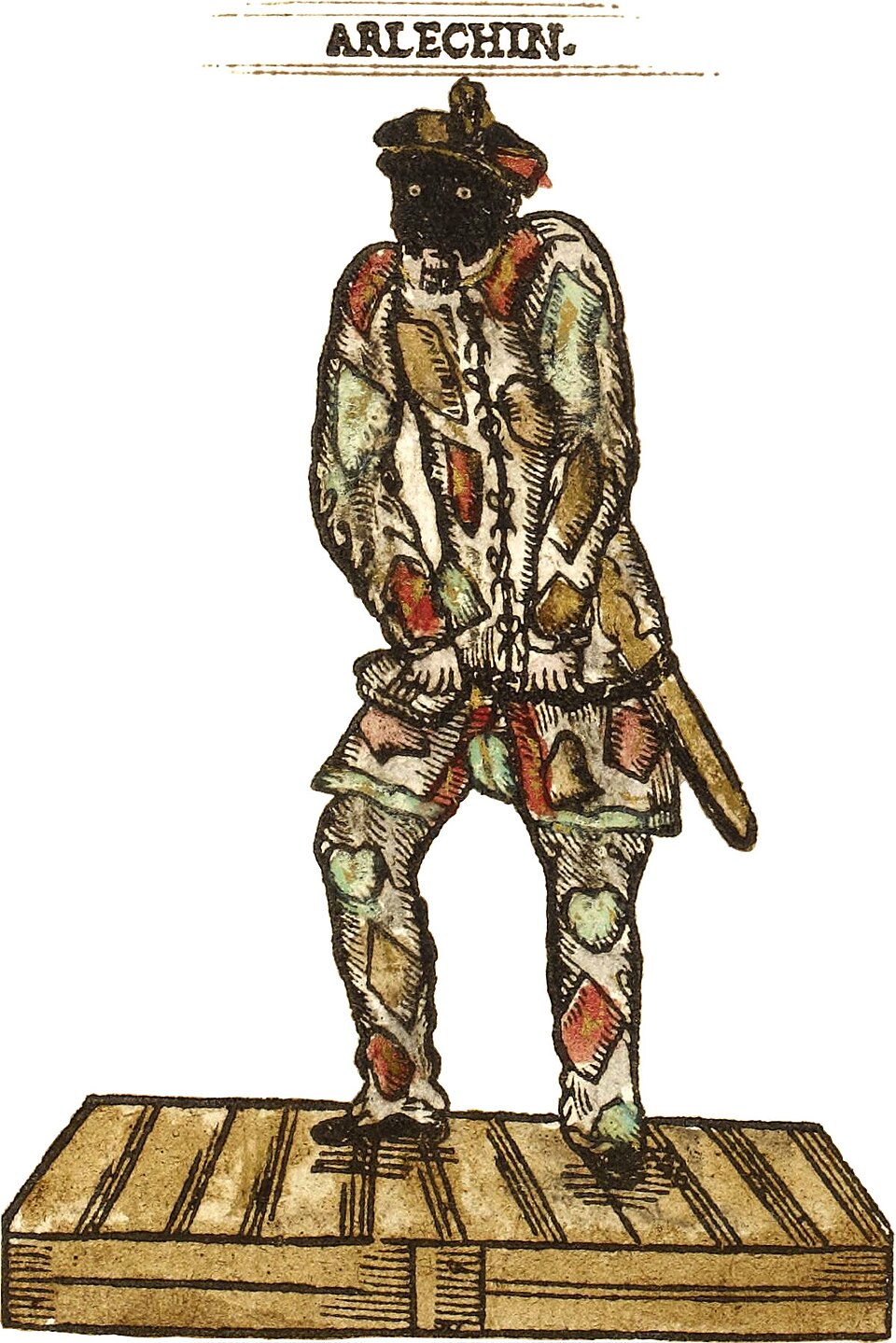
Harlequin's diamonds began as patches: he was the poor servant whose costume was made of whatever cloth came to hand, and the rags were later tidied into a pattern.
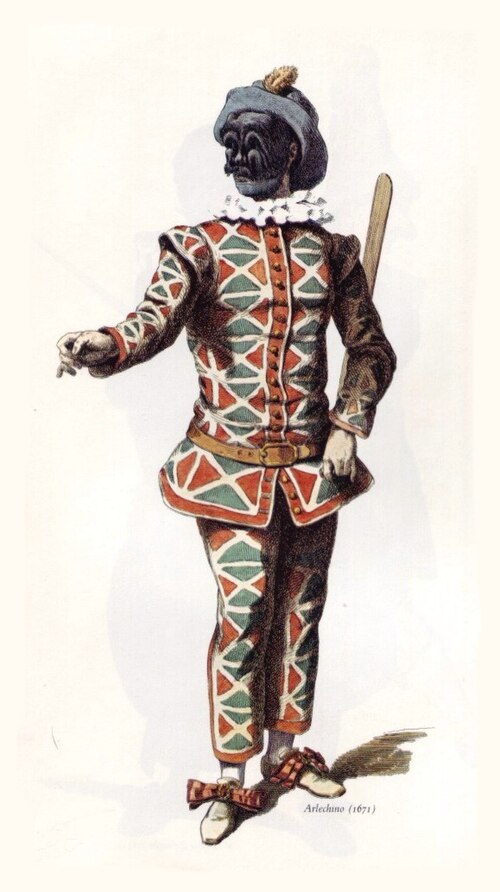
Harlequin ( HAR-lə-kwin; Italian: Arlecchino, pronounced [arlekˈkiːno]; Lombard: Arlechin, Bergamasque pronunciation: [arleˈki]) is the best-known of the comic servant characters (Zanni) from the Italian commedia dell'arte, associated with the city of Bergamo. The role is traditionally believed to have been introduced by the Italian actor-manager Zan Ganassa in the late 16th century. It was definitively popularized by the Italian actor Tristano Martinelli in Paris in 1584-1585, and became a stock character after Martinelli's death in 1630.
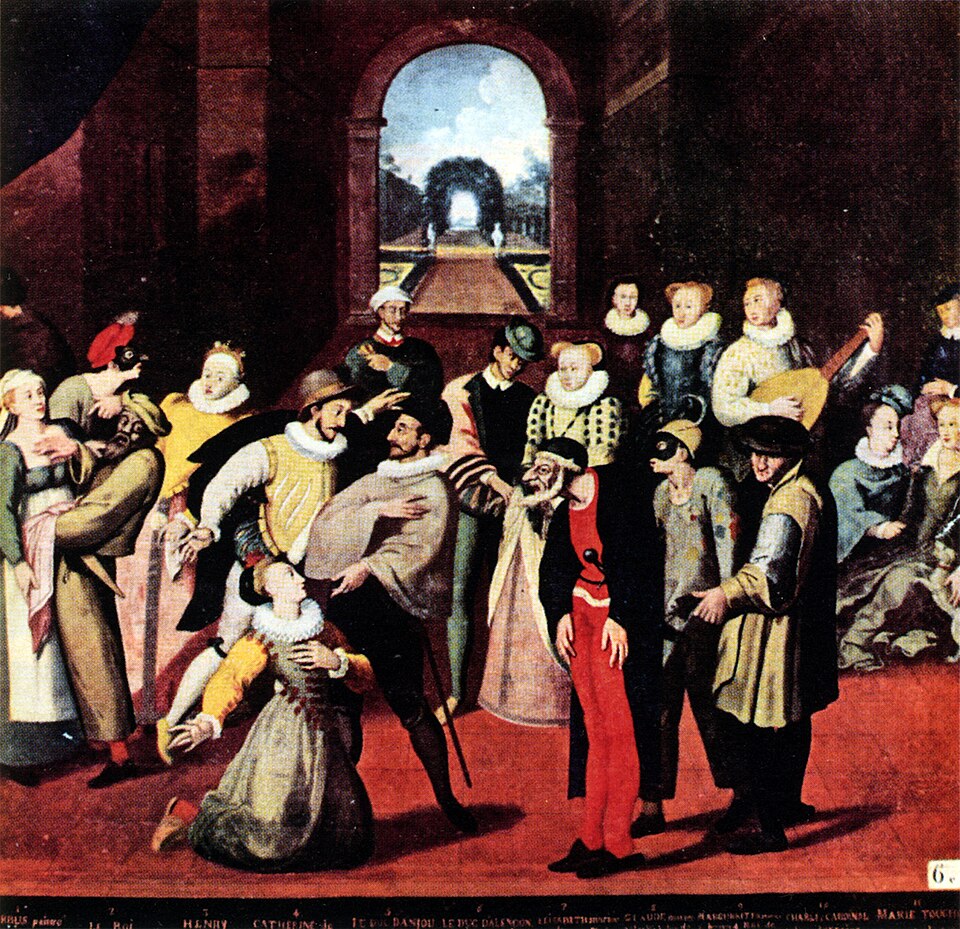
The Harlequin is characterised by his checkered costume. His role is that of a light-hearted, nimble, and astute servant, often acting to thwart the plans of his master, and pursuing his own love interest, Columbine, with wit and resourcefulness, often competing with the sterner and melancholic Pierrot. He later develops into a prototype of the romantic hero. Harlequin inherits his physical agility and his trickster qualities, as well as his name, from a mischievous "devil" character in medieval Passion Plays.
Further reading
- The World of Harlequin · Allardyce Nicoll (1963)History and criticism of the Harlequin figure within commedia dell'arte, with attention to its iconography.Find a copy: AbeBooks · Amazon · WorldCat
- The Italian Comedy · Pierre Louis Duchartre (1929)Study of the Italian commedia dell'arte, the theatrical tradition that Harlequin comes from.Find a copy: AbeBooks · Amazon · WorldCat
Commedia Harlequin is one of the 3D puzzles in World Artifacts: turn a cloud of broken pieces until it lines up. For iPhone, iPad, Apple Vision Pro and Android.

