World Artifacts › Atlas › Italy
Fiat 500
The 500 had thirteen horsepower and an engine in the back, and was designed to be affordable to people who had never owned a car. It is short enough to park nose-in to a kerb, which Italians duly did.
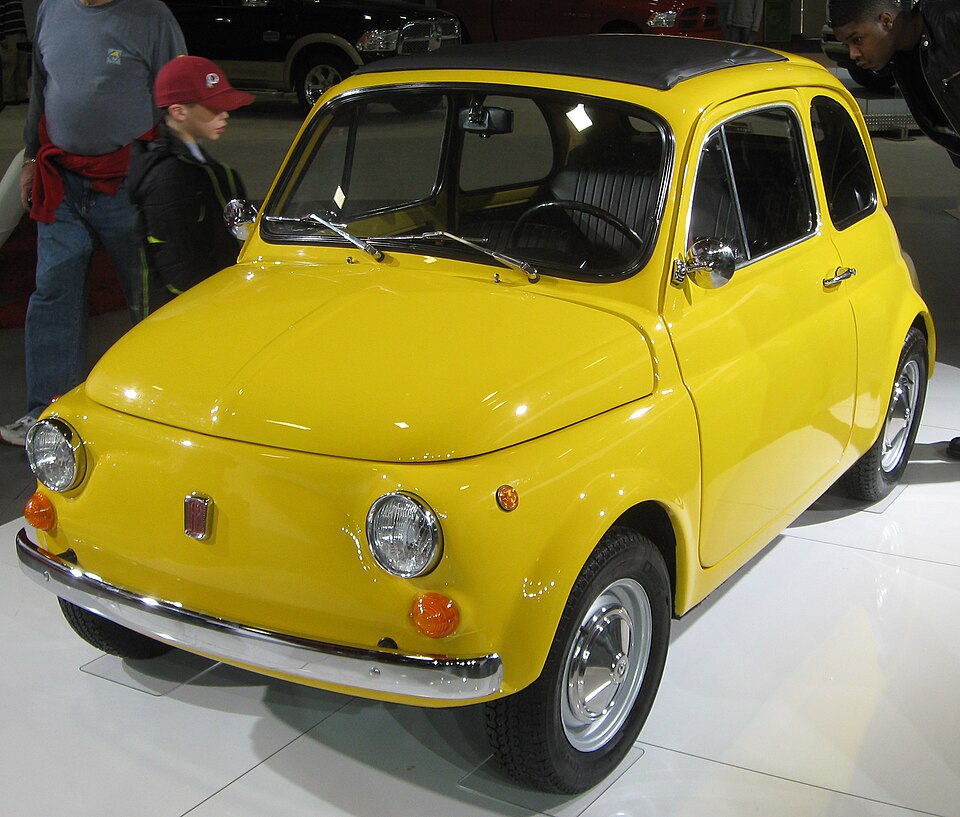
The Fiat 500 (Italian: Cinquecento, pronounced [ˌtʃiŋkweˈtʃɛnto]) is an economy / city car that was manufactured and marketed by Fiat Automobiles from 1957 until 1975. It was sold as a two-door semi-convertible or saloon car and as a three-door panel van or estate car.
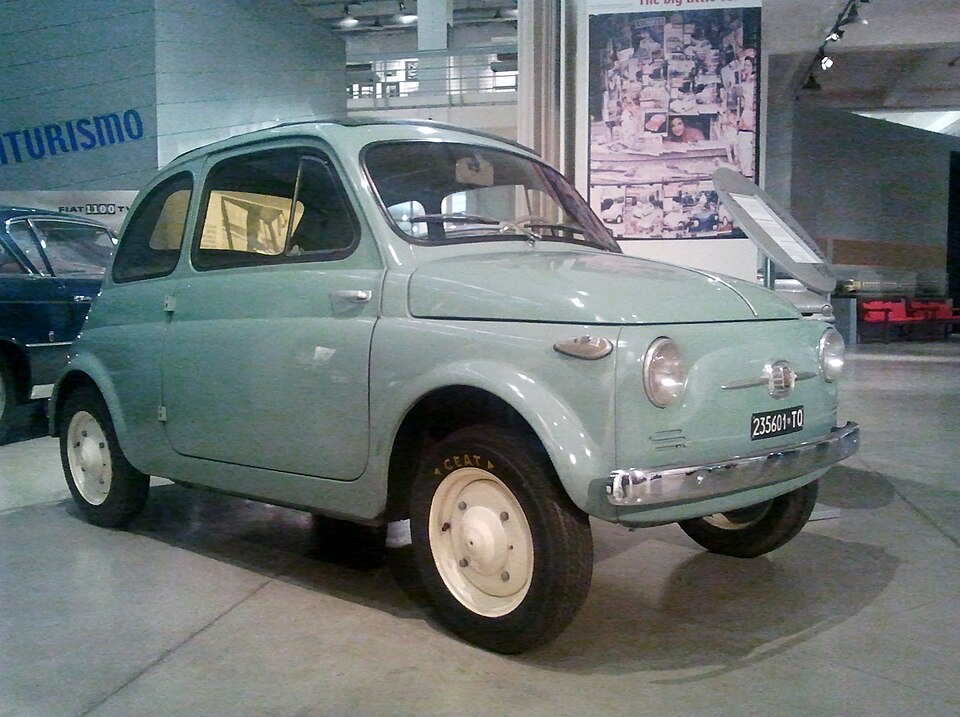
Launched as the Nuova (new) 500 in July 1957, as a successor to the 500 "Topolino", it was an inexpensive and practical small car. Measuring 2,970 mm (9 ft 9 in) long, originally powered by a rear-mounted 479 cc two-cylinder air-cooled engine, the 500 was 245 mm (9.6 in) smaller than the Fiat's 600, launched two years earlier, and is considered one of the first purpose-designed city cars.
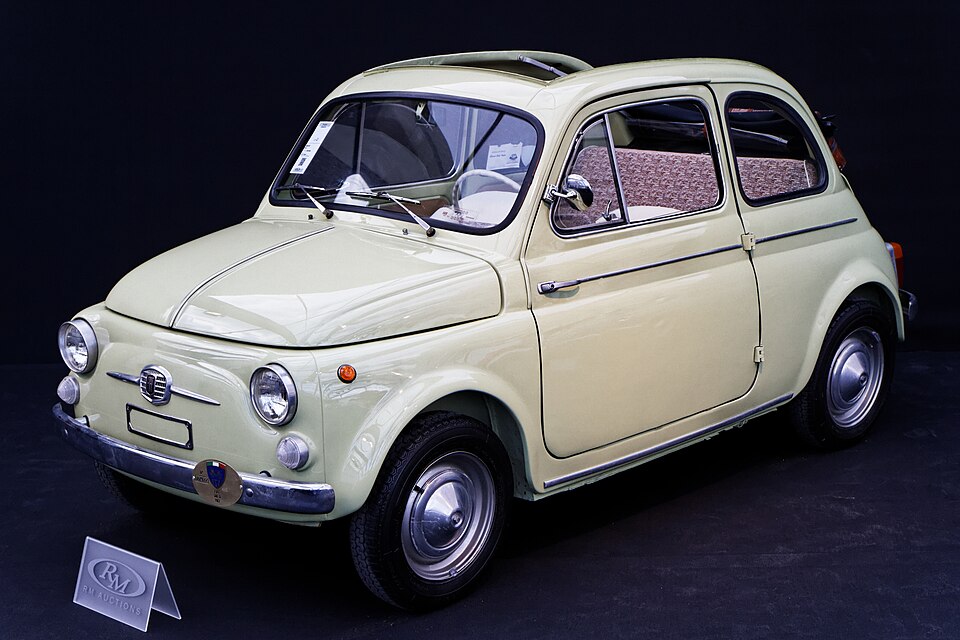
In 1959, Dante Giacosa received a Compasso d'Oro industrial design prize for the Fiat 500. This marked the first time a Compasso d’Oro was awarded to an automotive manufacturer.
Fiat 500 is one of the 3D puzzles in World Artifacts: turn a cloud of broken pieces until it lines up. For iPhone, iPad, Apple Vision Pro and Android.

