World Artifacts › Atlas › Italy
Gladiator Helmet
The murmillo's helmet has tiny eyeholes and enormous weight, which slowed the fight and made it last. Gladiators were expensive to train, so most bouts ended without a death; the free volunteers were a minority among the slaves.
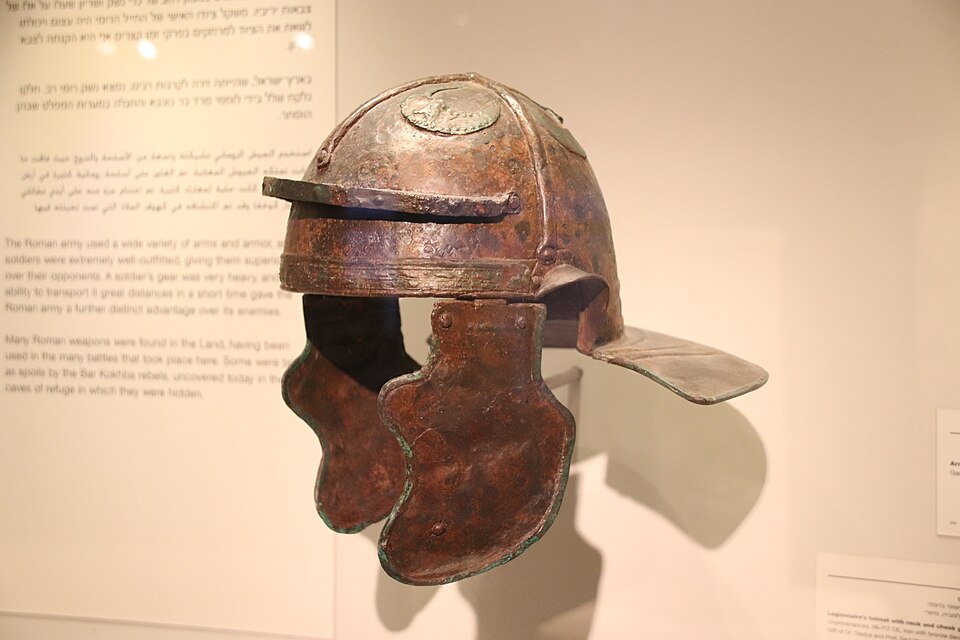
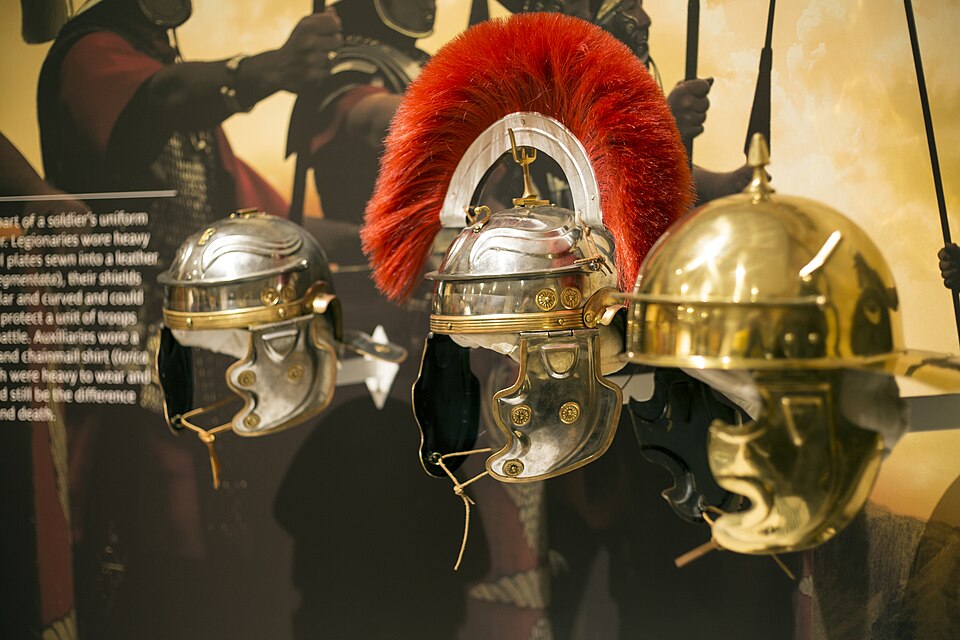
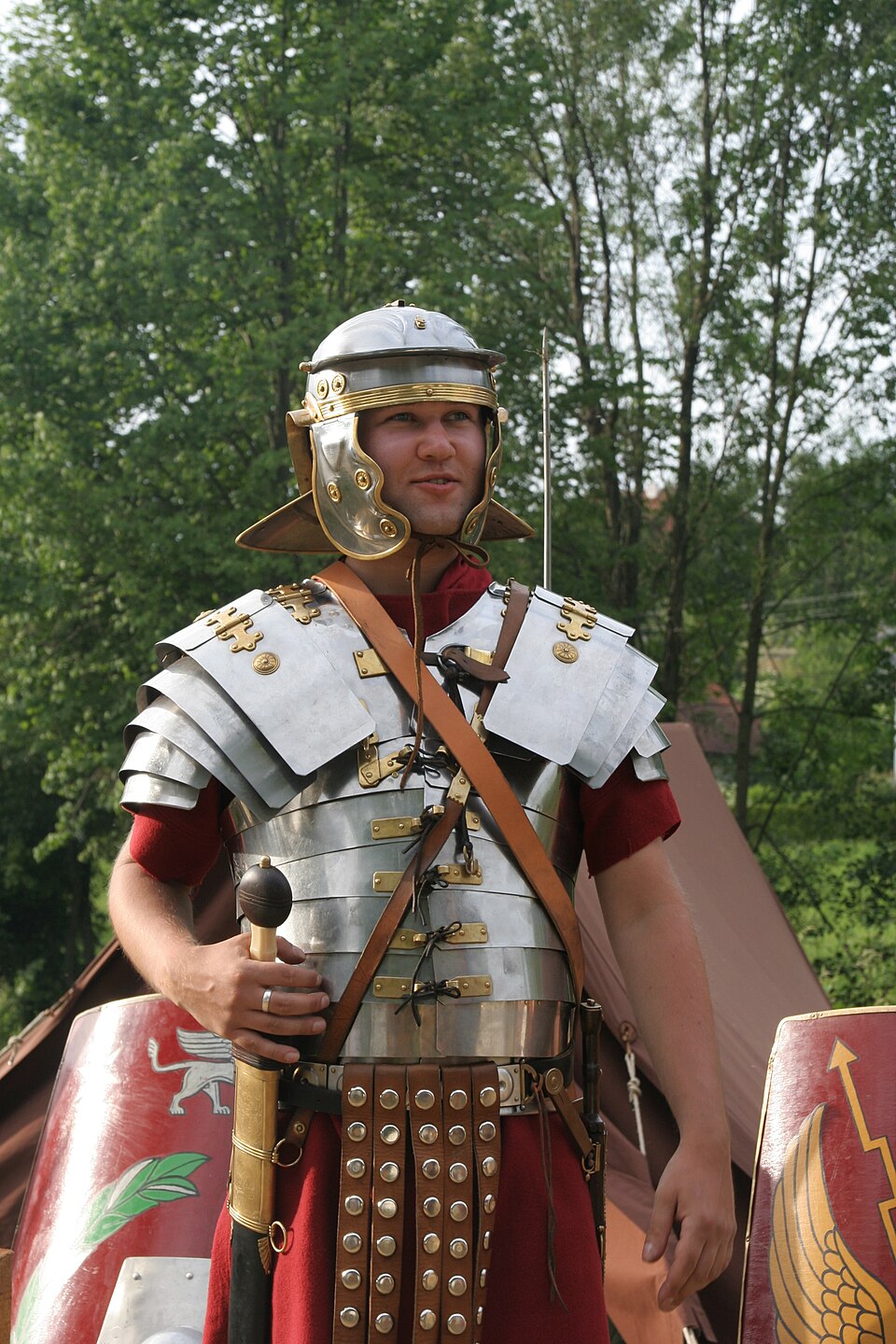
A galea (Latin: [ˈɡaɫea]; from Ancient Greek γαλέη (galéē) 'weasel, marten') was a Roman soldier's metal helmet, most famously worn by the heavy infantry of the legions. Some gladiators, specifically murmillo (myrmillo), also wore bronze galeae with face masks and decorations, often a fish on its crest. While details varied over time, all Roman galeas from the Republic era through the Principate featured the same basic design - a bowl to protect the skull, a neck guard (which grew larger over time), a deflector band to protect the forehead and cheek plates to protect the face. The exact form, type of metal, and design of the helmet varied over time, between differing unit types, and also between individual examples - pre-industrial production was by hand - so it is not certain to what degree there was any standardization even under the Roman Empire.
Originally, Roman helmets were influenced by the neighboring Etruscans, people who utilised the "Nasua" type helmets. The Greeks in the south also influenced Roman design in its early history.
The primary evidence is scattered archaeological finds, which are often damaged or incomplete; secondary evidence includes period depictions of galeae, generally in bas-relief sculpture and mosaic.
Further reading
- Gladiator · Konstantin Nossov (2009)Covers gladiators, their games and Roman social life.Find a copy: AbeBooks · Amazon · WorldCat
- The armour of imperial Rome · H. Russell Robinson (1975)Covers Roman armour, including the equipment worn by soldiers of imperial Rome.Find a copy: AbeBooks · Amazon · WorldCat
Gladiator Helmet is one of the 3D puzzles in World Artifacts: turn a cloud of broken pieces until it lines up. For iPhone, iPad, Apple Vision Pro and Android.

