World Artifacts › Atlas › Italy
Italian Flag
The tricolour comes from a republic set up under Napoleon in 1797, and the green is usually explained as the colour of a militia uniform. It was the flag of unification before it was the flag of a country.
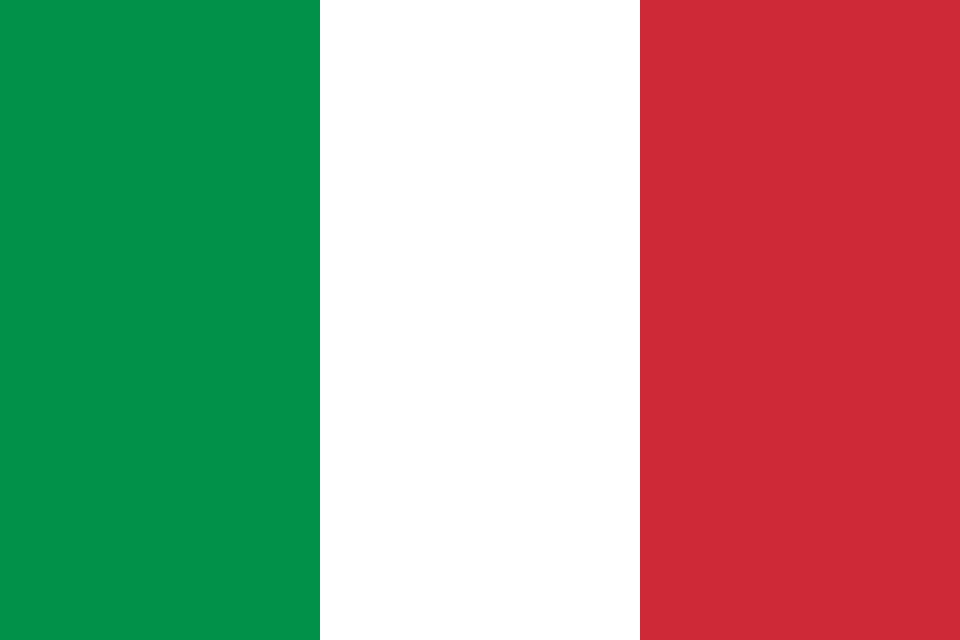
The national flag of Italy, often referred to as the Tricolour (il Tricolore, Italian: [il trikoˈloːre]), is a flag featuring three equally sized vertical pales of green, white and red, with the green at the hoist side, as defined by Article 12 of the Constitution of the Italian Republic. The Italian law regulates its use and display, protecting its defence and providing for the crime of insulting it; it also prescribes its teaching in Italian schools together with other national symbols of Italy.
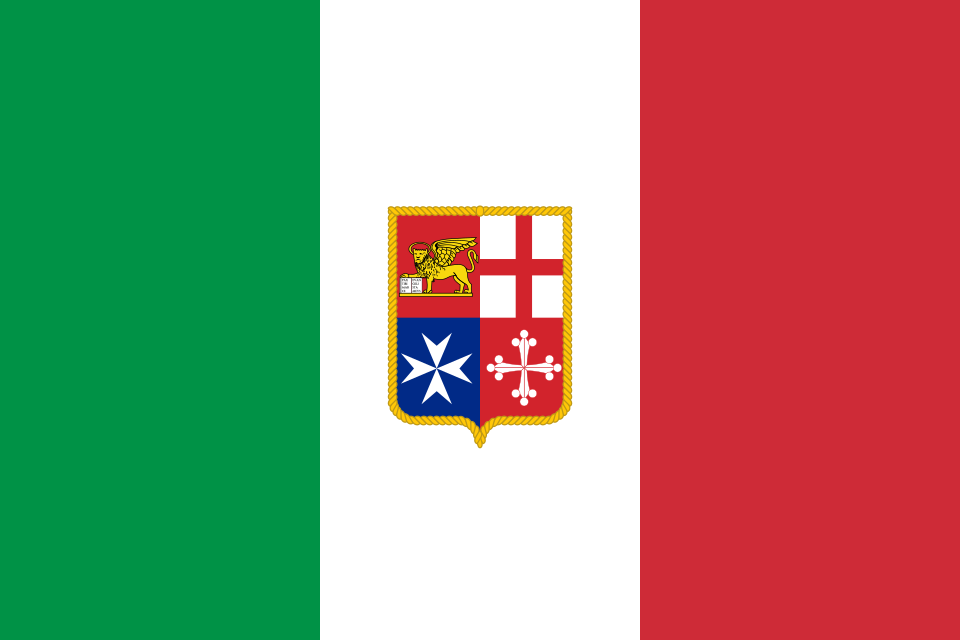
The Italian Flag Day named Tricolour Day was established by law n. 671 of 31 December 1996, and is held every year on 7 January. This celebration commemorates the first official adoption of the tricolour as a national flag by a sovereign Italian state, the Cispadane Republic, a Napoleonic sister republic of Revolutionary France, which took place in Reggio Emilia on 7 January 1797, on the basis of the events following the French Revolution (1789-1799) which, among its ideals, advocated national self-determination. The Italian national colours appeared for the first time in Genoa on a tricolour cockade on 21 August 1789, anticipating by seven years the first green, white and red Italian military war flag, which was adopted by the Lombard Legion in Milan on 11 October 1796.
Further reading
- Simboli e bandiere nella storia del Risorgimento Italiano · Oronzo Colangeli (1965)A history of the symbols and flags of the Italian Risorgimento.Find a copy: AbeBooks · Amazon · WorldCat
- Risorgimento · Lucy Riall (2009)A history of the Risorgimento and Italian nationalism.Find a copy: AbeBooks · Amazon · WorldCat
Italian Flag is one of the 3D puzzles in World Artifacts: turn a cloud of broken pieces until it lines up. For iPhone, iPad, Apple Vision Pro and Android.

