World Artifacts › Atlas › Italy
Mount Vesuvius
The eruption that buried Pompeii in 79 AD was described by an eyewitness whose uncle died going closer to look. Vesuvius has erupted many times since, most recently in 1944, and around three million people now live within reach of it.
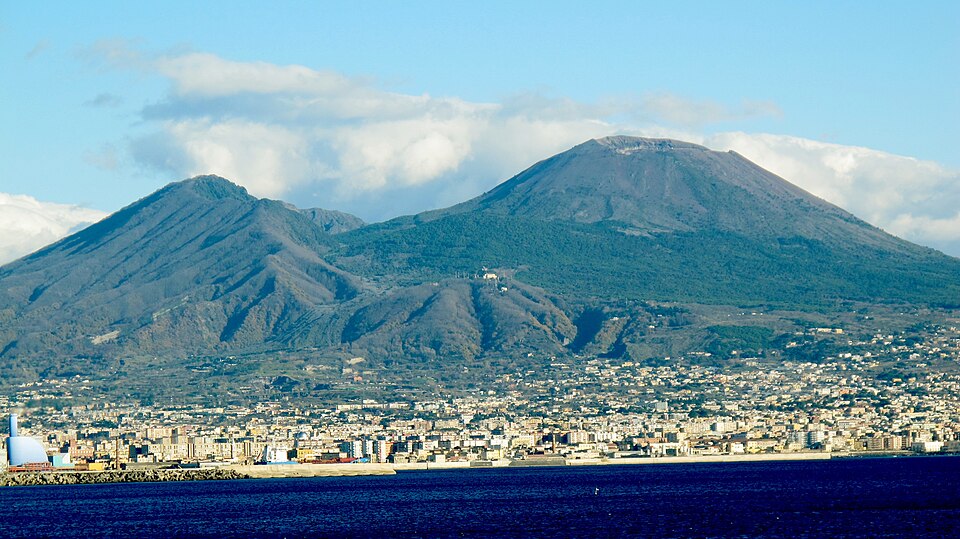
Mount Vesuvius ( və-SOO-vee-əs) is a somma-stratovolcano located on the Gulf of Naples in Campania, Italy, about 9 km (5.6 mi) east of Naples and a short distance from the shore. It is one of several volcanoes forming the Campanian volcanic arc. Vesuvius consists of a large cone partially encircled by the steep rim of a summit caldera, resulting from the collapse of an earlier, much higher structure.
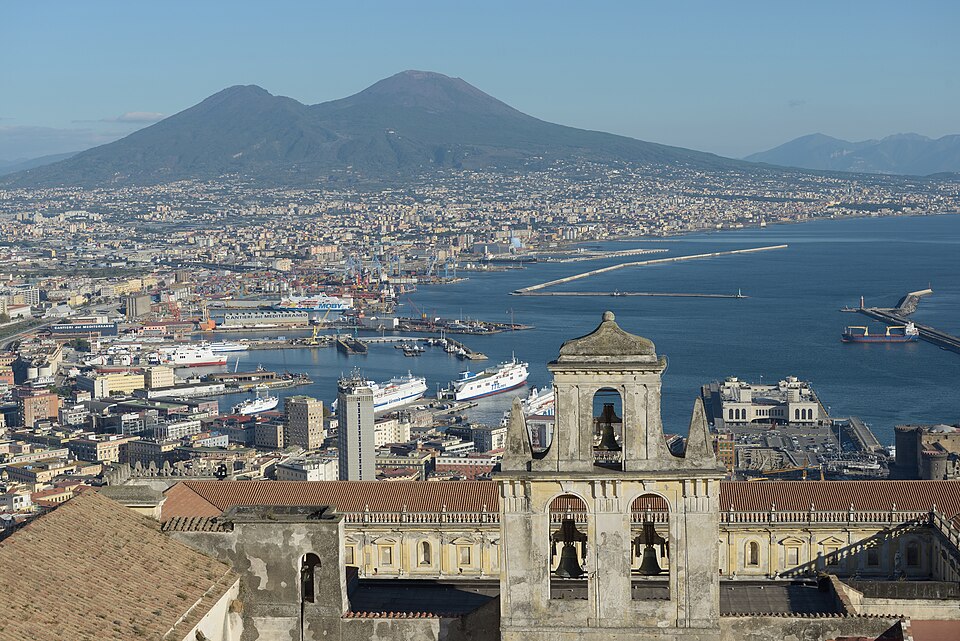
The eruption of Mount Vesuvius in 79 AD destroyed the Roman cities of Pompeii, Herculaneum, Oplontis, Stabiae and other settlements. The eruption ejected a cloud of stones, ash and volcanic gases to a height of 33 km (21 mi), erupting molten rock and pulverised pumice at the rate of 6×10⁵ cubic metres (7.8×10⁵ yd3) per second. More than 1,000 people are thought to have died in the eruption, though the exact toll is unknown. The only surviving witness account consists of two letters by Pliny the Younger to the historian Tacitus.
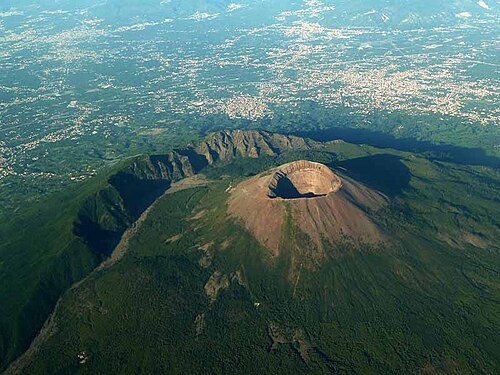
Vesuvius has erupted many times since. It is the only volcano on Europe's mainland to have erupted in the last hundred years. It is regarded as one of the most dangerous volcanoes in the world, marked as one of the Decade Volcanoes, because 3,000,000 people live near enough to be affected by an eruption, with at least 600,000 in the danger zone. Eruptions tend to be violent and explosive; these are known as Plinian eruptions.
Further reading
- Vesuvius · Alwyn Scarth (2009)A book on Vesuvius covering its volcanism and history, including its link to Pompeii.Find a copy: AbeBooks · Amazon · WorldCat
- Volcanoes in Human History · Jelle Zeilinga de Boer (2001)Covers volcanoes and their effect on human history, offering wider context for Vesuvius's eruptions.Find a copy: AbeBooks · Amazon · WorldCat
Mount Vesuvius is one of the 3D puzzles in World Artifacts: turn a cloud of broken pieces until it lines up. For iPhone, iPad, Apple Vision Pro and Android.

