World Artifacts › Atlas › Italy
Palio Horse and Jockey
The Palio is run twice a summer around a sloped, dangerous piazza, and the race is over in ninety seconds. A horse that finishes first without its rider still wins.
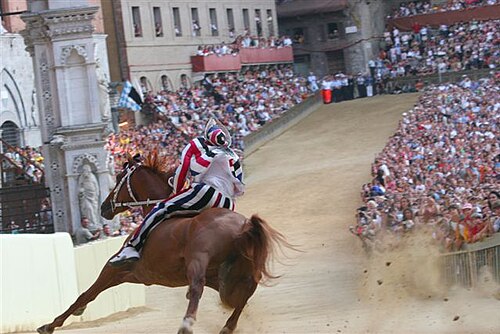
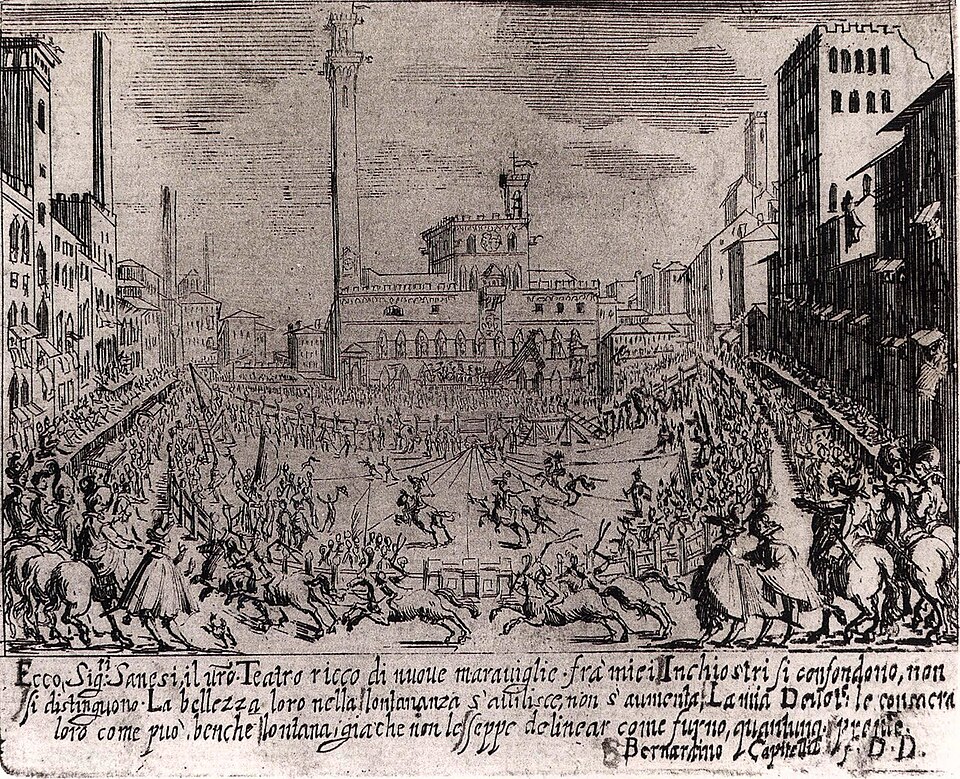
The Palio di Siena (pronounced [ˈpaːljo di ˈsjɛːna]; known locally simply as Il Palio; from Latin pallium) is a horse race held twice each year, on 2 July and 16 August, in Siena, Italy. Ten horses and riders, bareback and dressed in the appropriate colours, represent ten of the seventeen contrade, or city wards, in a tradition dating back to the 17th century. The Palio held on 2 July is named Palio di Provenzano, in honour of the Madonna of Provenzano, a Marian devotion particular to Siena which developed around an icon from the Terzo Camollia area of the city. The Palio held on 16 August is named Palio dell'Assunta, in honour of the Assumption of Mary.
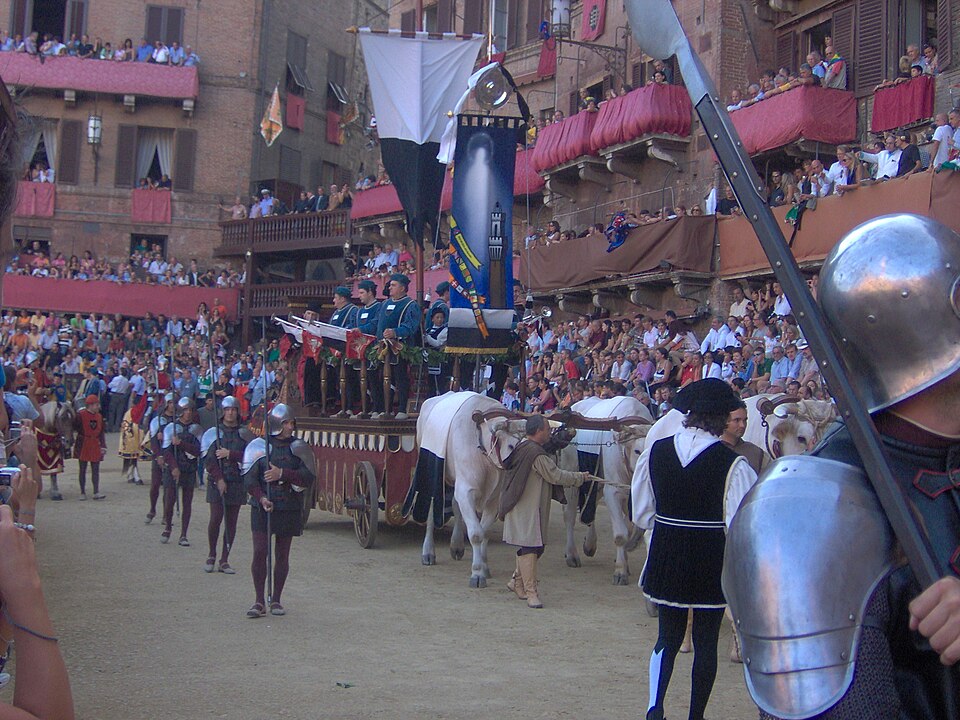
Of seventeen wards, or contrade, in the comune of Siena, only ten compete in each Palio. The seven contrade that did not take part in that month of the previous year are automatically included; three more are chosen by draw. The Corteo Storico, a pageant to the sound of the March of the Palio, precedes the race, which attracts visitors and spectators from around the world.
Further reading
Palio Horse and Jockey is one of the 3D puzzles in World Artifacts: turn a cloud of broken pieces until it lines up. For iPhone, iPad, Apple Vision Pro and Android.

