World Artifacts › Atlas › Italy
Pantheon
The dome is unreinforced concrete and is still the largest of its kind in the world, nineteen centuries on. The Romans made it lighter as it rose, using pumice near the top, and the hole in the middle is open to the sky, with drains in the floor.
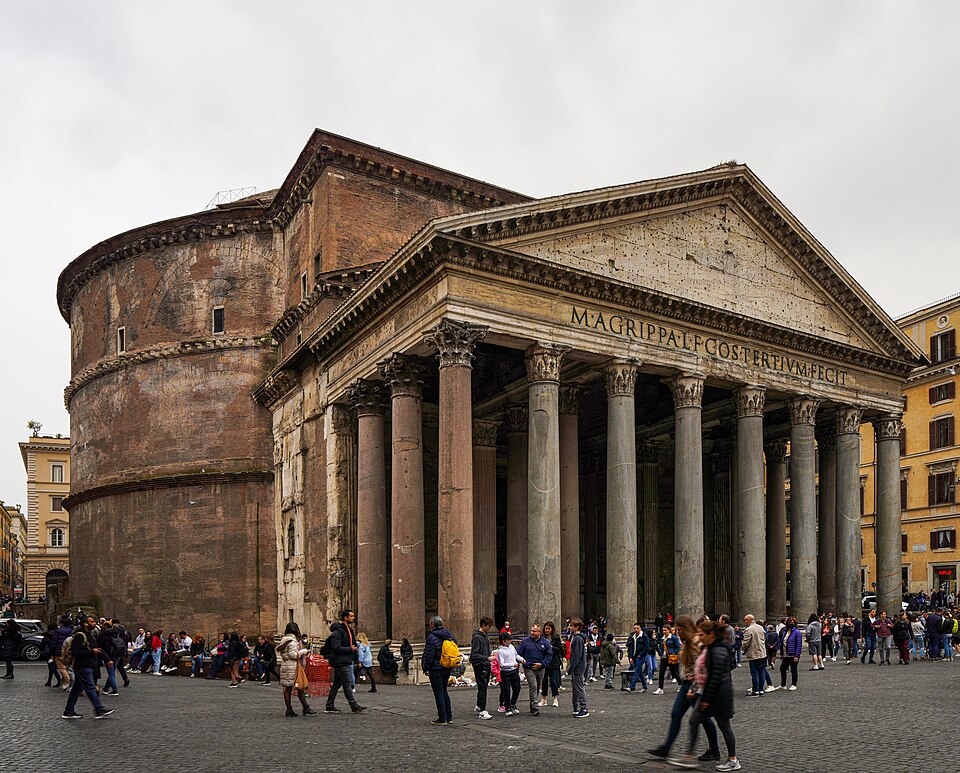
The Pantheon (UK: , US: ; Latin: Pantheum, from Ancient Greek Πάνθειον (Pantheion) '[temple] of all the gods') is an ancient Polytheist temple in Rome, Italy, originally built under Roman emperor Augustus (27 BC-AD 14) and reconstructed under Hadrian (117-138).
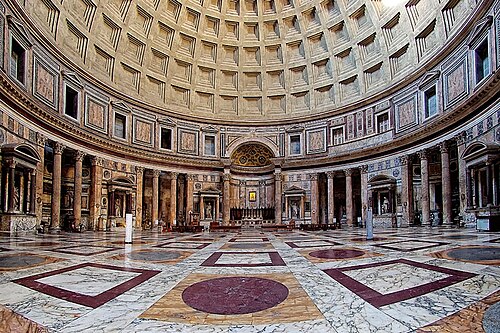
Since AD 609, it has served as the Roman Catholic Basilica of Saint Mary and the Holy Martyrs (Italian: Basilica di Santa Maria ad Martyres) with the special Pontifical privilege of immemorial status.
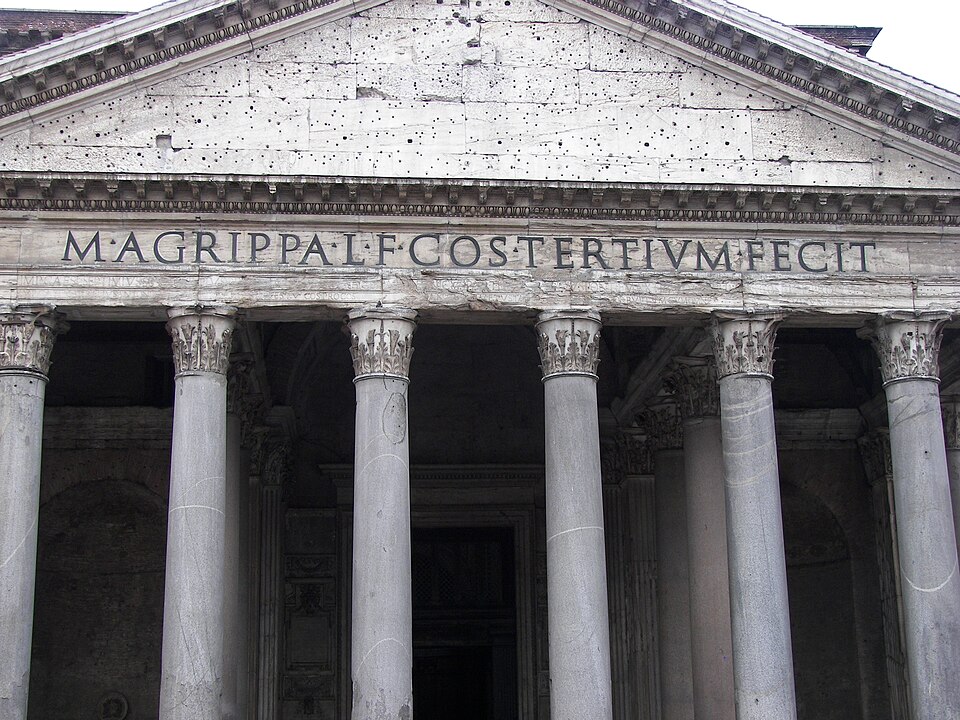
The Pantheon was built on the site of an earlier temple, which had been commissioned by Marcus Vipsanius Agrippa during the reign of Augustus. After the original burnt down, the present building was completed by the emperor Hadrian and probably dedicated c. AD 126. Its date of construction is uncertain, because Hadrian chose to re-inscribe the new temple with Agrippa's original date inscription from the older temple.
The building is round in plan, except for the portico with large granite Corinthian columns (eight in the first rank and two groups of four behind) under a pediment. A rectangular vestibule links the porch to the rotunda, which is under a coffered concrete dome made from Roman concrete (also called opus caementicium), with a central opening (oculus) to the sky. Almost two thousand years after it was built, the Pantheon's dome is still the world's largest unreinforced concrete dome. The height to the oculus and the diameter of the interior circle are the same, 43 metres (142 ft).
Further reading
Pantheon is one of the 3D puzzles in World Artifacts: turn a cloud of broken pieces until it lines up. For iPhone, iPad, Apple Vision Pro and Android.

