World Artifacts › Atlas › Italy
Pinocchio
In the original 1881 serial Pinocchio is hanged from an oak and the story ends there. Readers protested so loudly that Collodi brought him back to life and wrote the rest.
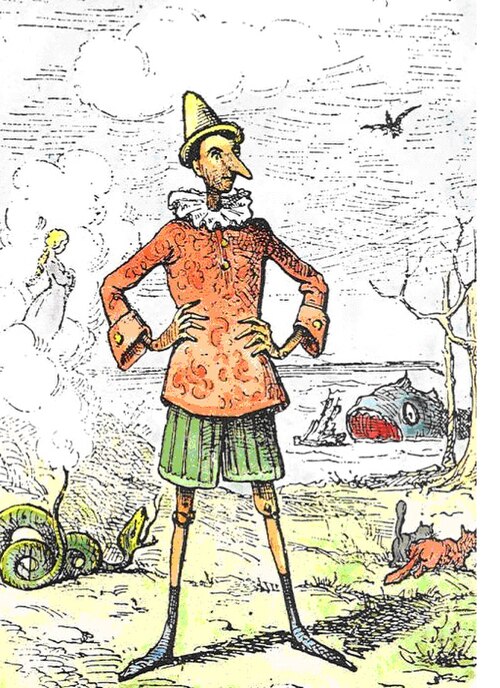
Pinocchio ( pin-OH-kee-oh, Italian: [piˈnɔkkjo]) is a fictional character and the protagonist of the children's novel The Adventures of Pinocchio (1881) by Italian writer Carlo Collodi of Florence, Tuscany. Pinocchio was carved by a poor man named Geppetto in a Tuscan village. He is created as a wooden puppet, but he dreams of becoming a real boy. He is known for his long nose, which grows when he lies.
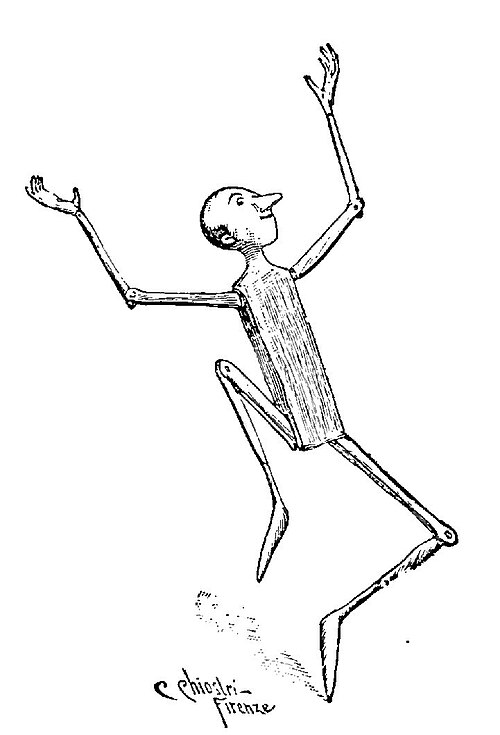
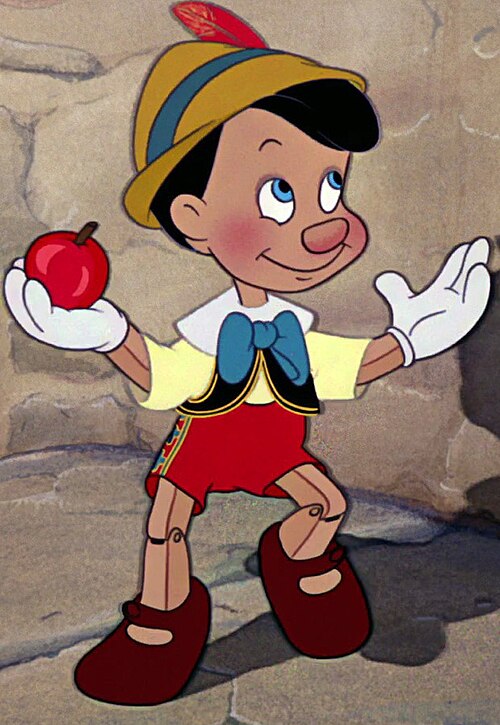
Pinocchio is a cultural icon and one of the most reimagined characters in children's literature. His story has been adapted into many other media, notably the 1940 Disney film Pinocchio. Collodi often used the Italian Tuscan dialect in his book. The name Pinocchio is possibly derived from the rare Tuscan form pinocchio ("pine nut") or constructed from pino ("pine tree, pine wood") and occhio ("eye").
Further reading
- Pinocchio, puppets, and modernity · Katia Pizzi (2011)A critical study of Pinocchio, puppets in literature and the character's place in modernity.Find a copy: AbeBooks · Amazon · WorldCat
- Le avventure di Pinocchio · Carlo Collodi (1883)Collodi's original Italian text of the Pinocchio story.Find a copy: AbeBooks · Amazon · WorldCat
Pinocchio is one of the 3D puzzles in World Artifacts: turn a cloud of broken pieces until it lines up. For iPhone, iPad, Apple Vision Pro and Android.

