World Artifacts › Atlas › Italy
Venice Gondola
A gondola is deliberately lopsided: it is wider on the right, so a single oar working on the right side drives it straight instead of turning it. It is also built with eight kinds of wood, each chosen for a different part.
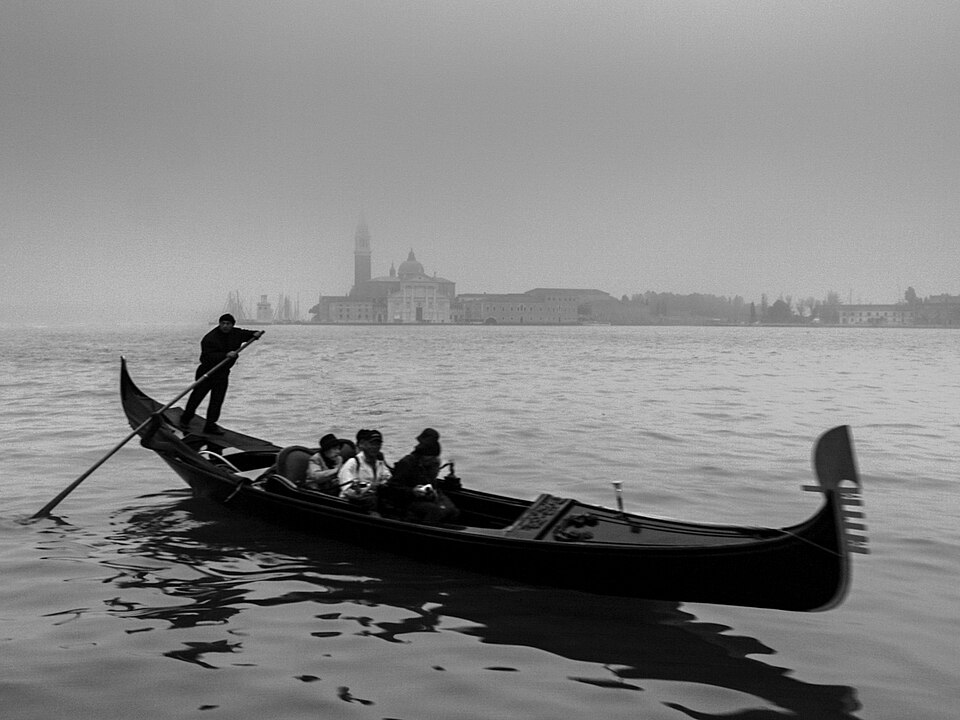
The gondola (English: , Italian: [ˈɡondola]; Venetian: góndoła, Venetian: [ˈɡoŋdoɰa]) is a traditional, flat-bottomed Venetian rowing boat, well suited to the conditions of the Venetian lagoon in Italy. It is typically propelled by a gondolier, who uses a rowing oar, which is not fastened to the hull, in a sculling manner, and also acts as the rudder. The uniqueness of the gondola includes its being asymmetrical along the length, making the single-oar propulsion more efficient.
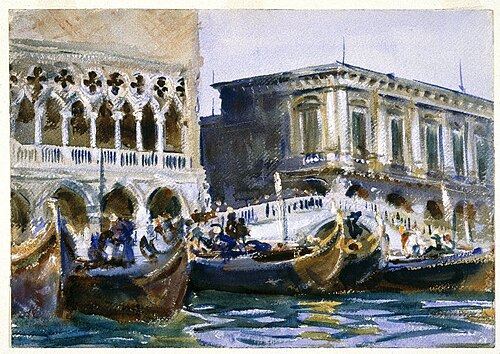
For centuries, the gondola was a major means of transportation and the most common watercraft within Venice. In modern times, the boats still do have a role in public transport in the city, serving as traghetti (small ferries) over the Grand Canal operated by two oarsmen.
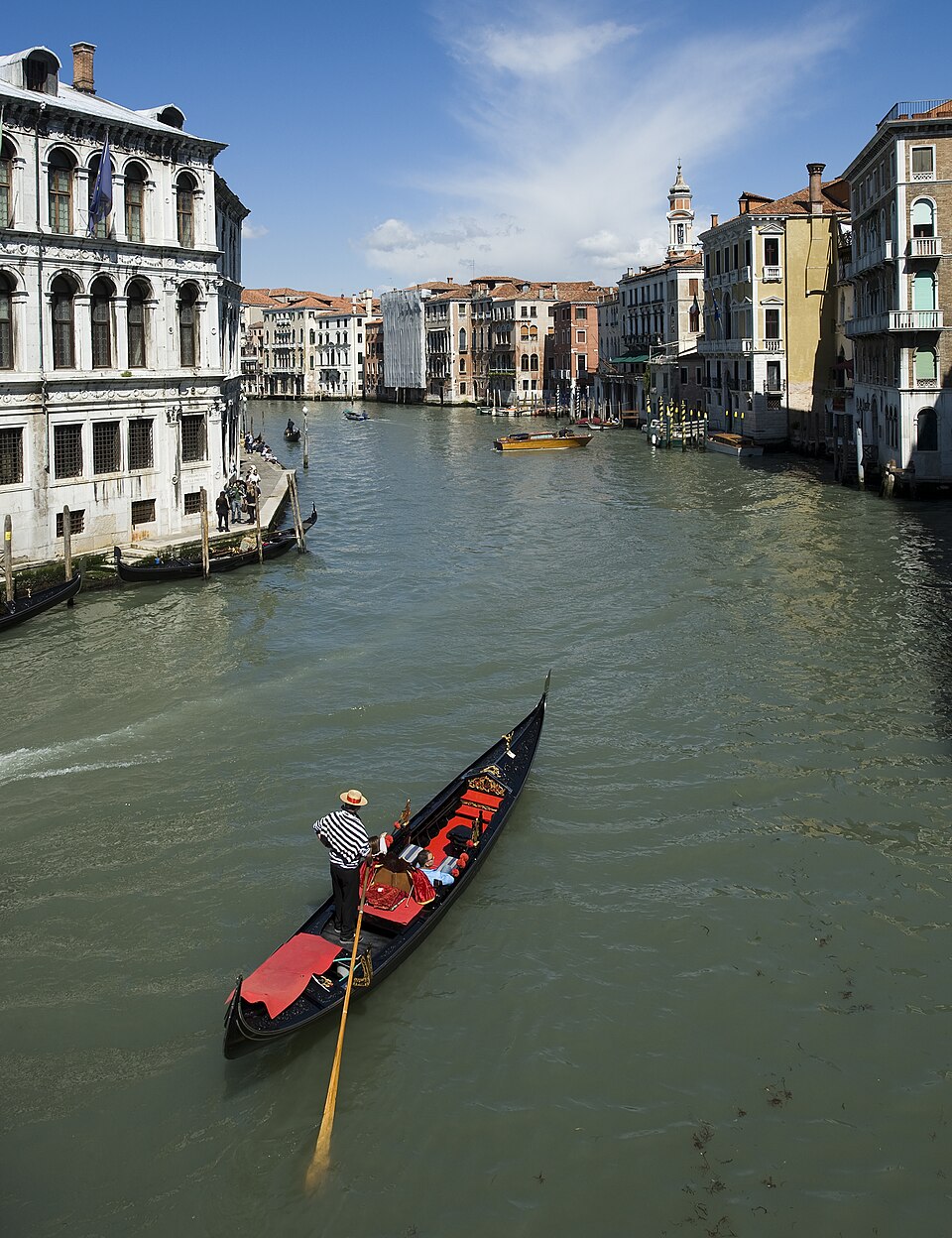
Various types of gondola boats are also used in special regattas (rowing races) held amongst gondoliers. Their primary role today, however, is to carry tourists on rides at fixed rates. There are approximately 400 licensed gondoliers in Venice and a similar number of boats, down from the thousands that travelled the canals centuries ago. However, they are now elegantly crafted, as opposed to the various types of homemade boats of the past.
Further reading
- Venice Master Artisans · Norbert Heyl (2006)Covers the master artisans and handicrafts of Venice.Find a copy: AbeBooks · Amazon · WorldCat
- Venetian ships and shipbuilders of the Renaissance · Frederic Chapin Lane (1934)A history of Venetian shipbuilding and shipbuilders in the Renaissance, including the arsenals.Find a copy: AbeBooks · Amazon · WorldCat
Venice Gondola is one of the 3D puzzles in World Artifacts: turn a cloud of broken pieces until it lines up. For iPhone, iPad, Apple Vision Pro and Android.

