World Artifacts › Atlas › Japan
Ema Plaque
People used to give real horses to shrines, which was ruinous, so they began giving wooden pictures of horses instead. The plaques are still horse-shaped in places, and they now carry wishes for exams, jobs and babies.
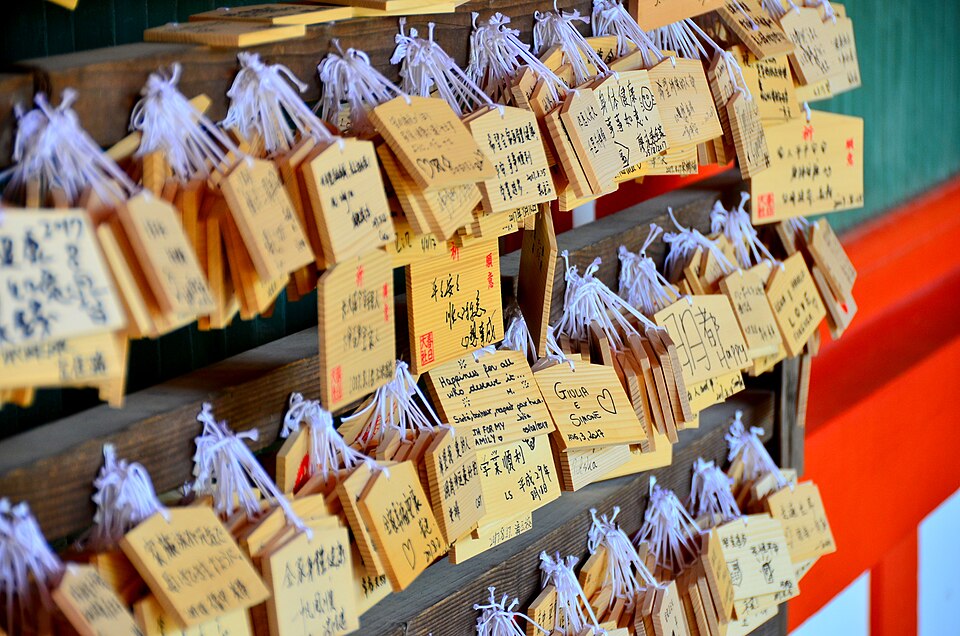
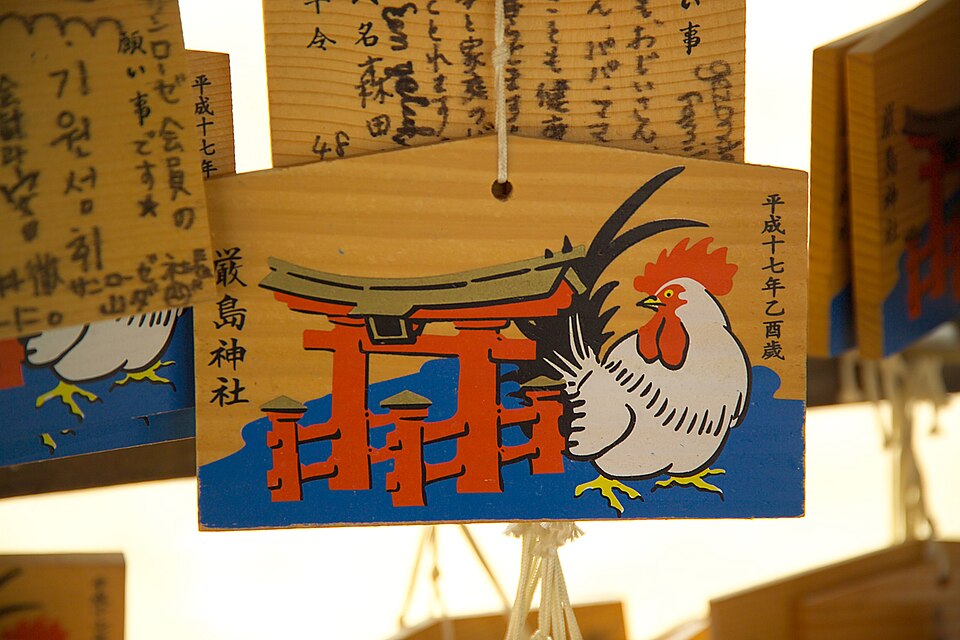
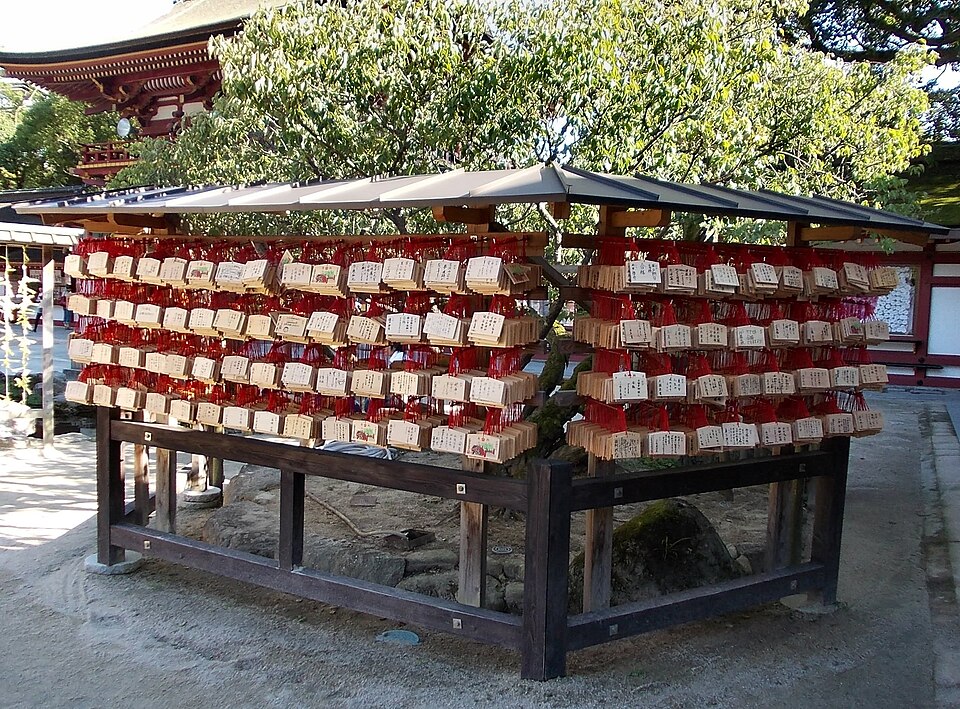
Ema (絵馬, lit. 'picture-horse') are small wooden plaques, common to Japan, in which Shinto and Buddhist worshippers write prayers or wishes. Ema are left hanging up at the shrine, where the kami (spirits or gods) are believed to receive them. This is particularly evident at shrines such as at the Ikoma Shrine, where ema more often than usual indicate great despair or tragedy in one's life and show a heavy dependence on divine intervention. However, ema have been hung up for many other purposes, such as advertisements for certain Kabuki groups at shrines such as Naritasan Shinshôji in the Chiba prefecture. Typically 15 cm (5.9 in) wide and 9 cm (3.5 in) tall, they often carry images or are shaped like animals, or symbols from the zodiac, Shinto, or the particular shrine or temple. In ancient times, people would donate horses to the shrines for good favor; over time this was transferred to a wooden plaque with a picture of a horse, and later still to the various wooden plaques sold today for the same purpose. Once inscribed with a wish, ema are hung at the shrine until they are ritually burned at special events, symbolic of the liberation of the wish from the writer. Ema can be hung up either for one's personal benefit, or the benefit of another. There is no specified format for creating ema. Typically, one side has the wishes inscribed in text, and the other is left for imagery should it be desired.
Further reading
Ema Plaque is one of the 3D puzzles in World Artifacts: turn a cloud of broken pieces until it lines up. For iPhone, iPad, Apple Vision Pro and Android.

