World Artifacts › Atlas › Japan
Emperor's Kanmuri
The black lacquered cap with a stiff tail at the back is court dress with a thousand years behind it, worn with robes whose colours were set by rank. It is still worn at enthronements.
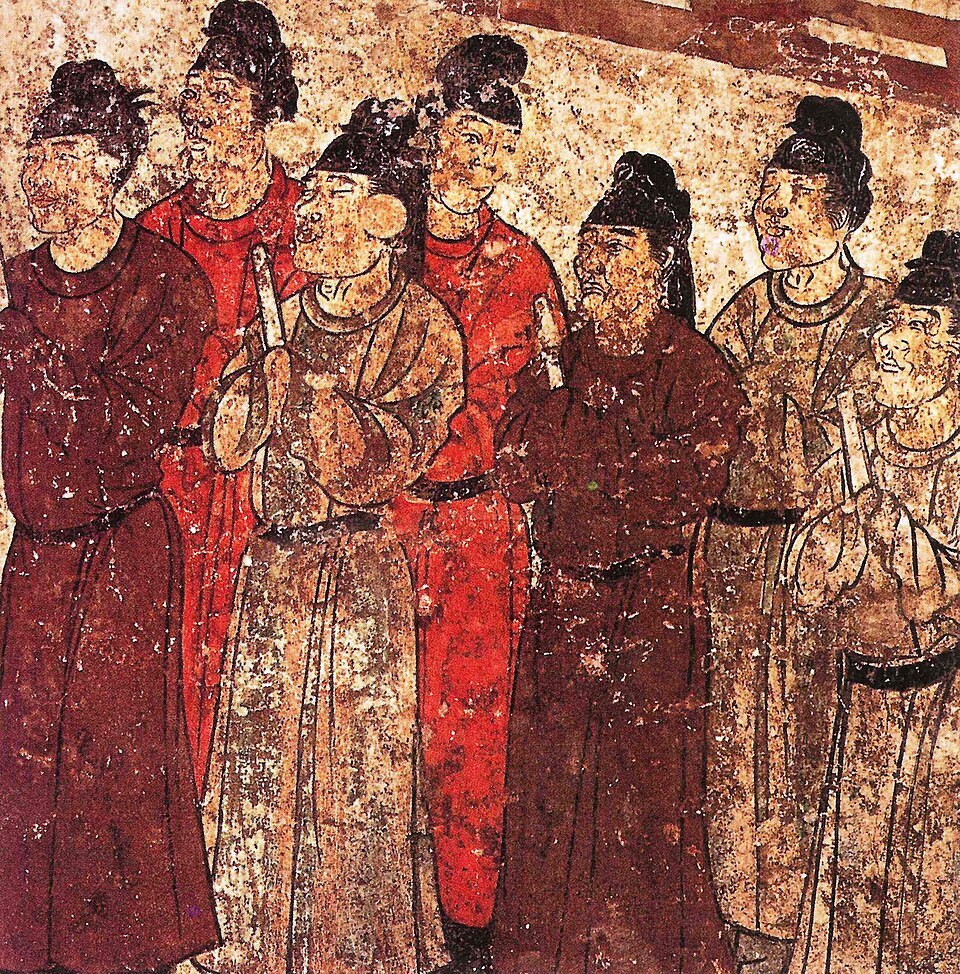
The sokutai (束帯; traditional form: 束帶) is the full formal attire worn by men at the Japanese imperial court from the Heian period (794-1185) onward. It was worn by the emperor, male members of the imperial family, and the court nobility at court ceremonies and while performing official duties. Among the warrior class, the shogun and other men holding the Fifth Court Rank or higher also wore it on major ceremonial occasions.
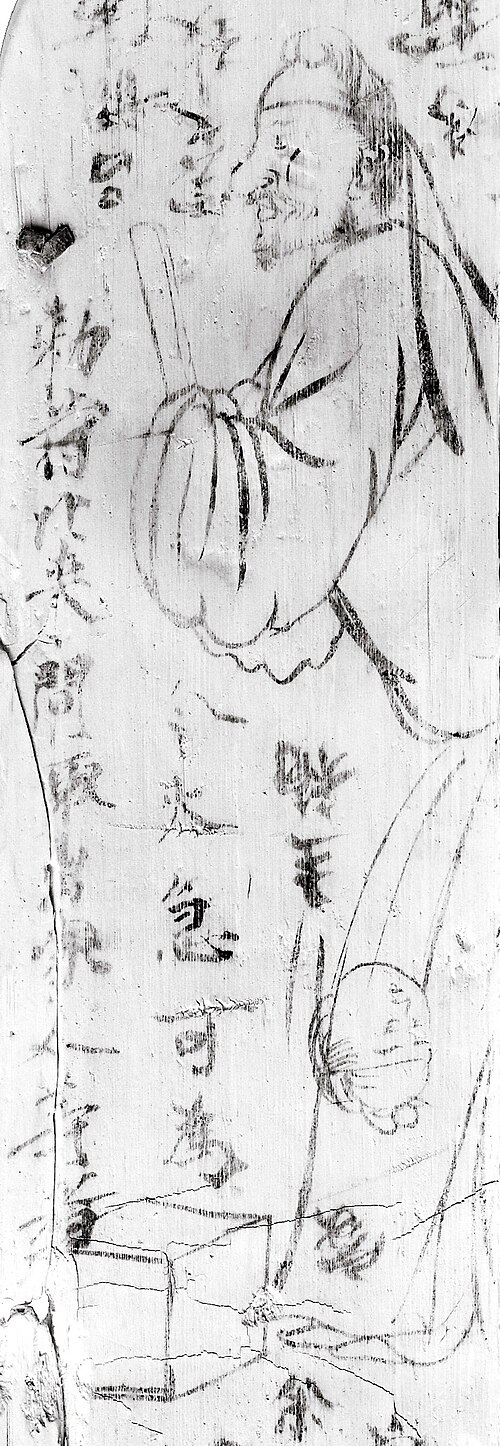
The sokutai developed from the male court dress known as chōfuku under the ritsuryō system, which was gradually adapted to Japanese court practice during the Heian period. It was classified as formal ceremonial attire (hare no shōzoku) and was also called hi no shōzoku, literally “daytime attire”. The latter name distinguished it from simplified forms of court dress, such as hōko (布袴), and from garments worn by courtiers remaining overnight on duty at the palace, particularly the ikan.
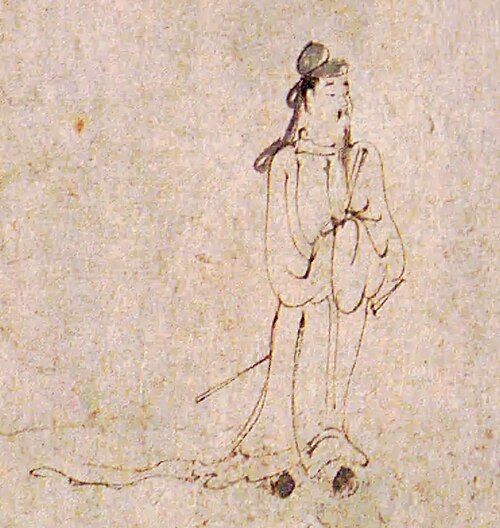
The term sokutai refers to the complete ensemble rather than to a single garment. Its principal components included the hō (outer robe), hanpi (short-sleeved under-robe), shitagasane (under-robe, often with a long train), akome (intermediate robe), hitoe (unlined inner robe), hakama (trousers), kanmuri (formal court cap), sekitai (decorated leather belt), and shaku (ritual baton). In its complete form, the ensemble included headgear, inner and outer garments, accessories, objects carried in the hand or worn at the waist, and footwear.
Further reading
Emperor's Kanmuri is one of the 3D puzzles in World Artifacts: turn a cloud of broken pieces until it lines up. For iPhone, iPad, Apple Vision Pro and Android.

