World Artifacts › Atlas › Japan
Five-Storey Pagoda
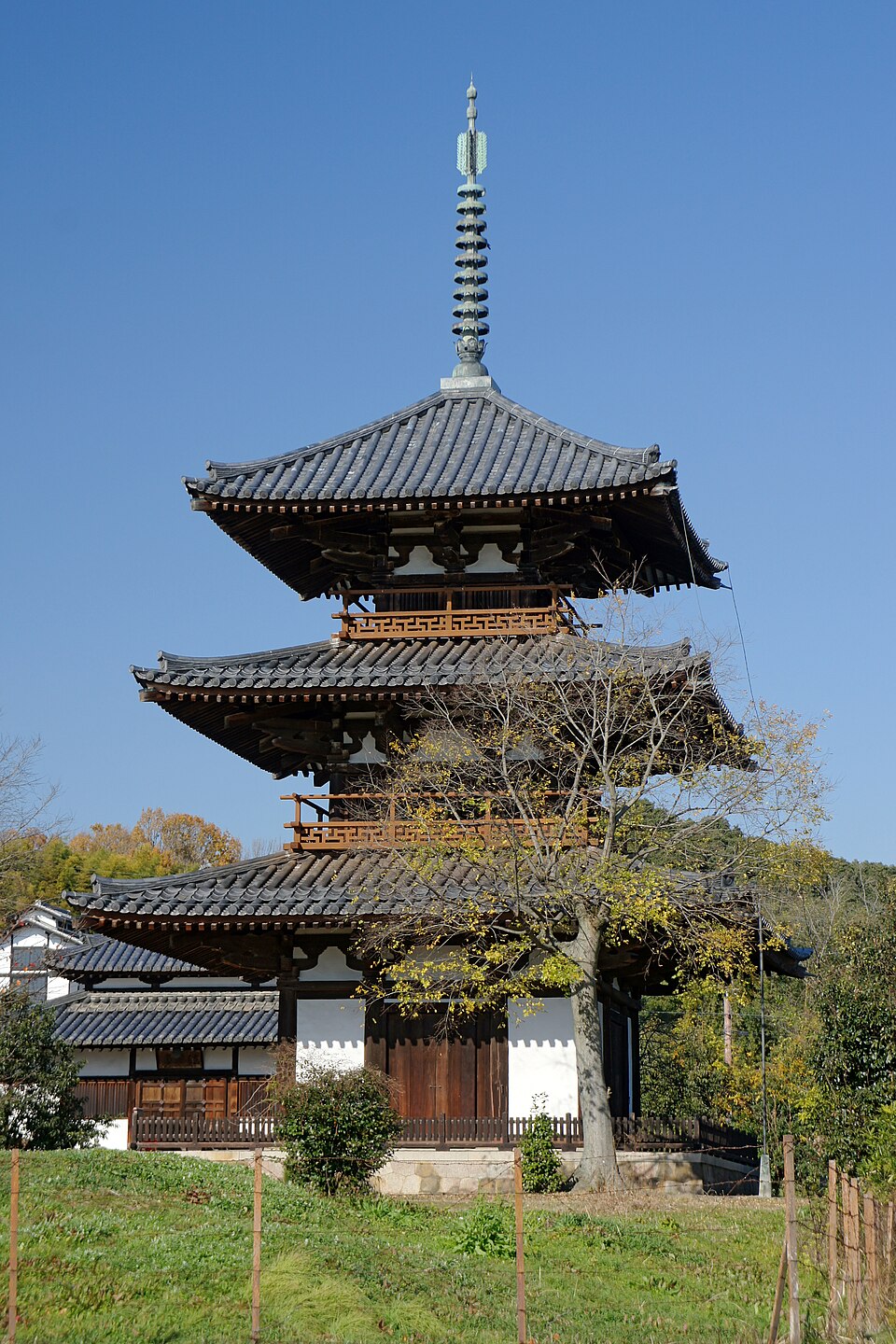
Pagodas survive earthquakes because the storeys are not fixed to each other: they slide and shift while a central pillar hangs down the middle like a pendulum. The engineers of the Skytree studied them and used the same trick.
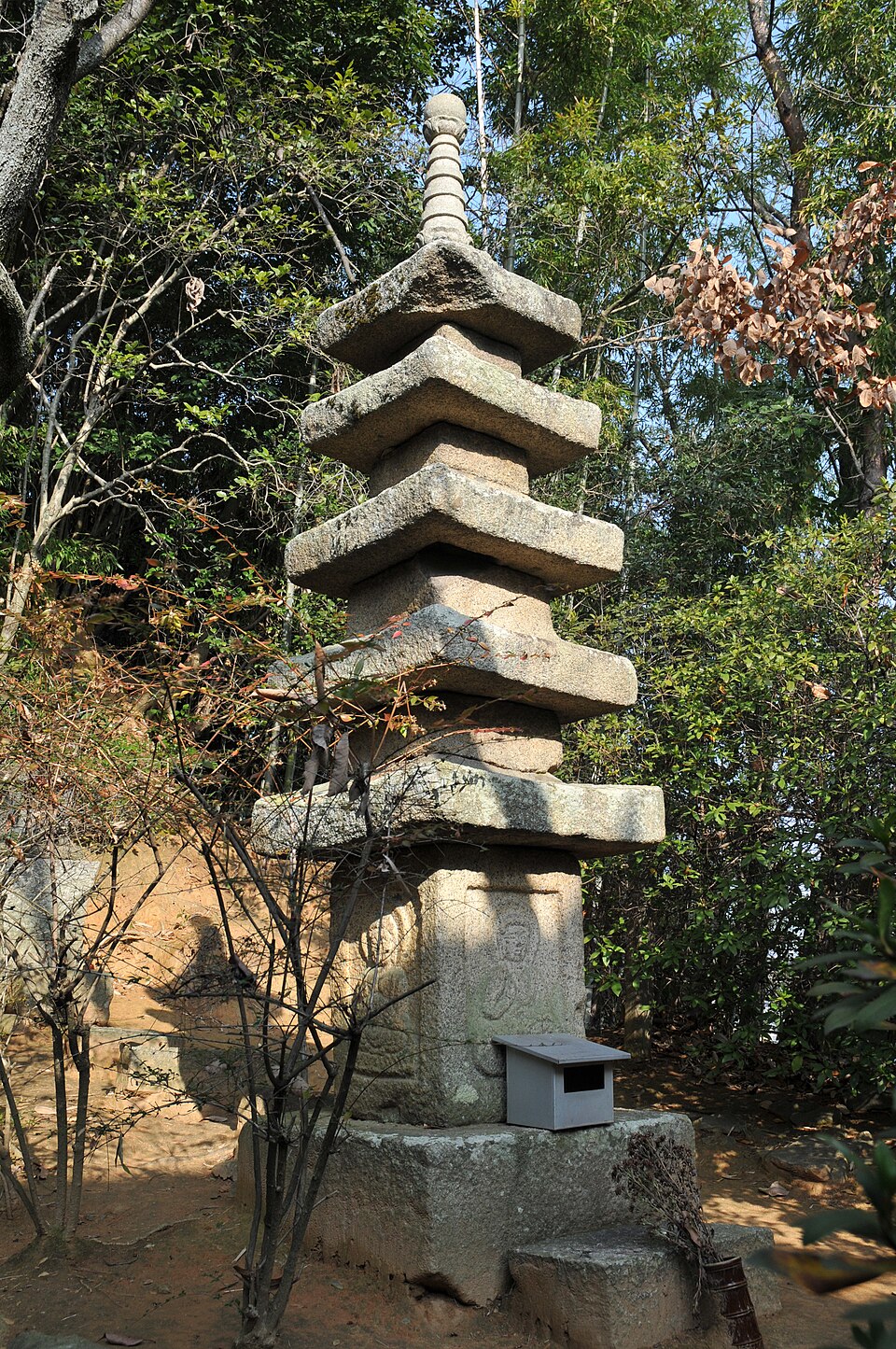
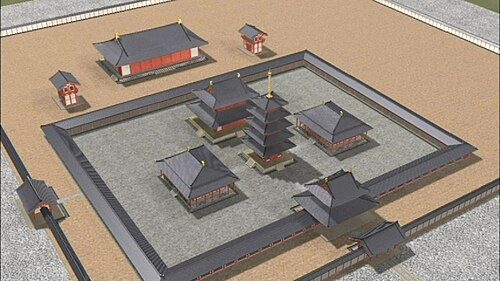
Pagodas in Japan are called tō (塔) lit. 'pagoda', sometimes buttō (仏塔; lit. Buddhist pagoda) or tōba (塔婆; lit. pagoda), and derive historically from the Chinese pagoda, itself an interpretation of the Indian stupa. Like the stupa, pagodas were originally used as reliquaries, but in many cases ended up losing this function. Pagodas are quintessentially Buddhist and an important component of Japanese Buddhist temple compounds but, because until the Kami and Buddhas Separation Act of 1868, a Shinto shrine was normally also a Buddhist temple and vice versa, they are not rare at shrines either. The famous Itsukushima Shrine, for example, has one. After the Meiji Restoration the word tō, once used exclusively in a religious context, came to mean also "tower" in the western sense, as for example in Eiffel Tower (エッフェル塔, Efferu-tō).
Further reading
- The evolution of Buddhist architecture in Japan · Alexander Coburn Soper (1942)A history of how Buddhist architecture developed in Japan.Find a copy: AbeBooks · Amazon · WorldCat
- Jisha kenchiku no kanshō kiso chishiki · Masaji Hamashima (1992)A study of temple and shrine architecture, covering pagodas, designs and plans, and history.Find a copy: AbeBooks · Amazon · WorldCat
Five-Storey Pagoda is one of the 3D puzzles in World Artifacts: turn a cloud of broken pieces until it lines up. For iPhone, iPad, Apple Vision Pro and Android.

