World Artifacts › Atlas › Japan
Fushimi Inari Gates
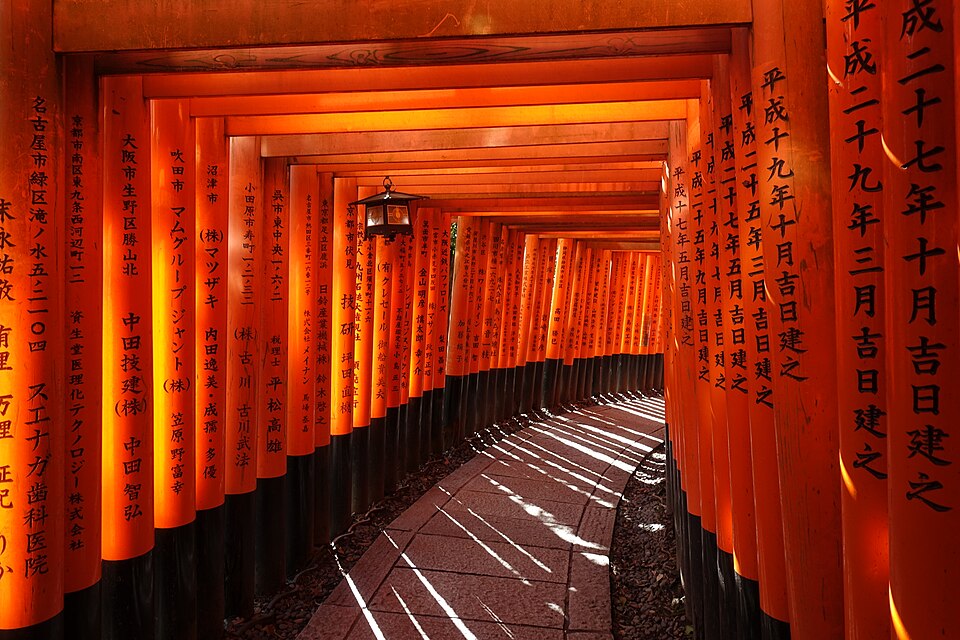
Each gate is paid for by a business, with the donor's name and the date painted on the back, so walking up the hill you see the prayers from one side and the invoices from the other.
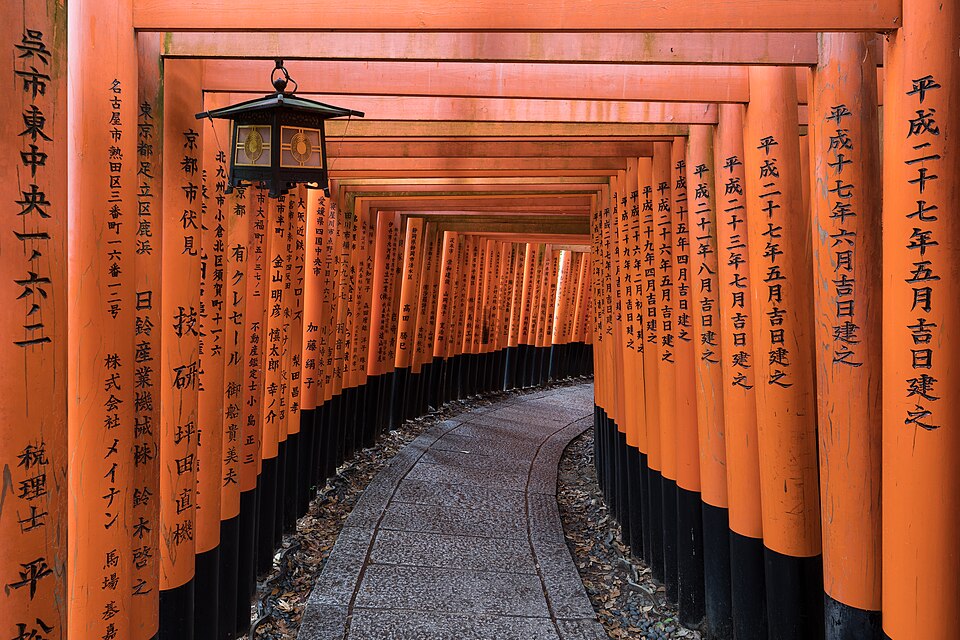
Fushimi Inari-taisha (Japanese: 伏見稲荷大社) is the head shrine of the kami Inari, located in Fushimi-ku, Kyoto, Japan. The shrine sits at the base of a mountain, also named Inari, which is 233 metres (764 ft) above sea level, and includes trails up the mountain to many smaller shrines which span 4 kilometres (2.5 mi) and take approximately 2 hours to walk up. It is unclear whether the mountain's name, Inariyama, or the shrine's name came first.
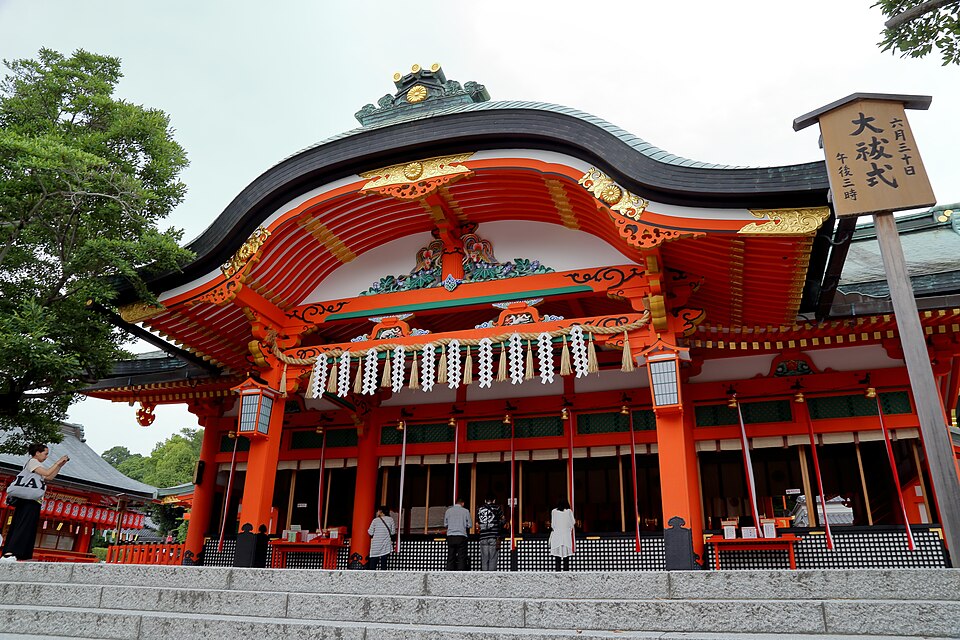
The shrine was formally founded in 711 CE by the Hata clan, an influential immigrant group from the Korean Peninsula. Inari was originally and remains primarily the kami of rice and agriculture, but merchants also worship Inari as the patron of business. Each of Fushimi Inari-taisha's roughly 10,000 torii were donated by a Japanese business, and approximately 800 of these are set in a row to form the Senbon Torii, creating the impression of a tunnel. The shrine is said to have ten thousand such gates in total that designate the entrance to the holy domain of kami and protect it against wicked forces.
Owing to the popularity of Inari's division and re-enshrinement, this shrine is said to have as many as 32,000 sub-shrines (分社 bunsha) throughout Japan.
Further reading
Fushimi Inari Gates is one of the 3D puzzles in World Artifacts: turn a cloud of broken pieces until it lines up. For iPhone, iPad, Apple Vision Pro and Android.

