World Artifacts › Atlas › Japan
Giant Salamander
The Japanese giant salamander reaches a metre and a half and can live over fifty years. It has almost no lungs worth the name and takes its oxygen through the folds of its skin, which is why it needs cold, fast water.
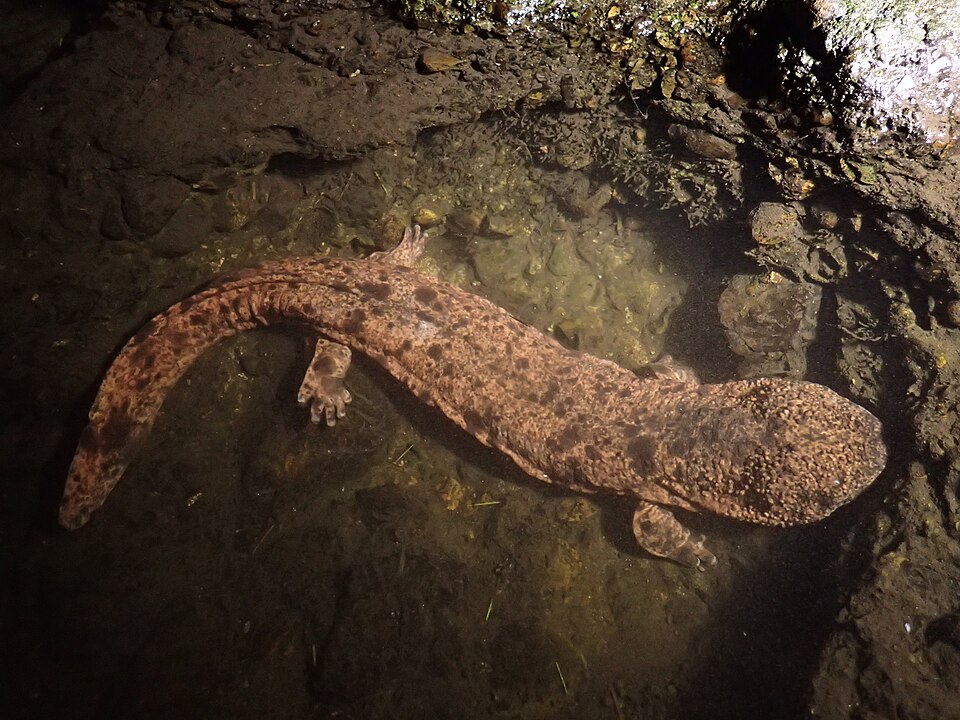
The Japanese giant salamander (Andrias japonicus) is a species of fully aquatic giant salamander endemic to Japan, occurring across the western portion of the main island of Honshu, with smaller populations present on Shikoku and in northern Kyushu. With a length of up to 5 feet (1.5 m), it is the third-largest salamander in the world, being surpassed only by the very similar and closely related Chinese giant salamander and the South China giant salamander.
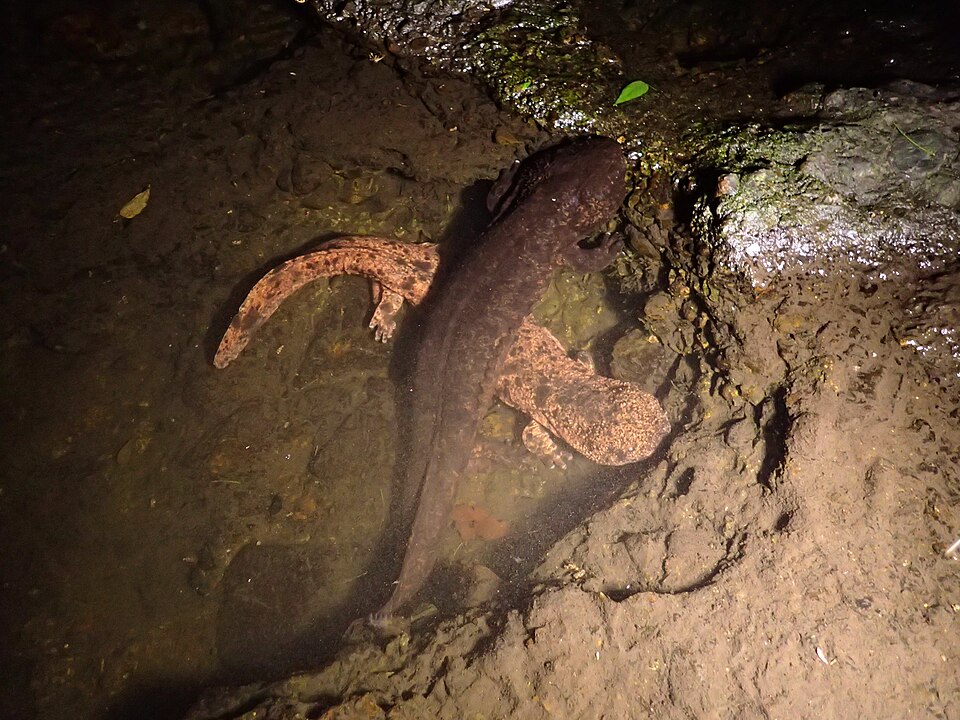
It is known in Japanese as ōsanshōuo (オオサンショウウオ/大山椒魚), literally meaning "giant salamander". Other local names include hanzaki, hanzake, and ankou. This salamander was first catalogued by Europeans when the resident physician of Dejima Island in Nagasaki, Philipp Franz von Siebold, captured an individual and shipped it back to Leiden in the Netherlands, in the 1820s. The species was designated as a special natural monument in 1951, and is protected by the Central Government. It is one of only six species of giant salamanders in the world.
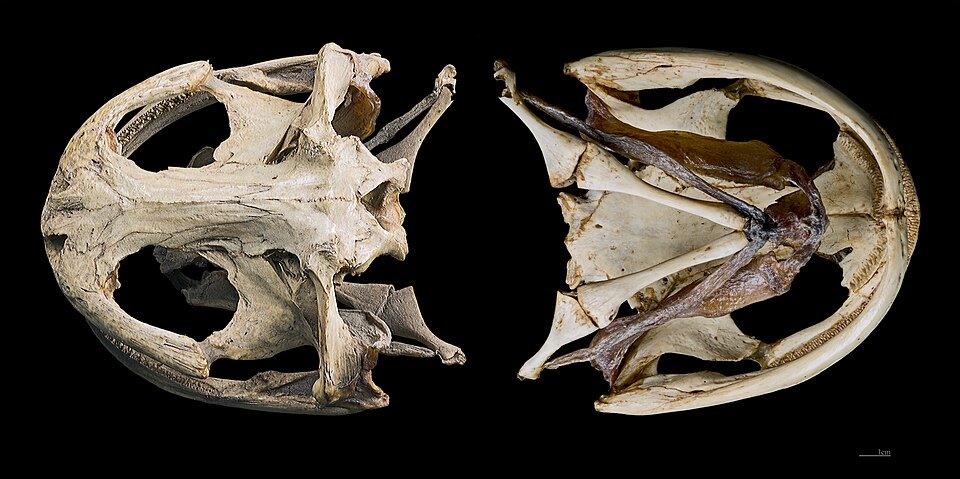
Giant Salamander is one of the 3D puzzles in World Artifacts: turn a cloud of broken pieces until it lines up. For iPhone, iPad, Apple Vision Pro and Android.

