World Artifacts › Atlas › Japan
Jizō Statue
Jizo protects travellers and, above all, dead children, who are believed to pile stones on a riverbank in the next world. The red bibs and hats are put on by parents, and a Jizo with a hundred bibs is a hundred families.
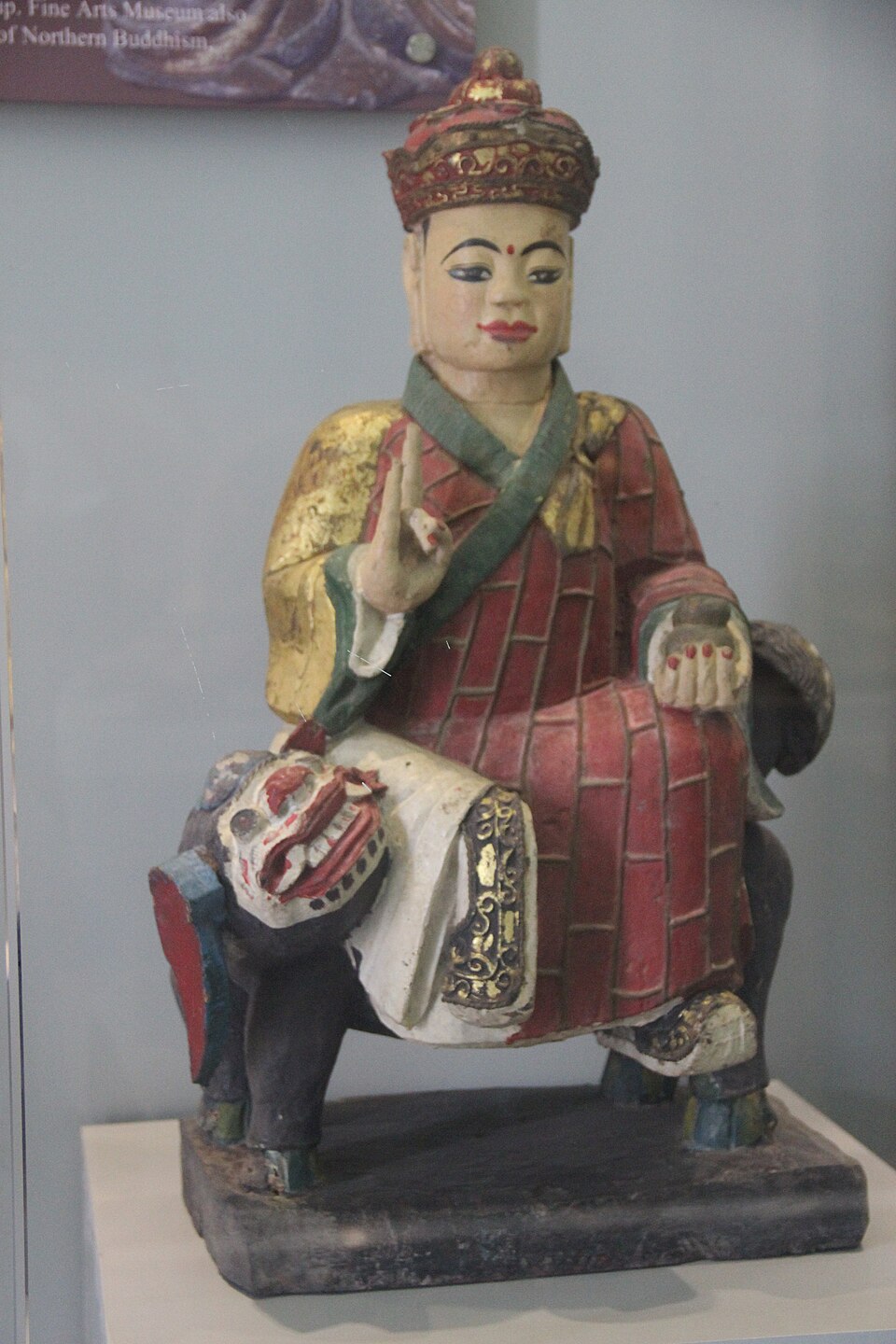
Kṣitigarbha (Sanskrit: क्षितिगर्भ, Chinese: 地藏; pinyin: Dìzàng; Japanese: 地蔵; rōmaji: Jizō; Korean: 지장 (地藏); romaja: Jijang; Vietnamese: Địa Tạng (地藏), Standard Tibetan: ས་ཡི་སྙིང་པོ་ Wylie: sa yi snying po) is a bodhisattva primarily revered in East Asian Buddhism and usually depicted as a Buddhist monk. His name may be translated as "Earth Treasury", "Earth Store", "Earth Matrix", or "Earth Womb". Kṣitigarbha is known for his vow to take responsibility for the instruction of all beings in the six worlds between the death of Gautama Buddha and the rise of Maitreya, as well as his vow not to achieve Buddhahood until all hells are emptied. He is therefore often regarded as the bodhisattva of hell-beings, as well as the guardian of children and patron deity of deceased children and aborted fetuses in Japanese culture.
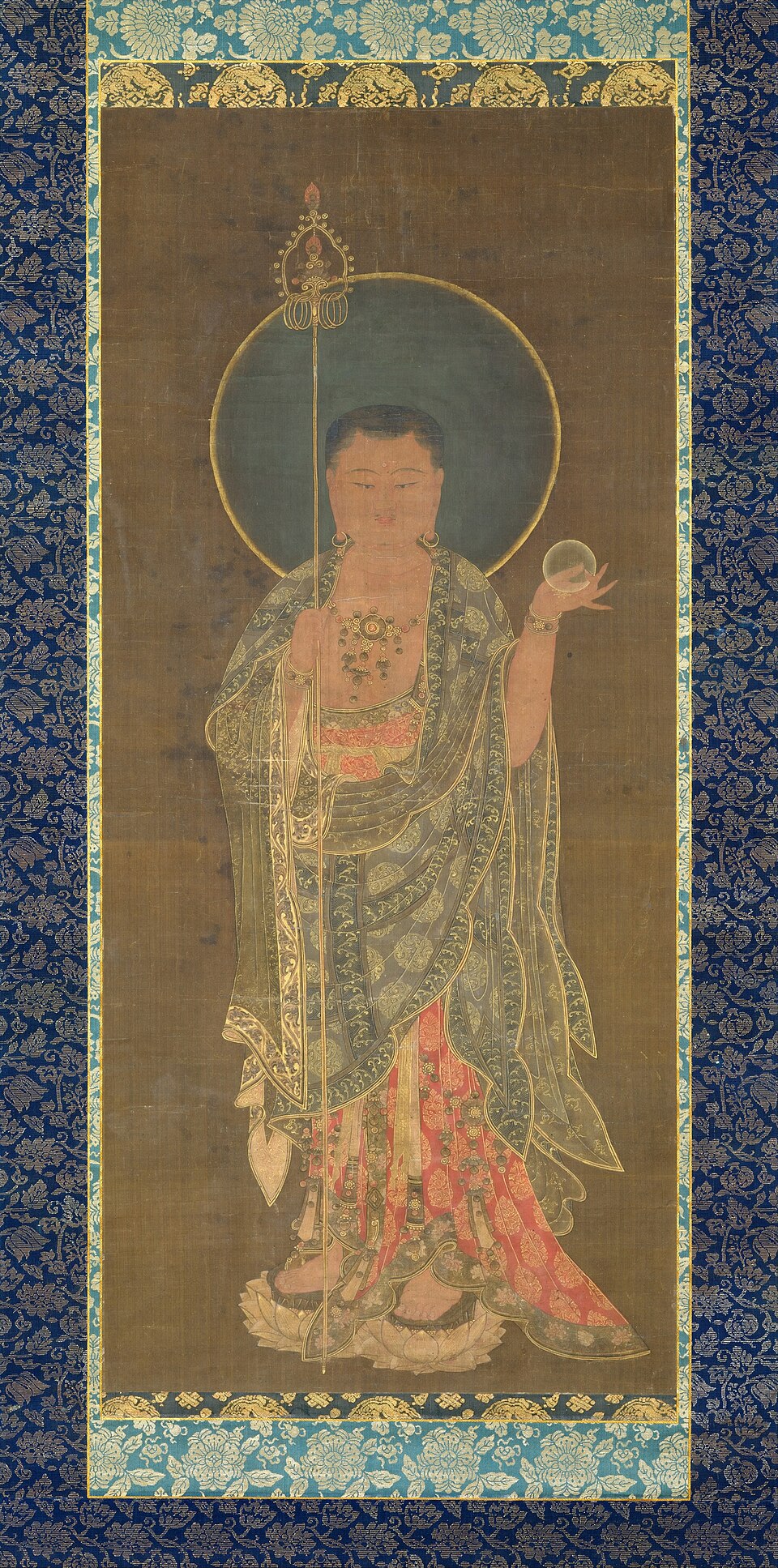
Usually depicted as a monk with either a halo or a crown bearing images of the Five Tathāgatas around his shaved head, he carries a staff to force open the gates of hell and a wish-fulfilling jewel to light up the darkness.
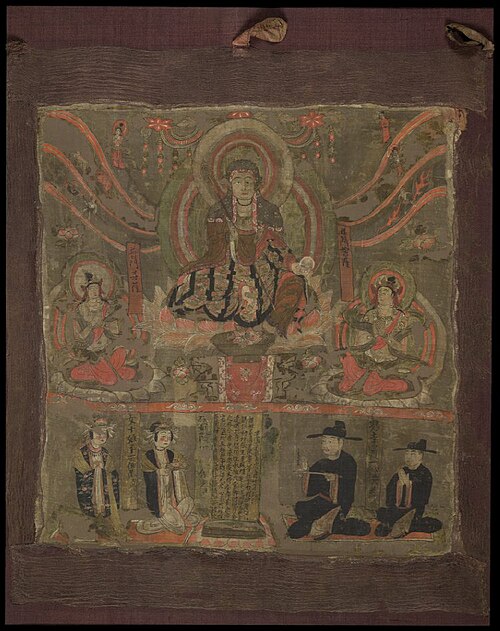
Further reading
Jizō Statue is one of the 3D puzzles in World Artifacts: turn a cloud of broken pieces until it lines up. For iPhone, iPad, Apple Vision Pro and Android.

