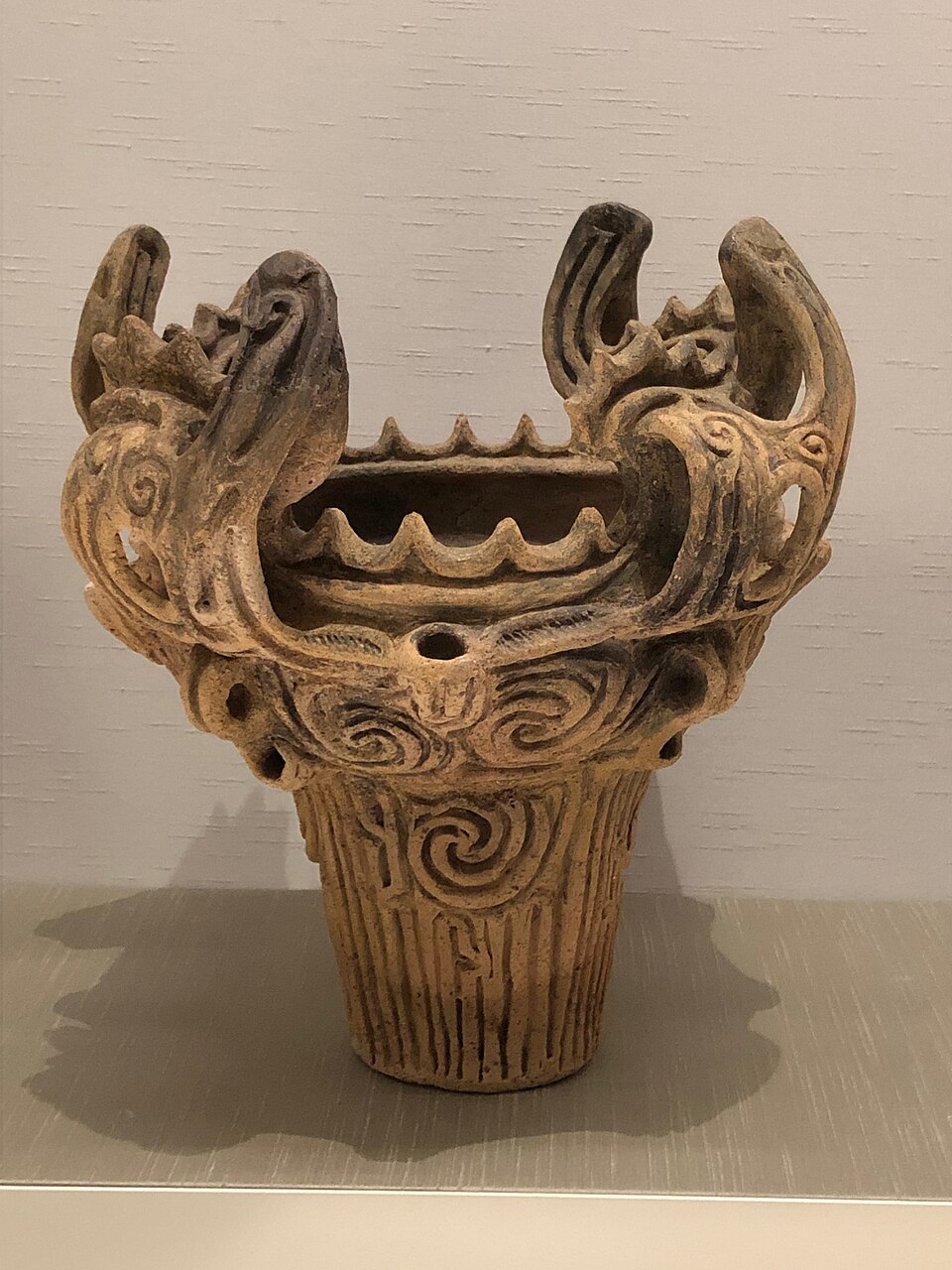
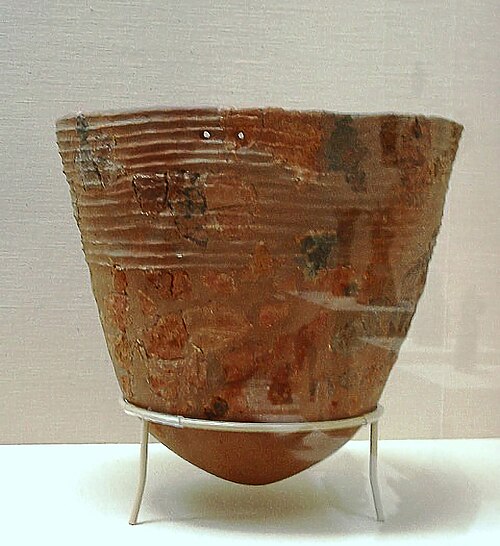
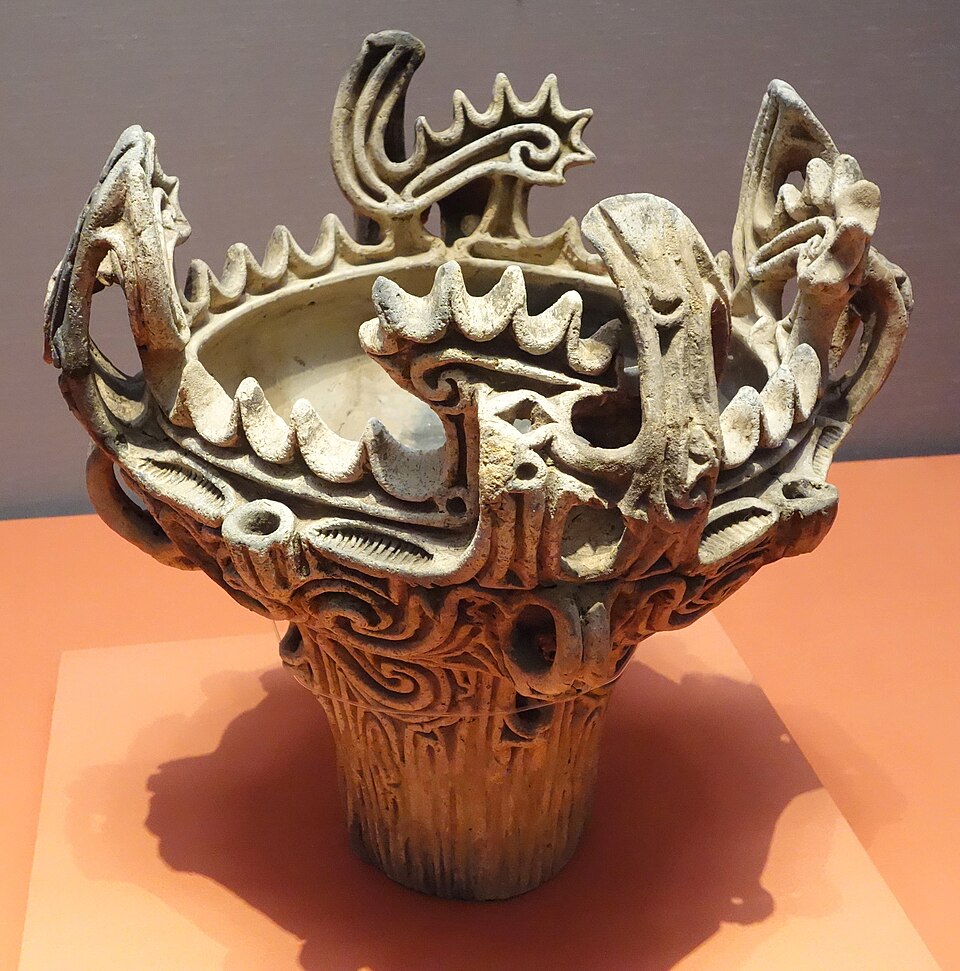
Jomon pottery is among the oldest in the world, older than farming in Japan, and it was made by hunter-gatherers who stayed in one place because the sea fed them. The flame rims serve no function anyone has been able to identify.
Jomon flame-style pottery, 3,000 BC, excavated at the Iwanohara site, Niigata PrefectureNetherzone · CC BY-SA 4.0 · Source
The Jōmon pottery (縄文土器, Jōmon doki) is a type of ancient earthenware pottery which was made during the Jōmon period in Japan. The term "Jōmon" (縄文) means "rope-patterned" in Japanese, describing the patterns that are pressed into the clay.
Ancient Jomon of Japan (Case Studies in Early Societies) · Junko Habu (2004)A case study of the ancient Jomon culture, covering its pottery, art and excavations.Find a copy: AbeBooks · Amazon · WorldCat
Jōmon Flame Pot is one of the 3D puzzles in World Artifacts: turn a cloud of broken pieces until it lines up. For iPhone, iPad, Apple Vision Pro and Android.