World Artifacts › Atlas › Japan
Kappa
The kappa has a dish of water on its head and loses its strength if it spills, so the advice is to bow to one: it will bow back and empty itself. It is also said to like cucumbers, which is why the cucumber sushi roll is named after it.
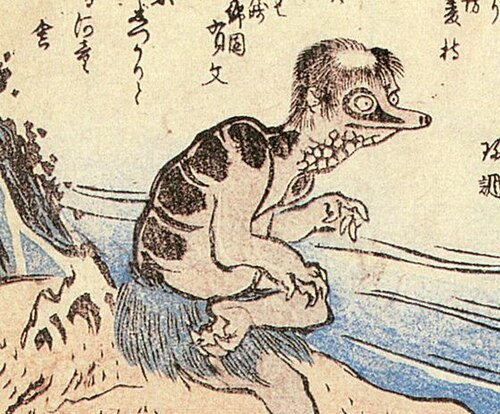
In Japanese folklore, the kappa (河童; "river-child") is a familiar type of water monster, considered one of three major yōkai. Kappa are said to be inhabiting the ponds and rivers of Japan. It is also known by various local names, including kawatarō (川太郎; "river-boy").
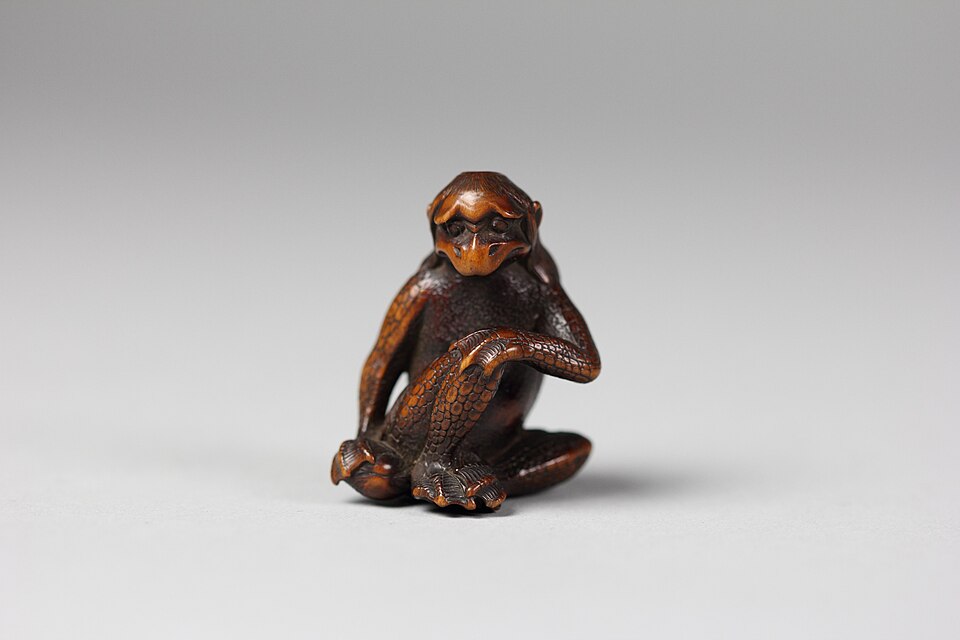
The kappa had been dangerous mankillers that drowned people, also targeting horses and cattle to be dragged into water. Later, they came to be depicted as mischievous beings which get punished (captured, having its arm severed, etc.), and in exchange of forgiveness, gratefully performed labor, or revealed a secret medicinal recipe (kappa's wonder drug).
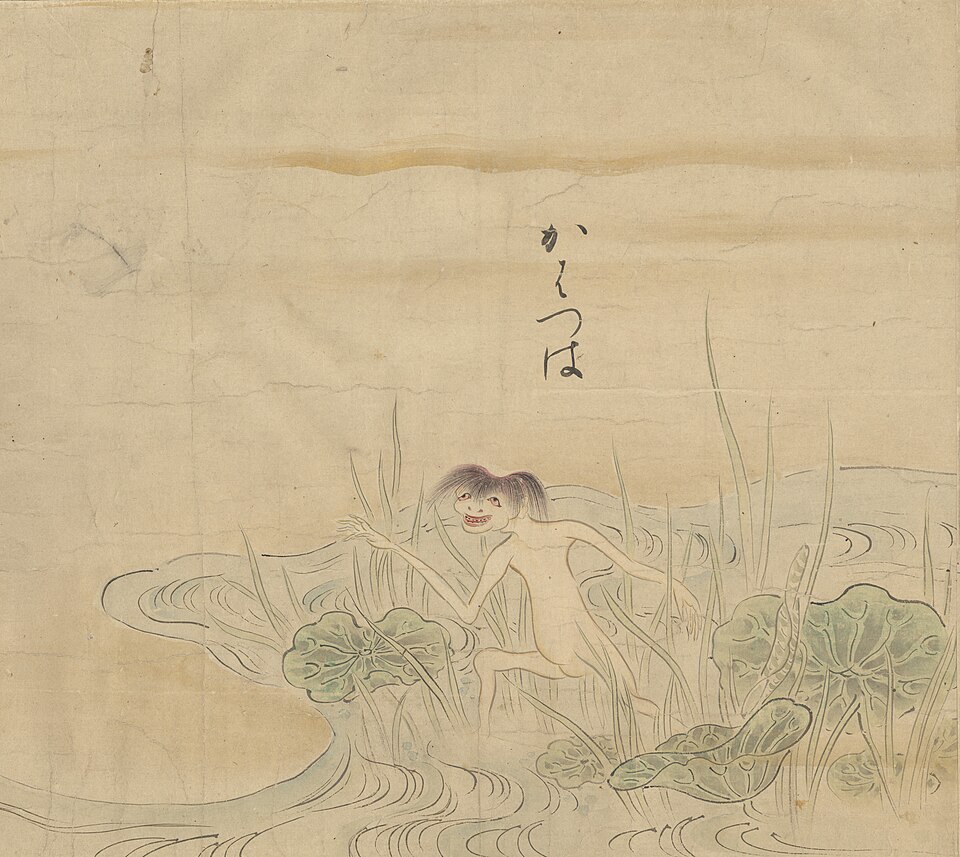
Accounts typically depict them as green, slimy (or scaly), human-like beings with webbed hands and feet and turtle-like carapaces on their backs. A depression on the head, called a "dish" (sara), retains water, and if this receptacle is damaged or if its liquid is spilled or dried, a kappa becomes severely weakened. The kappa favor cucumbers and love to engage in sumo-wrestling. They are often accused of assaulting humans in water and removing a mythical organ called the shirikodama (lit. "buttocks-wee-ball") from their victim's anus.
Further reading
- Myths & legends of Japan · F. Hadland Davis (1912)A collection of Japanese myths, legends, tales and folklore.Find a copy: AbeBooks · Amazon · WorldCat
- Pandemonium and Parade · Michael Dylan Foster (2008)Michael Dylan Foster's study of Japanese folklore and yōkai.Find a copy: AbeBooks · Amazon · WorldCat
Kappa is one of the 3D puzzles in World Artifacts: turn a cloud of broken pieces until it lines up. For iPhone, iPad, Apple Vision Pro and Android.

