World Artifacts › Atlas › Japan
Maneki-neko
The raised paw is beckoning in the Japanese gesture, palm out and fingers down. A right paw is said to bring money and a left to bring customers, which is why some shops keep one of each.
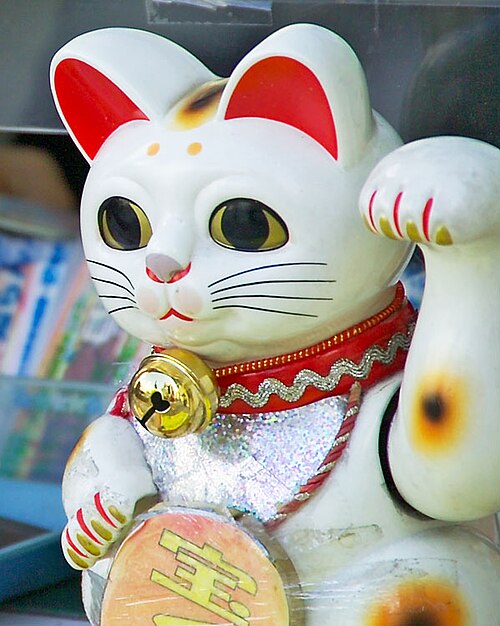
The maneki-neko (招き猫, lit. 'beckoning cat') is a common Japanese figurine which is often believed to bring good luck to the owner. In modern times, they are usually made of ceramic or plastic. The figurine depicts a cat, traditionally a calico Japanese Bobtail, with a paw raised in a beckoning gesture. The figurines are often displayed in shops, restaurants, pachinko parlors, dry cleaners, laundromats, bars, casinos, hotels, nightclubs, and other businesses, generally near the entrance, as well as households. Some maneki-neko are equipped with a mechanical paw that slowly moves back and forth.
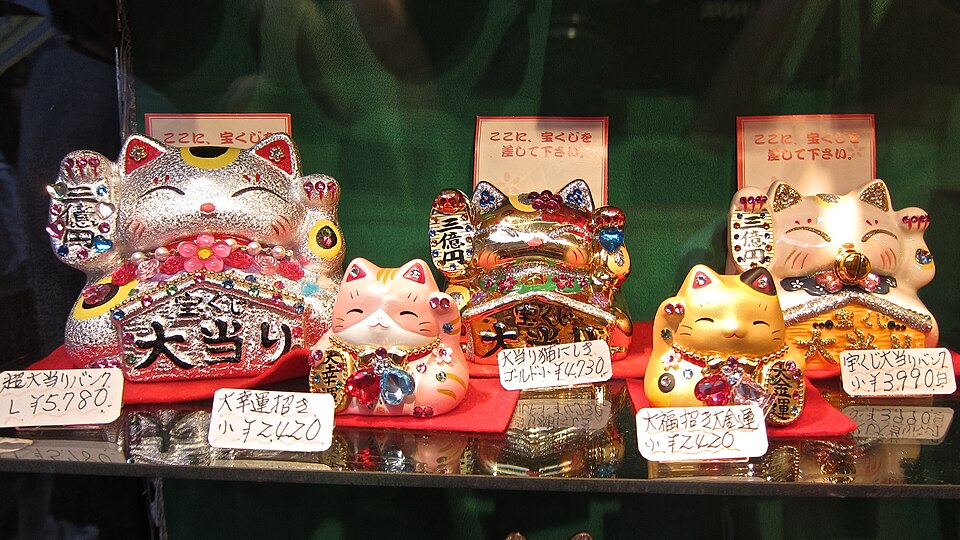
Maneki-neko come in different colors and styles and vary in degrees of detail. Common colors are white, black, red, and gold. In addition to statues, maneki-neko can be found in the form of keychains, piggy banks, air fresheners, pots, and numerous other media and merchandise. Maneki-neko are sometimes referred to simply as "lucky cats" or "calling cats".
Further reading
Maneki-neko is one of the 3D puzzles in World Artifacts: turn a cloud of broken pieces until it lines up. For iPhone, iPad, Apple Vision Pro and Android.

