World Artifacts › Atlas › Japan
Omikuji Rack
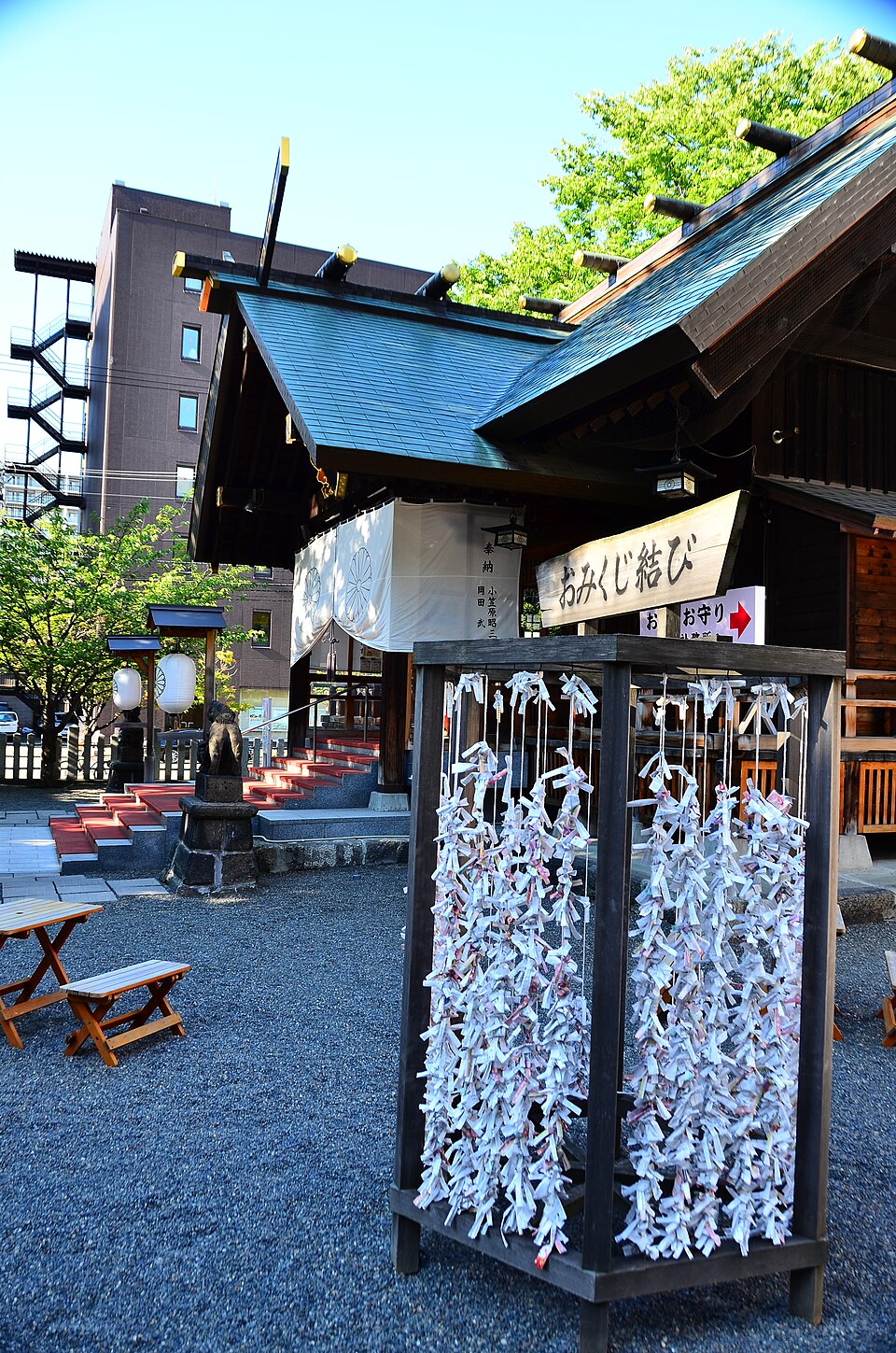
A fortune slip is drawn at random, and a bad one is tied to a rack or a pine branch and left at the shrine. The point is to leave the bad luck behind you rather than carry it home in your pocket.
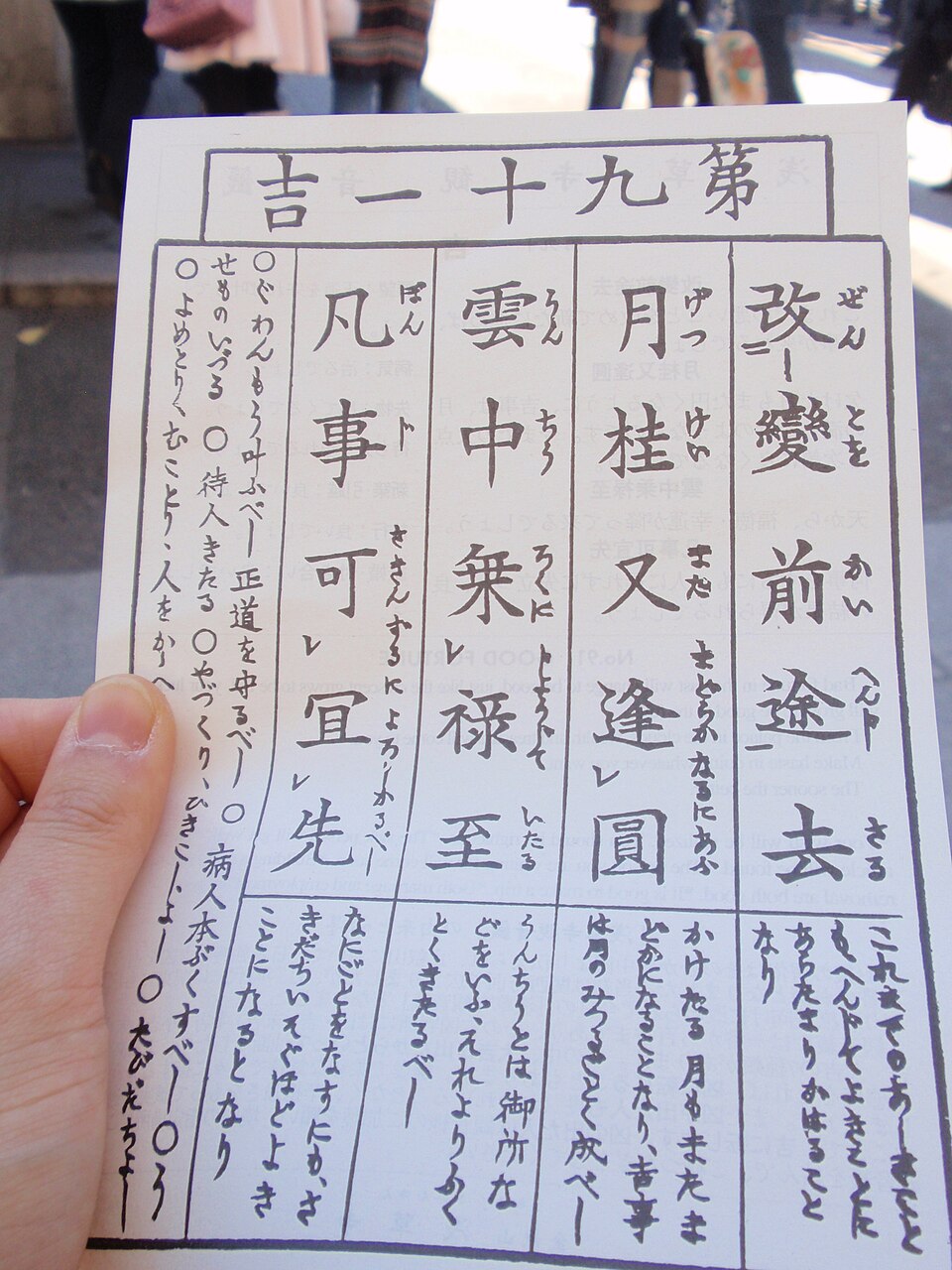
Omikuji (御御籤/御神籤/おみくじ) are random fortunes written on strips of paper at Shinto shrines and Buddhist temples in Japan. Literally "sacred lot", these are usually received by making a small offering and randomly choosing one from a box, hoping for the resulting fortune to be good. As of 2024, vending machines sometimes dispense omikuji.
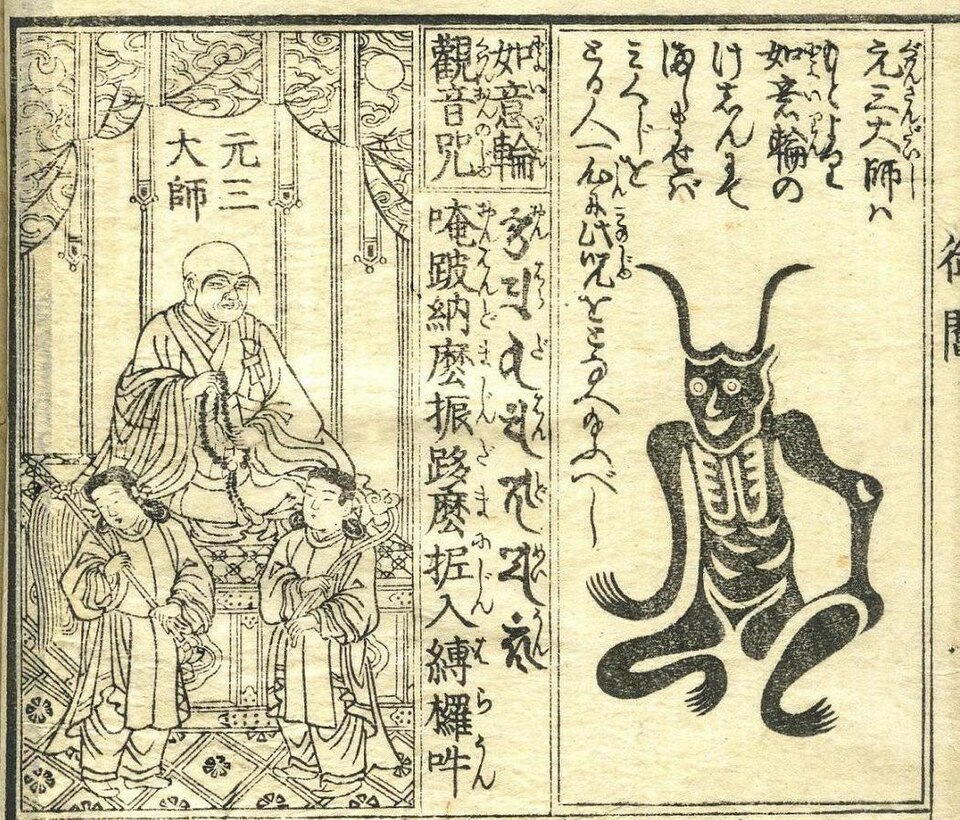
The omikuji predicts the person's chances of their hopes coming true, of finding a good match, or generally matters of health, fortune, life, etc. When the prediction is bad, it is a custom to fold up the strip of paper and attach it to a pine tree or a wall of metal wires alongside other bad fortunes in the temple or shrine grounds. A purported reason for this custom is a pun on the word for pine tree (松, matsu) and the verb 'to wait' (待つ, matsu), the idea being that the bad luck will wait by the tree rather than attach itself to the bearer. In the event of the fortune being good, the bearer has two options: they can also tie it to the tree or wires so that the fortune has a greater effect or they can keep it for luck. Omikuji are available at many shrines and temples, and remain one of the traditional activities related to shrine or temple-going.
Further reading
- Practically Religious · Ian Reader (1998)Ian Reader's Practically Religious, a study of religious practice in Japan.Find a copy: AbeBooks · Amazon · WorldCat
- Shinto, the Kami way · Sokyo Ono (1960)An introduction to Shinto, the indigenous faith of Japan, whose shrines host omikuji.Find a copy: AbeBooks · Amazon · WorldCat
Omikuji Rack is one of the 3D puzzles in World Artifacts: turn a cloud of broken pieces until it lines up. For iPhone, iPad, Apple Vision Pro and Android.

