World Artifacts › Atlas › Japan
Onigiri
The wrapper on a shop-bought onigiri is a small piece of engineering: the seaweed is sealed in its own layer and only meets the rice when you pull the tab, so it is still crisp when you bite it.
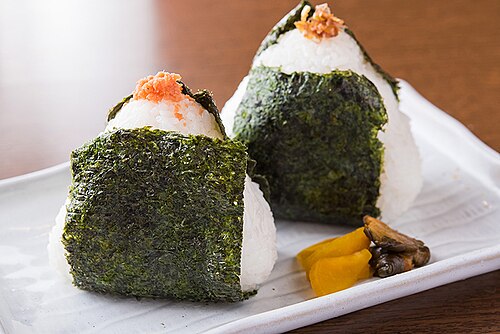
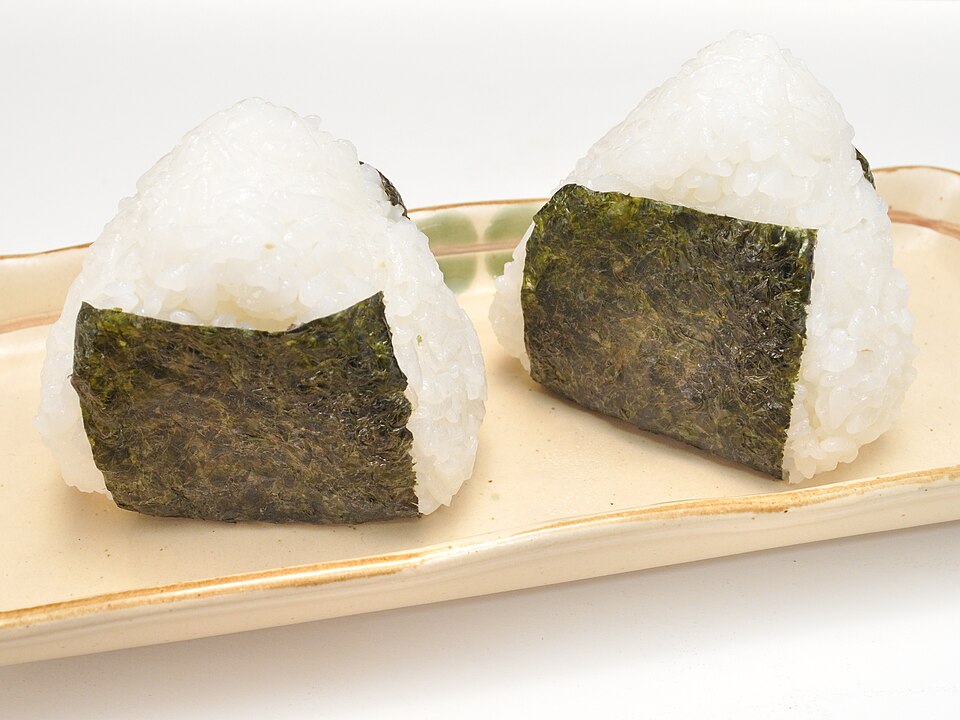
Onigiri (おにぎり, お握り or 御握り), also known as omusubi (おむすび or お結び) or nigirimeshi (握り飯), is a Japanese rice ball made from white rice. It is usually formed into triangular or cylindrical shapes, and wrapped in nori (seaweed). While modern onigiri can be filled with a wide variety of ingredients, including both savory and sweet fillings, traditional fillings are often salty or sour, such as salted salmon, umeboshi (pickled Japanese plum), katsuobushi (smoked and fermented bonito), kombu tsukudani (sweet simmered kelp), tarako or mentaiko (pollock roe), or takanazuke (pickled Japanese mustard greens). Because it is easily portable and eaten by hand, onigiri has been used as portable food or bento from ancient times to the present day.

Originally, it was used as a way to use and store left-over rice, but it later became a regular meal. Many Japanese convenience stores and supermarkets stock onigiri with various fillings and flavors. It has become so mainstream that it is even served in izakayas and sit-down restaurants. There are even specialized shops which only sell onigiri to take out. Due to the popularity of this trend in Japan, onigiri has become a popular staple in Japanese restaurants worldwide.
Further reading
- Simply onigiri · Sanae Inada (2012)A cookbook devoted to onigiri, Japanese rice balls.Find a copy: AbeBooks · Amazon · WorldCat
- The history and culture of Japanese food · Ishige, Naomichi (2001)A history of Japanese food, covering food habits and social life and customs.Find a copy: AbeBooks · Amazon · WorldCat
Onigiri is one of the 3D puzzles in World Artifacts: turn a cloud of broken pieces until it lines up. For iPhone, iPad, Apple Vision Pro and Android.

