World Artifacts › Atlas › Japan
Samurai Armour
The armour is lacquered plates laced together with silk cord, light enough to fight and ride in, and the lacing had to be dried out after rain or it rotted. The crests on the helmet were for recognition, since a face in a mask is anonymous.
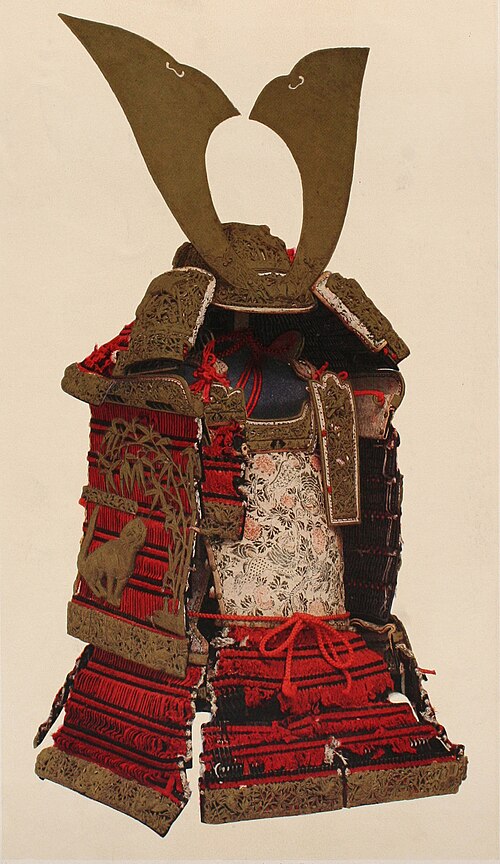
Japanese armour first appeared in the 4th century, as evidenced by the discovery of cuirasses and basic helmets in graves.
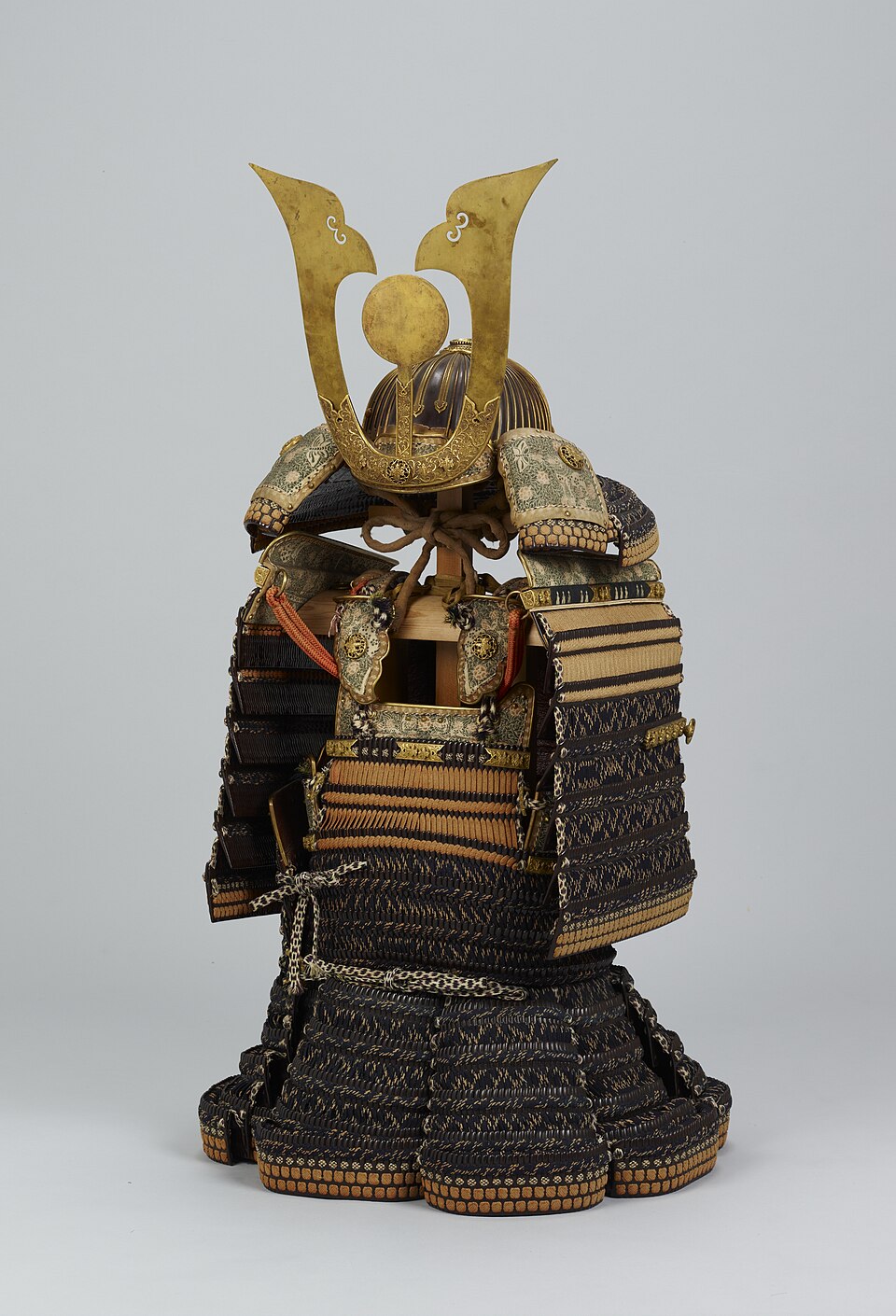
During the Heian period (794-1185), the unique Japanese samurai armour ō-yoroi and dō-maru appeared. The Japanese cuirass evolved into the more familiar style of body armour worn by the samurai known as the dō, with the use of leather straps (nerigawa) and Japanese lacquerware for weatherproofing. Leather and/or iron scales were also used to construct samurai armours, with leather and eventually kumihimo (braided silk) used to connect the individual scales (kozane) of the cuirass.
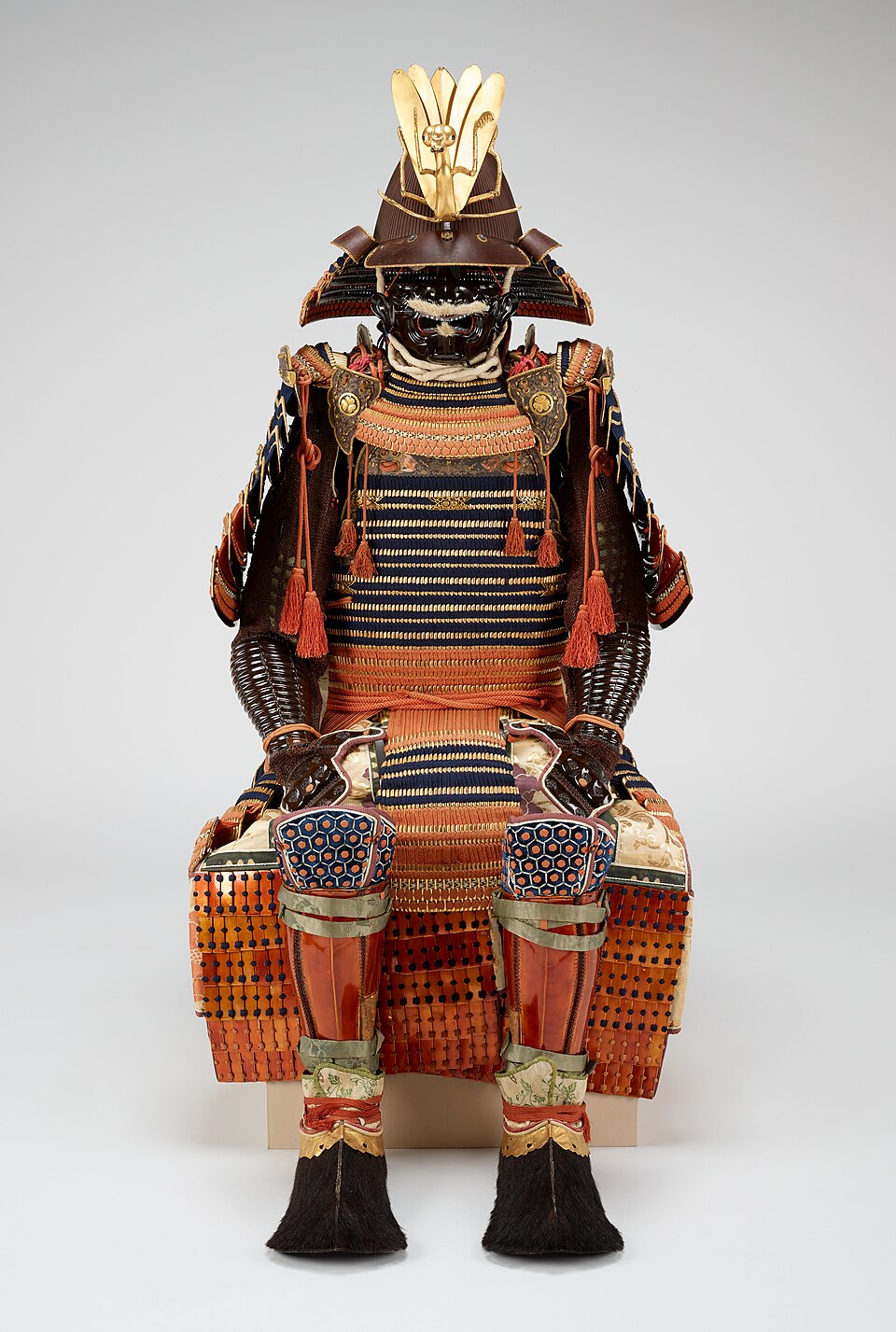
The Sengoku period had created new armies of ashigaru, lightly-armoured peasant soldiers armed with long spears. Japan also began trading with European powers, principally the Portuguese Empire, which is known as the Nanban trade. Matchlock guns were sold to the Japanese in the 1500s, who rapidly improved them. These new tanegashima guns were mass-produced domestically. The combination of these two things meant samurai needed much lighter and simpler armour with different defensive qualities; this new style was called tosei-gusoku "modern armour".
When a unified Japan entered the peaceful Edo period, samurai continued to wear both plate and lamellar armour as symbols of their status.
Further reading
- Samurai armour · Trevor Absolon (2017)A pictorial book on samurai armour, including its history and collecting.Find a copy: AbeBooks · Amazon · WorldCat
- Japanese arms & armour · H. Russell Robinson (1969)A history of Japanese arms and armour, with catalogued examples.Find a copy: AbeBooks · Amazon · WorldCat
Samurai Armour is one of the 3D puzzles in World Artifacts: turn a cloud of broken pieces until it lines up. For iPhone, iPad, Apple Vision Pro and Android.

