World Artifacts › Atlas › Japan
Taiko Drum
A taiko is played with the whole body, and the great drums were once used to mark the edge of a village: the boundary lay as far as the drum could be heard. They were also used to give the beat of work and to frighten insects out of the fields.
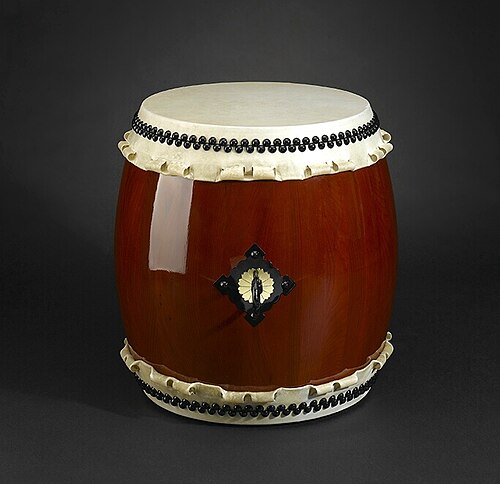
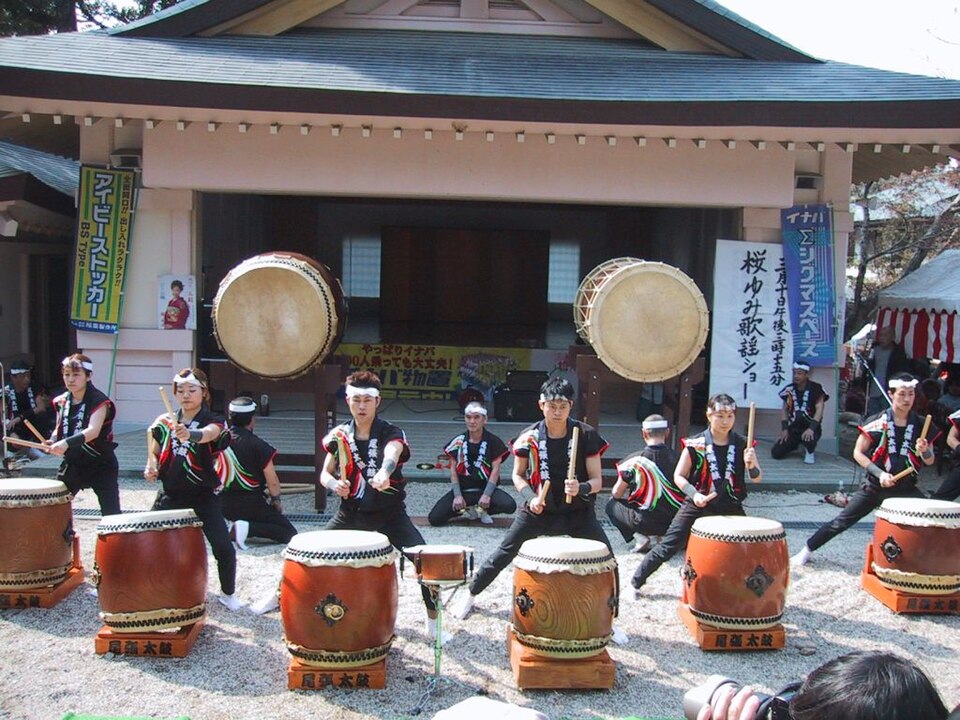
Taiko (太鼓) are a broad range of Japanese percussion instruments. In Japanese, the term taiko refers to any kind of drum, but outside Japan, it is used specifically to refer to any of the various Japanese drums called wadaiko (和太鼓, lit. 'Japanese drums') and to the form of ensemble taiko drumming more specifically called kumi-daiko (組太鼓, lit. 'set of drums'). The process of constructing taiko varies between manufacturers, and the preparation of both the drum body and skin can take several years depending on the method.
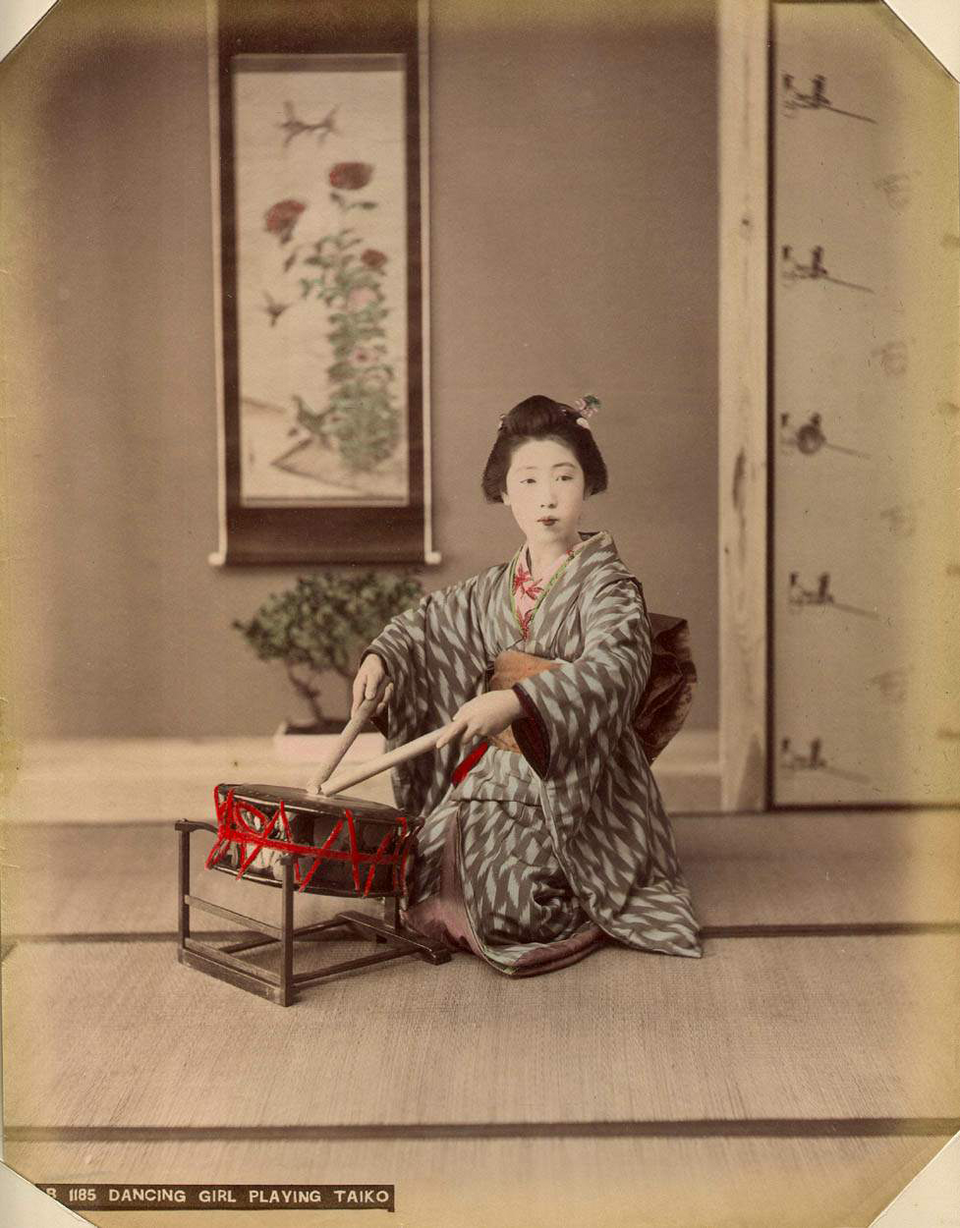
Taiko have a mythological origin in Japanese folklore, but historical records suggest that taiko were introduced to Japan through Chinese and Korean cultural influence as early as the 6th century CE; pottery from Haniwa figures depicting taiko drums has also been found. Some taiko are similar to instruments originating from India. Archaeological evidence also supports the view that taiko were present in Japan during the 6th century in the Kofun period. Their function has varied throughout history, ranging from communication, military action, theatrical accompaniment, religious ceremonies and concert performances. In modern times, taiko have also played a central role in social movements for minorities both within and outside Japan.
Further reading
Taiko Drum is one of the 3D puzzles in World Artifacts: turn a cloud of broken pieces until it lines up. For iPhone, iPad, Apple Vision Pro and Android.

