World Artifacts › Atlas › Kenya
Matatu
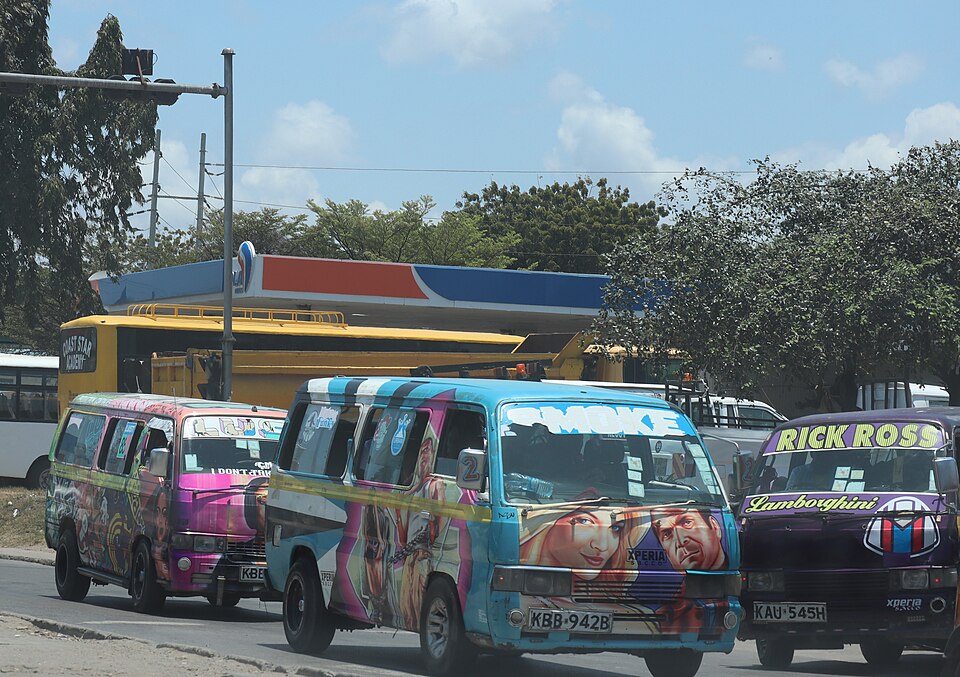
Matatus are privately owned minibuses covered in airbrushed art, fitted with sound systems, and named after footballers and rappers. Successive governments have tried to standardise them into plain white vans, and each time the paint has come back.
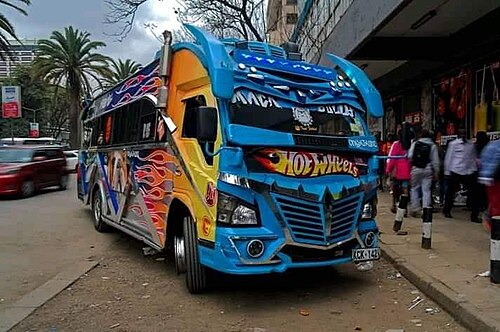
In Kenya, matatu or matatus (known as mathree in Sheng) are privately owned minibuses used as share taxis. Often decorated, many matatus feature portraits of famous people or slogans and sayings. Likewise, the music they play is also aimed at quickly attracting riders. Over 70% of commuter trips are taken using matatu in cities like Nairobi.
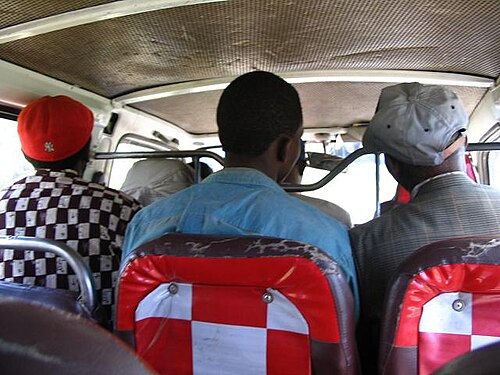
Although their origins can be traced back to the 1960s, matatu saw growth in Kenya in the 1980s and 1990s. The matatu culture sprang up under the influence of widespread hip-hop music and culture by black Americans in the 1980s. By the early 2000s, the archetypal form was a (gaily decorated) Japanese microvan. C. 2015, larger, bus-sized vehicles also started to be used as matatus. The name may also be used in parts of Nigeria. In Kenya, this industry is regulated, and such minibuses must, by law, be fitted with seatbelts and speed governors. Present regulation may not be a sufficient deterrent to prevent small infractions as even decoration may be prohibited. Kenya has one of the "most extensive regulatory controls to market entry", and a matatu worker can be pulled from the streets simply for sporting too loud a shirt.
Further reading
Matatu is one of the 3D puzzles in World Artifacts: turn a cloud of broken pieces until it lines up. For iPhone, iPad, Apple Vision Pro and Android.

