World Artifacts › Atlas › Kyrgyzstan
Komuz
The komuz has three strings and no frets, so the notes are found by feel alone. Players show off by tossing the instrument behind the back or between the legs without dropping the tune.
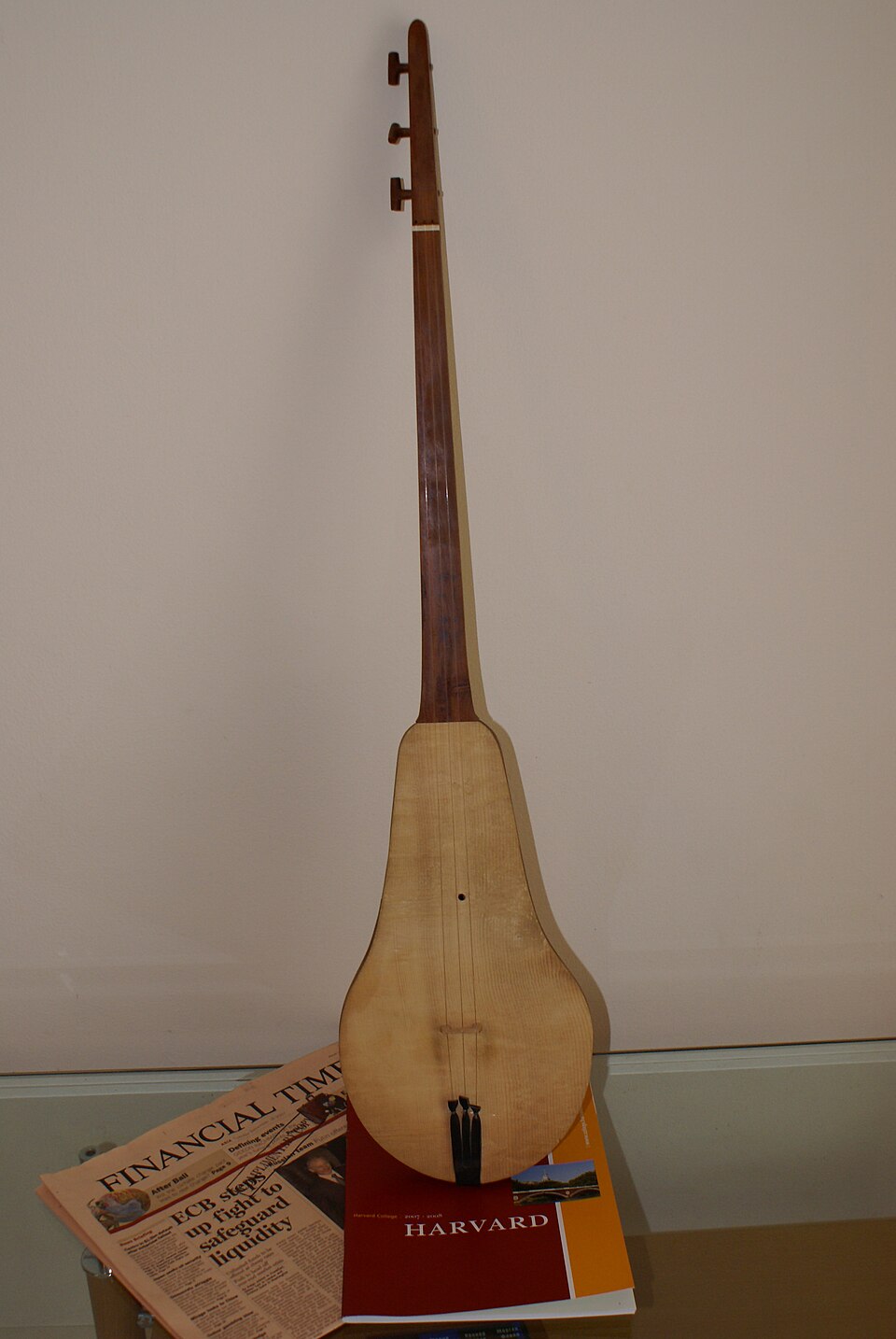
The komuz or qomuz (Kyrgyz: комуз / كومۇز, Kyrgyz pronunciation: [qoˈmuz], Turkish: Kopuz, Azerbaijani: Qopuz) is an ancient fretless string instrument used in Central Asian music, related to certain other Turkic string instruments, the Mongolian tovshuur, and the lute.

The instrument can be found in Turkic ethnic groups, from China to Turkey. Forms of this instrument are used in China by the Naxi people and are called Huobusi, Hebisi, and Hunbusi.
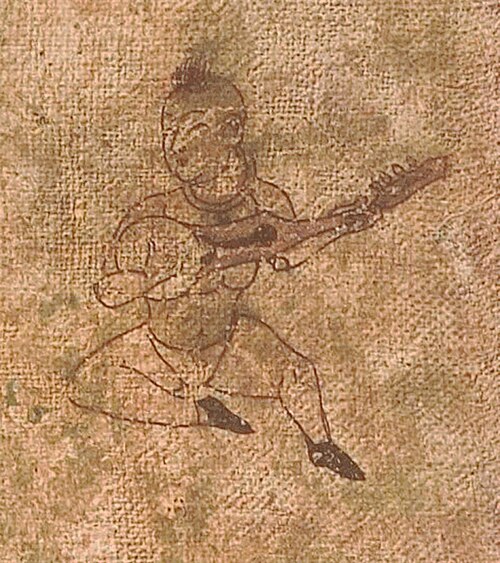
It is the best-known national instrument and one of the better-known Kyrgyz national symbols. The komuz is generally made from a single piece of wood (usually apricot or juniper) and has three strings traditionally made out of gut, and often from fishing line in modern times.
In the most common tunings the middle string is the highest in pitch.
Virtuosos frequently play the komuz in a variety of different positions: over the shoulder, between the knees and upside down.
An illustration of a komuz is featured on the reverse of the one-som note.
Komuz is one of the 3D puzzles in World Artifacts: turn a cloud of broken pieces until it lines up. For iPhone, iPad, Apple Vision Pro and Android.

