World Artifacts › Atlas › Kyrgyzstan
Song Kol Yurts
Song Kol is a summer pasture, not a village. Families drive their animals up in June, live in felt for three months, and are down again before the snow closes the passes.
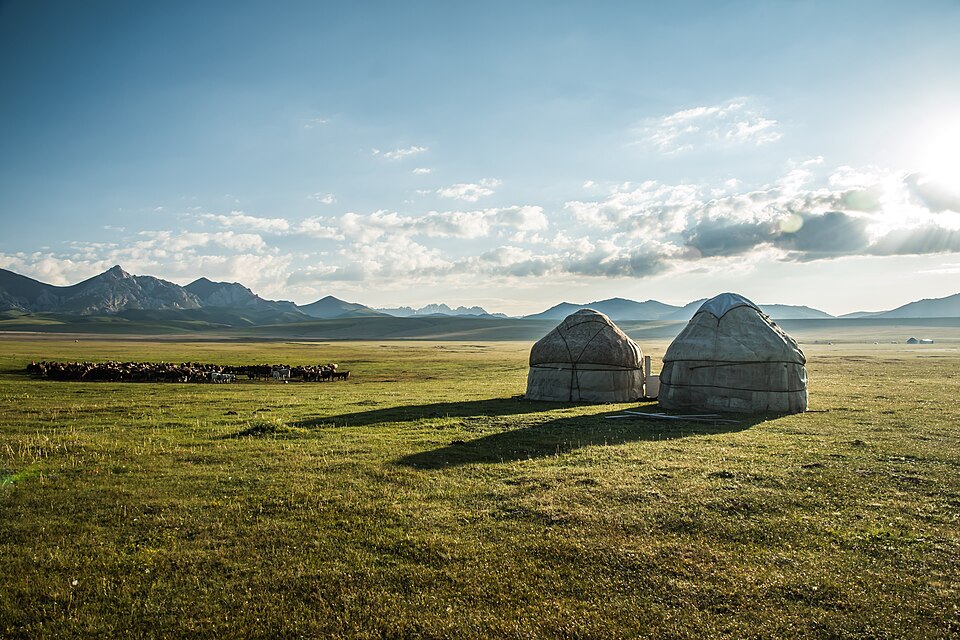
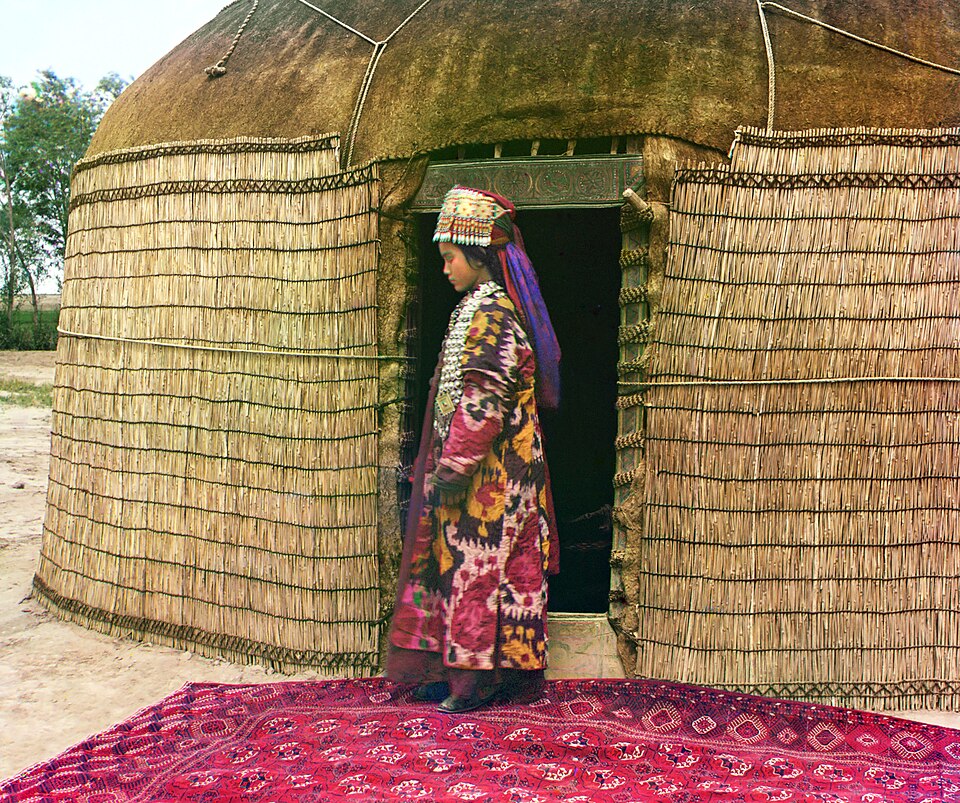
A yurt (; from the Turkic languages) or ger (; from the Mongolic languages) is a portable, round tent covered and insulated with skins or felt and traditionally used as a dwelling by several distinct nomadic groups in the steppes and mountains of Inner Asia. The structure consists of a flexible angled assembly or latticework of wood or bamboo for walls, a door frame, ribs (poles, rafters), and a wheel (crown, compression ring) possibly steam-bent as a roof. The roof structure is sometimes self-supporting, but large yurts may have interior posts or columns supporting the crown. The top of the wall of self-supporting yurts is prevented from spreading by means of a tension band, which opposes the force of the roof ribs. Yurts take between 30 minutes and 3 hours to set up or take down, and are generally used by 5-15 people. Nomadic farming with yurts as housing has been the primary way of life in Central Asia, particularly Mongolia, for thousands of years.
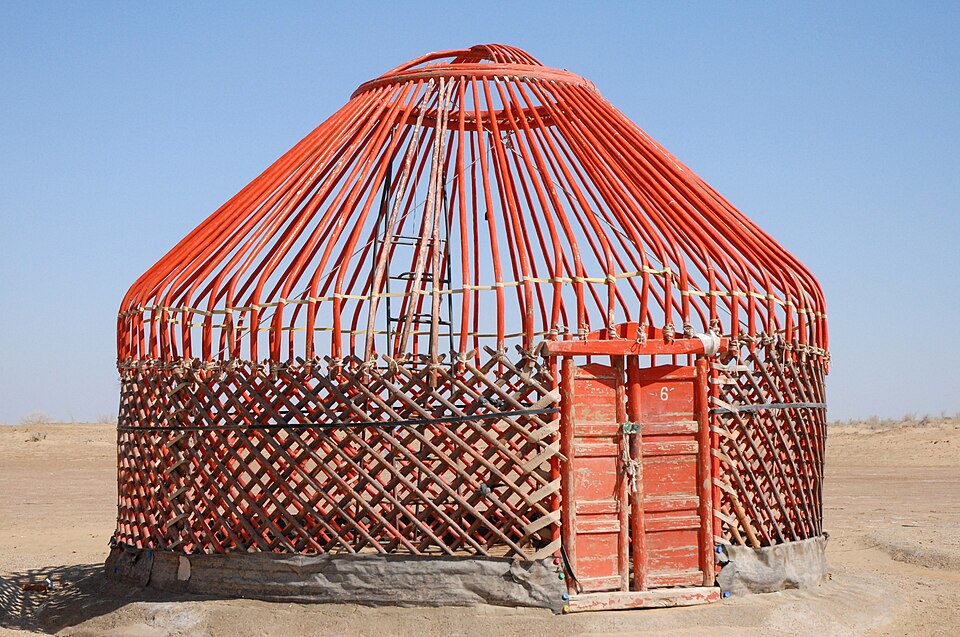
Modern yurts may be permanently built on a wooden or concrete platform; they may use modern materials such as metal framing, plastics, plexiglass dome, or radiant insulation.
Further reading
Song Kol Yurts is one of the 3D puzzles in World Artifacts: turn a cloud of broken pieces until it lines up. For iPhone, iPad, Apple Vision Pro and Android.

