World Artifacts › Atlas › Cambodia
Naga Balustrade
The seven-headed serpent railing.
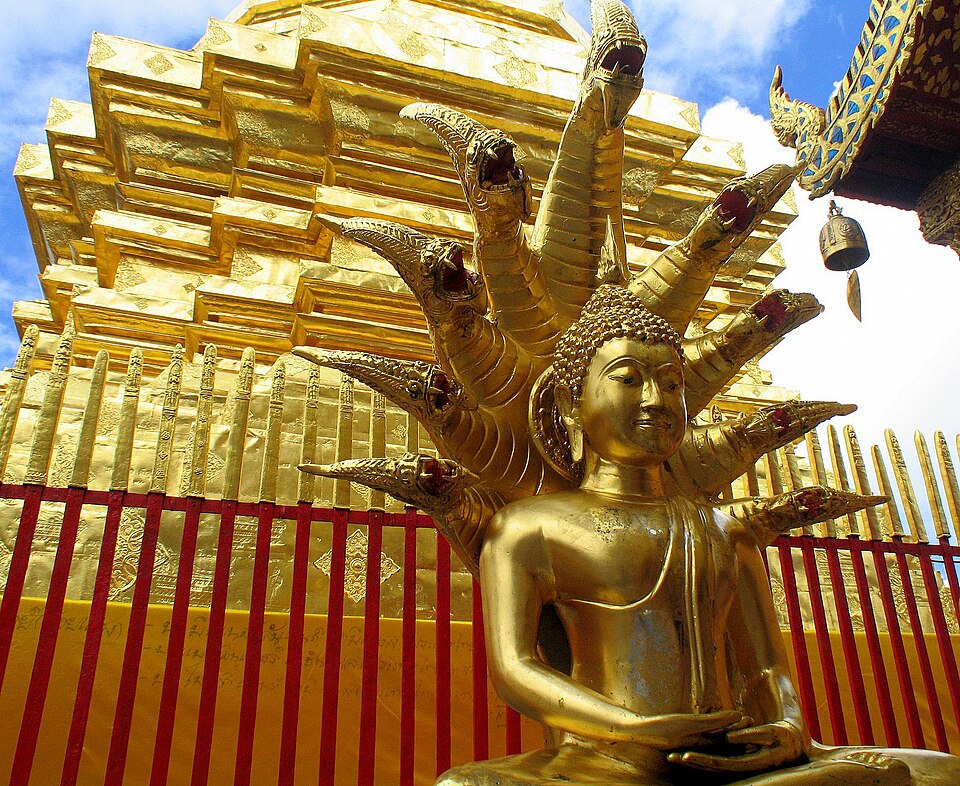
In various Asian religious traditions, the Nāgas (Sanskrit: नाग, romanized: Nāga) are a divine or semi-divine race of half-human, half-serpent beings that reside in the netherworld (Patala), and can occasionally take human or part-human form, or are so depicted in art. Furthermore, nāgas are also known as dragons and water spirits. A female nāga is called a Nagini (Hindi: नागिन nāgin). According to legend, they are the children of the sage Kashyapa and Kadru. Rituals devoted to these supernatural beings have been taking place throughout South Asia for at least 2,000 years. They are principally depicted in three forms: as entirely human with snakes on the heads and necks, as common serpents, or as half-human, half-snake beings in Hinduism and Buddhism.
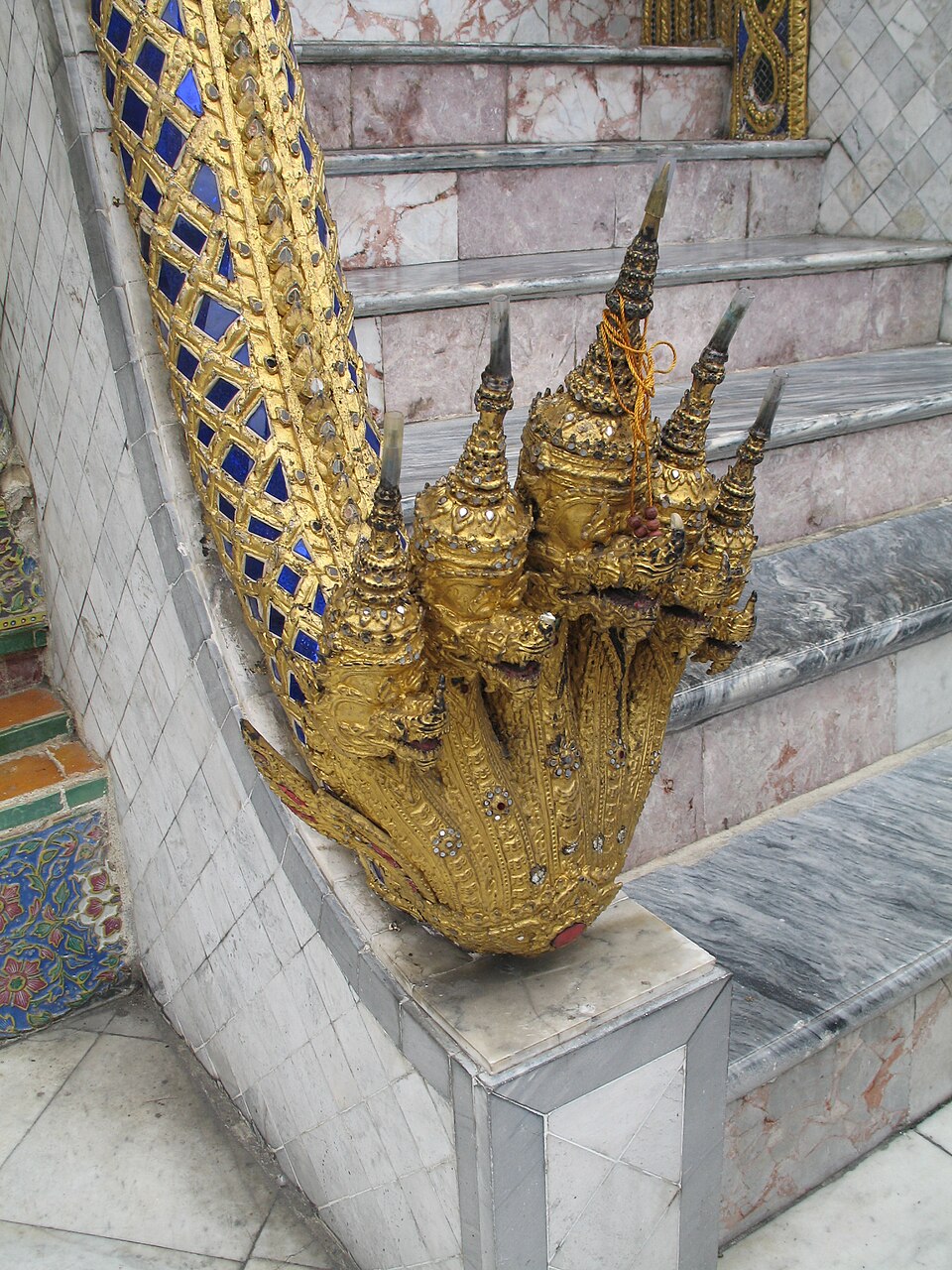
Nagaraja is the title given to the king of the nagas. Narratives of these beings hold cultural significance in the mythological traditions of many South Asian and Southeast Asian cultures, and within Hinduism and Buddhism. Communities such as the Nagavamshi, Khmer and Sri Lankan Tamils claim descent from this race.
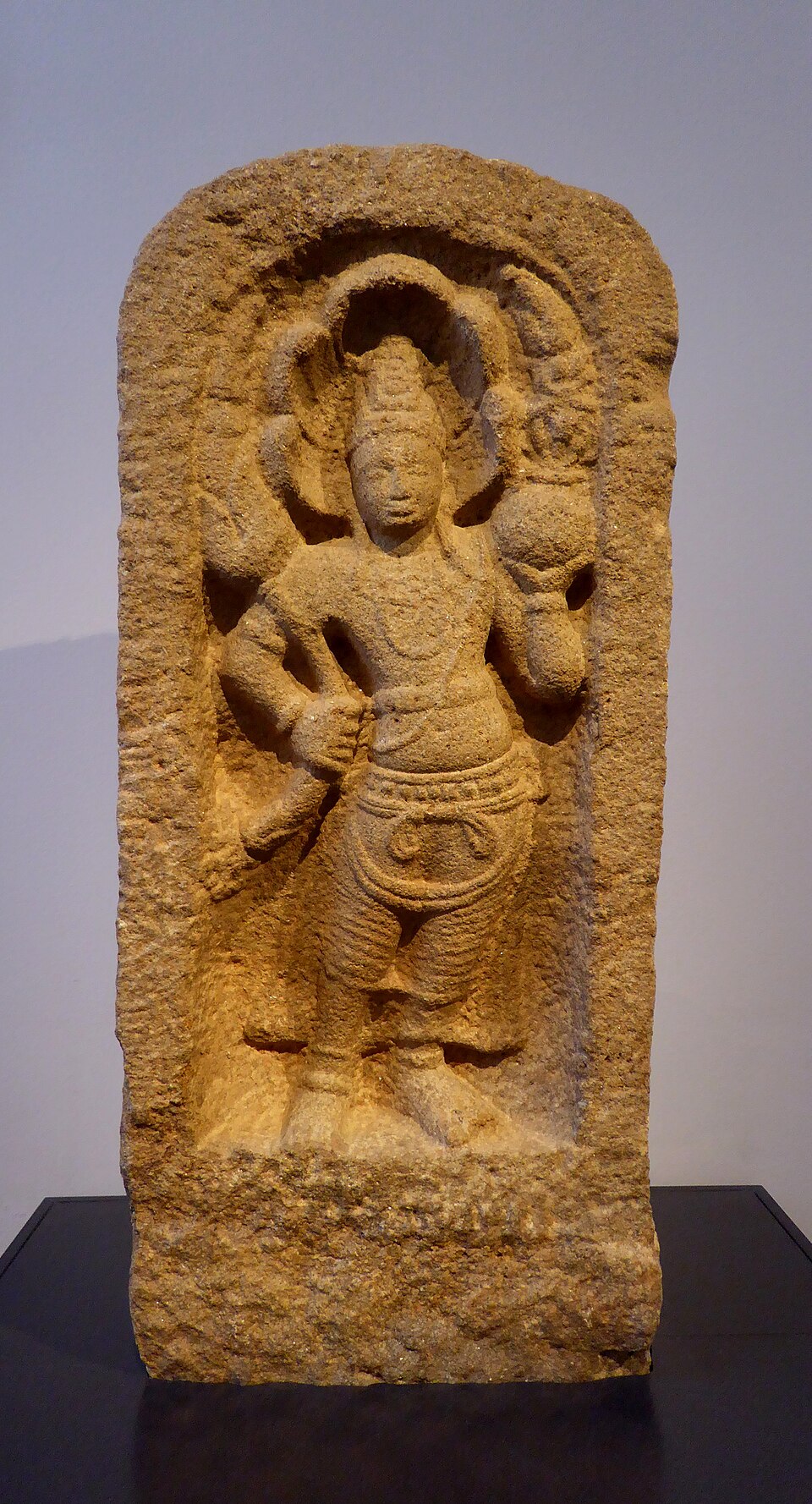
Further reading
- Ancient Angkor · Michael Freeman (1999)A pictorial study of Angkor's Khmer temples, architecture and civilization.Find a copy: AbeBooks · Amazon · WorldCat
- Images of the Gods · Vittorio Roveda (2005)Covers Khmer relief sculpture, temples and Hindu and Buddhist mythology.Find a copy: AbeBooks · Amazon · WorldCat
Naga Balustrade is one of the 3D puzzles in World Artifacts: turn a cloud of broken pieces until it lines up. For iPhone, iPad, Apple Vision Pro and Android.

