World Artifacts › Atlas › Kiribati
Giant Clam
The clam with a blue mantle.
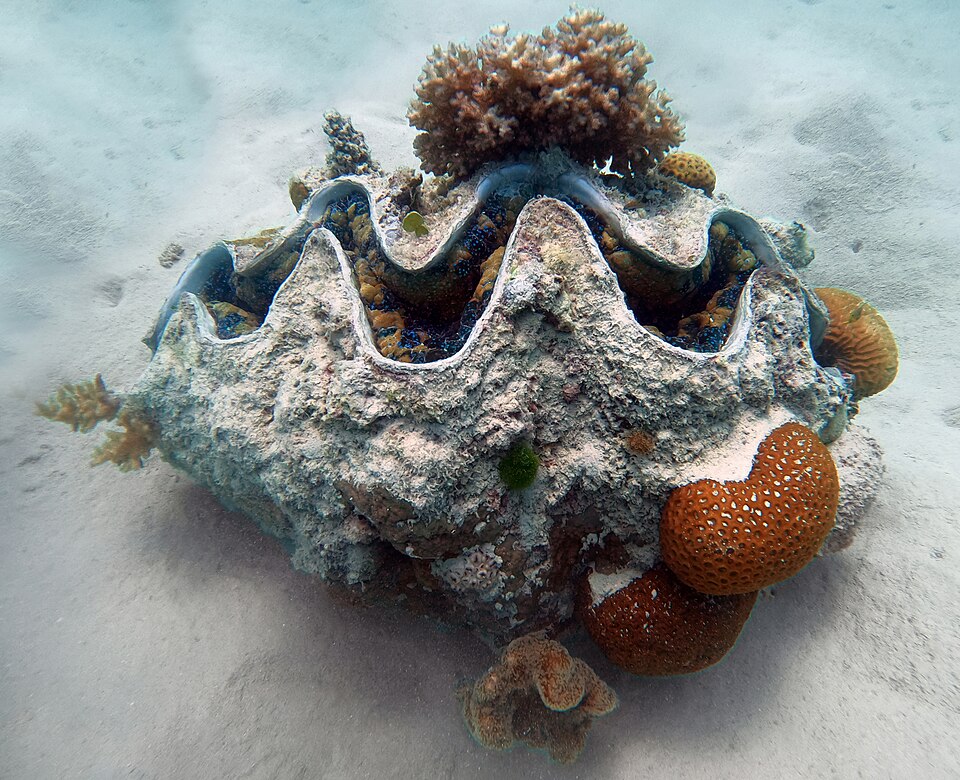
Tridacna gigas, the giant clam, is the best-known species of the giant clam genus Tridacna. Giant clams are the largest living bivalve molluscs. Several other species of "giant clam" in the genus Tridacna are often misidentified as Tridacna gigas.
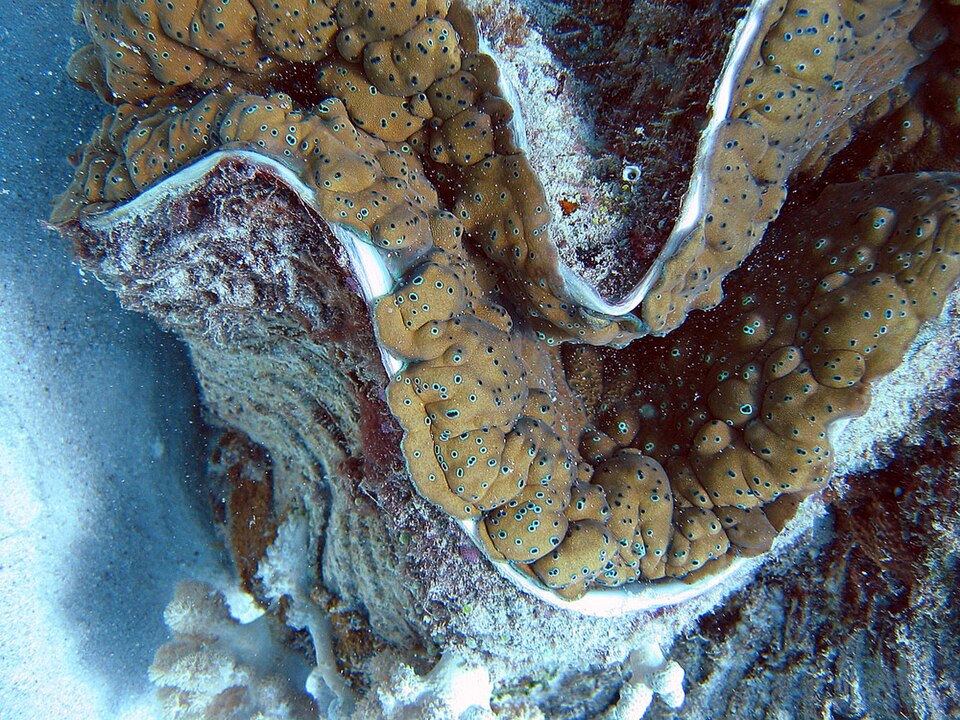
These clams were known to indigenous peoples of East Asia for thousands of years and the Venetian scholar and explorer Antonio Pigafetta documented them in a journal as early as 1521. One of a number of large clam species native to the shallow coral reefs of the South Pacific and Indian oceans, they may weigh more than 200 kilograms (440 lb), measure as much as 120 cm (47 in) across, and have an average lifespan in the wild of more than 100 years. They also are found off the shores of the Philippines and in the South China Sea in the coral reefs of Malaysia and are generally found at a depth of 6-65 feet.
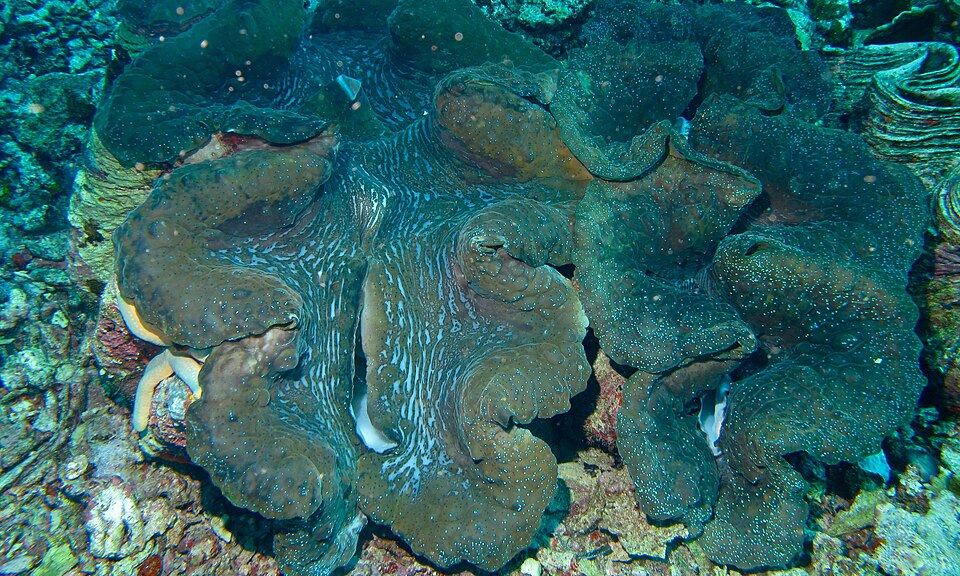
The giant clam lives on flat coral sand or broken coral and may be found at depths of as great as 20 m (66 ft). Its range covers the Indo-Pacific, but populations are diminishing quickly and the giant clam has become extinct in many areas where it was once common.
Further reading
Giant Clam is one of the 3D puzzles in World Artifacts: turn a cloud of broken pieces until it lines up. For iPhone, iPad, Apple Vision Pro and Android.

