World Artifacts › Atlas › South Korea
Kimchi
Kimchi is made communally in late autumn, enough to last the winter, and the season has its own name and its own UNESCO listing. There are hundreds of kinds, and it was white until chilli reached Korea in the 1600s.
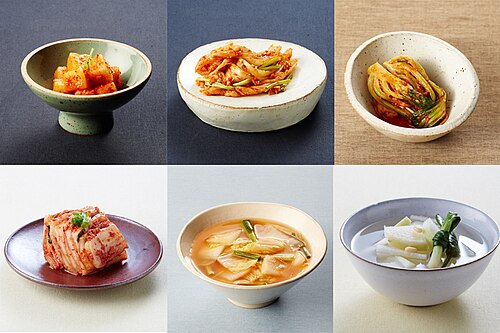
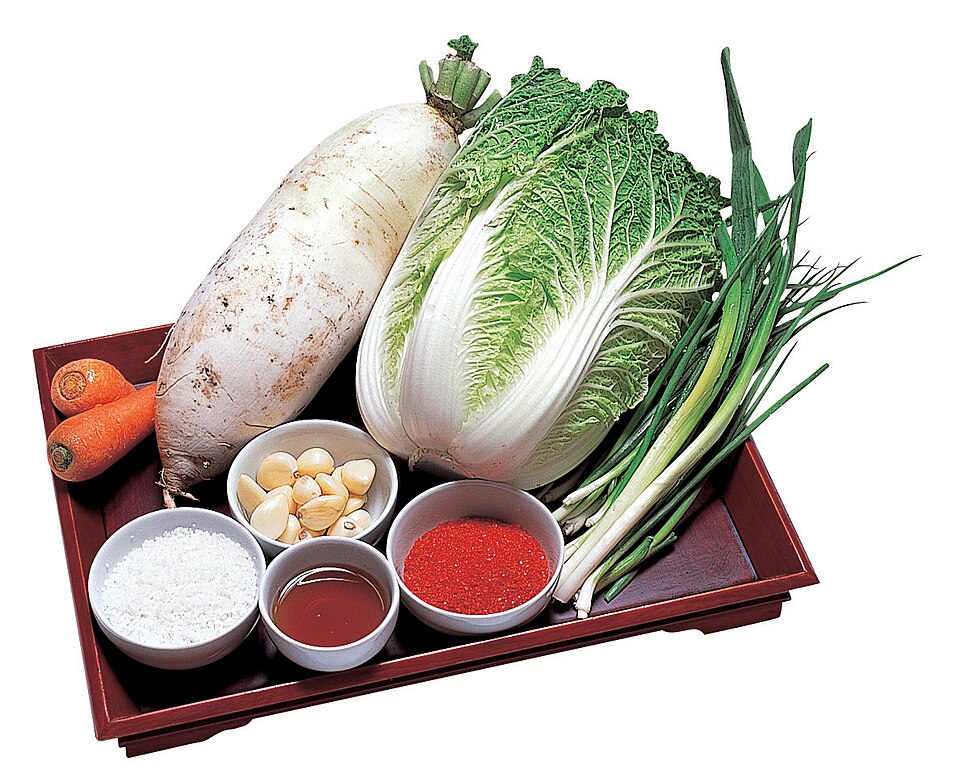
Kimchi (; Korean: 김치; pronounced [kim.tɕʰi]) is a traditional Korean side dish (banchan) consisting of salted and fermented vegetables, most often Chinese cabbage or Korean radish. A wide selection of seasonings are used, including gochugaru (Korean chili powder), spring onions, garlic, ginger, and jeotgal (salted seafood). Kimchi is also used in a variety of soups and stews. Kimchi is a staple food in Korean cuisine and is eaten as a side dish with almost every Korean meal.

There are hundreds of different types of kimchi made with different vegetables as the main ingredients. Examples of variants include baechu-kimchi, kkakdugi, chonggak-kimchi, and oi-sobagi. Traditionally, winter kimchi, called gimjang, was stored in large earthenware fermentation vessels, called onggi, in the ground to prevent freezing during the winter months and to keep it cool enough to slow down the fermentation process during summer months. The process of making kimchi was called gimjang and was based on participation by the whole village. The vessels are also kept outdoors in special terraces called jangdokdae. The use of household kimchi refrigerators has become a more common method for keeping fermenting kimchi at the right temperature.
Kimchi has gained international recognition as a traditional Korean food and has been promoted as part of Korean cultural heritage. Its preparation methods and cultural significance have been documented as part of Korea's intangible cultural heritage.
Further reading
Kimchi is one of the 3D puzzles in World Artifacts: turn a cloud of broken pieces until it lines up. For iPhone, iPad, Apple Vision Pro and Android.

