World Artifacts › Atlas › South Korea
Onggi Jar
Onggi jars are fired at a temperature that leaves the clay slightly porous, so air passes through the wall while liquid does not, which is exactly what a fermenting jar needs. They were buried to their necks in the ground to hold a steady temperature, and the kimchi refrigerator was invented to imitate that.
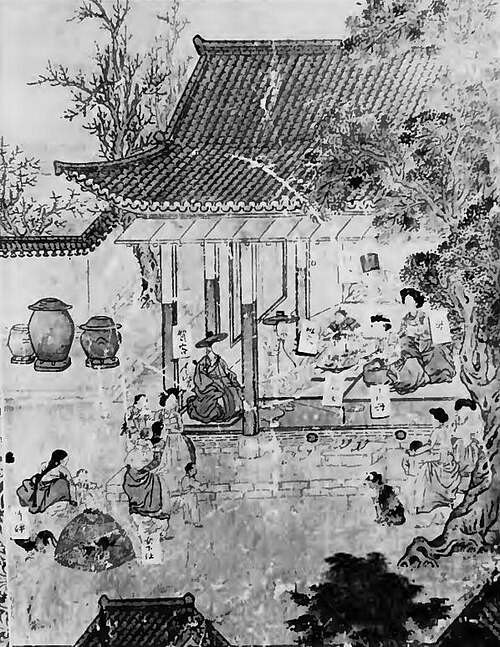
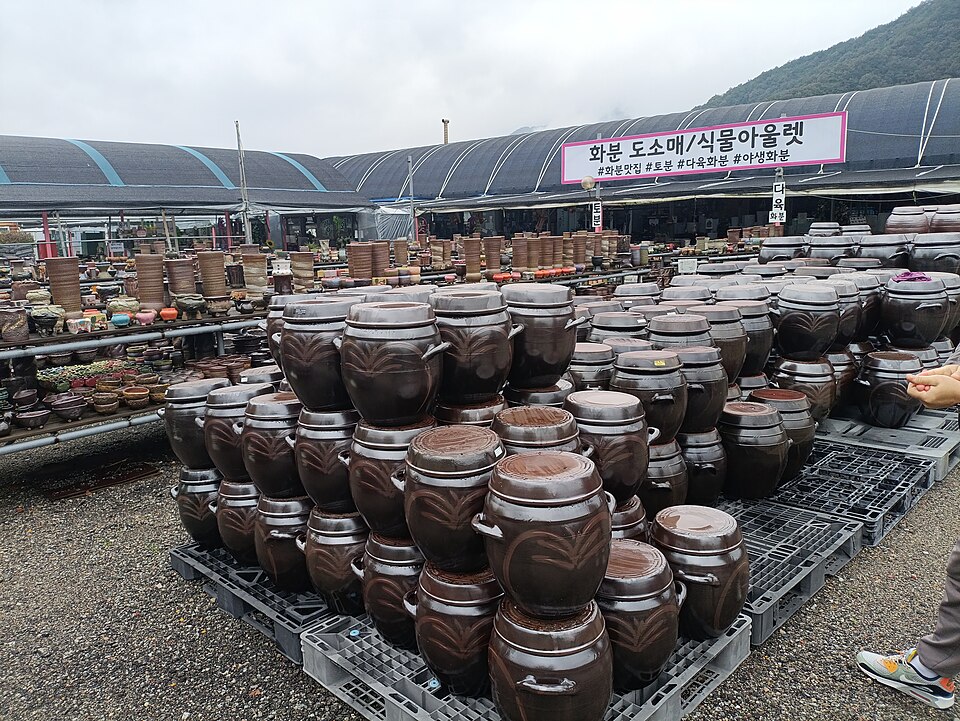
Onggi (Korean: 옹기) are earthenware jars extensively used as tableware and storage containers in Korea. The term includes both unglazed earthenware, fired near 600 to 700°C, and pottery with a dark brown glaze fired at over 1100 °C. Onggi have been used continuously from prehistoric Korean states to the modern day; however, they primarily see use as traditional storage and ornaments today. In Korea, onggi are often referred to by size: danji (Korean: 단지) for small jars; hangari (Korean: 항아리) for medium sized jars; and dok (Korean: 독) for large crocks.
The origin of onggi dates to around 4000 to 5000 BCE. The types of earthenware include patternless, mumun, and a red-and-black variety. The patternless earthenware is made with lumps of clay and fine sand. The predecessor of Goryeo celadon and Joseon white porcelain, the black/red earthenware excludes any sand in its creation process. The earthenware's color is determined by both the iron content of the clay and the method used to fire it. The modern onggi shape dates back from the Joseon era.
Further reading
- Onggi · Han-seung Lee (2010)A book on onggi, Korean pottery, covering the craft, its potters and the social life and customs around it.Find a copy: AbeBooks · Amazon · WorldCat
- The Korean onggi potter · Robert Sayers (1987)A study of the Korean onggi potter and the history of the pottery industry.Find a copy: AbeBooks · Amazon · WorldCat
Onggi Jar is one of the 3D puzzles in World Artifacts: turn a cloud of broken pieces until it lines up. For iPhone, iPad, Apple Vision Pro and Android.

