World Artifacts › Atlas › South Korea
Talchum Dancer
Masked dance drama was performed by travelling players and villagers, and the targets were the local nobleman, the corrupt monk and the unfaithful husband. The mask was the licence: what a mask says cannot be held against a face.
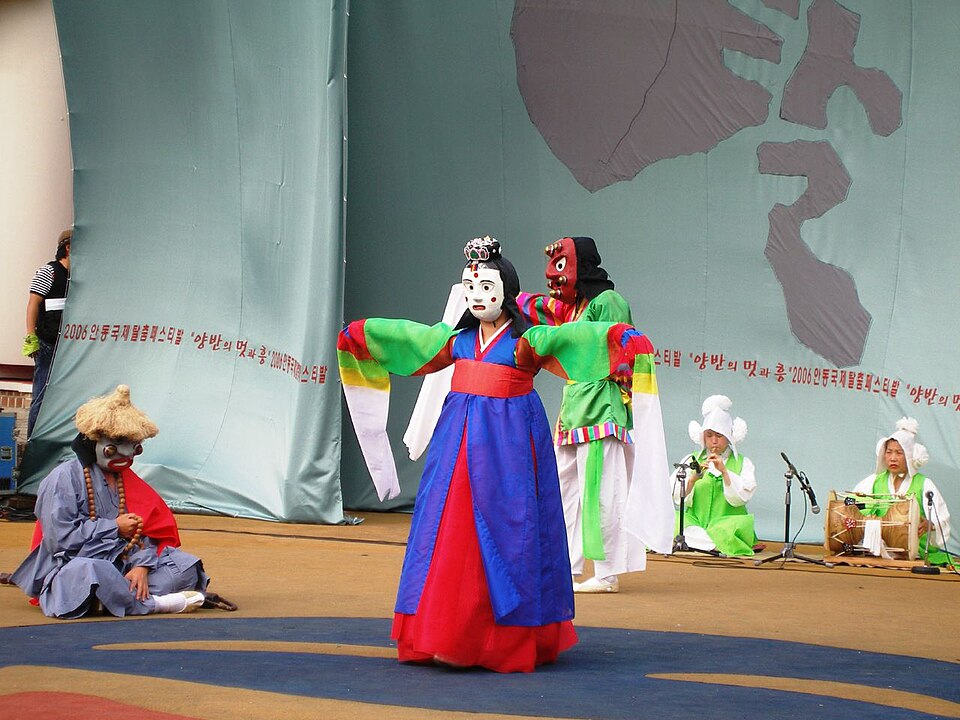
Talchum (Korean: 탈춤; IPA: [ˈtʰa̠(ː)ʎt͡ɕʰum]; lit. 'mask dance') is a Korean dance performed while wearing a mask, and often involves singing and dancing.
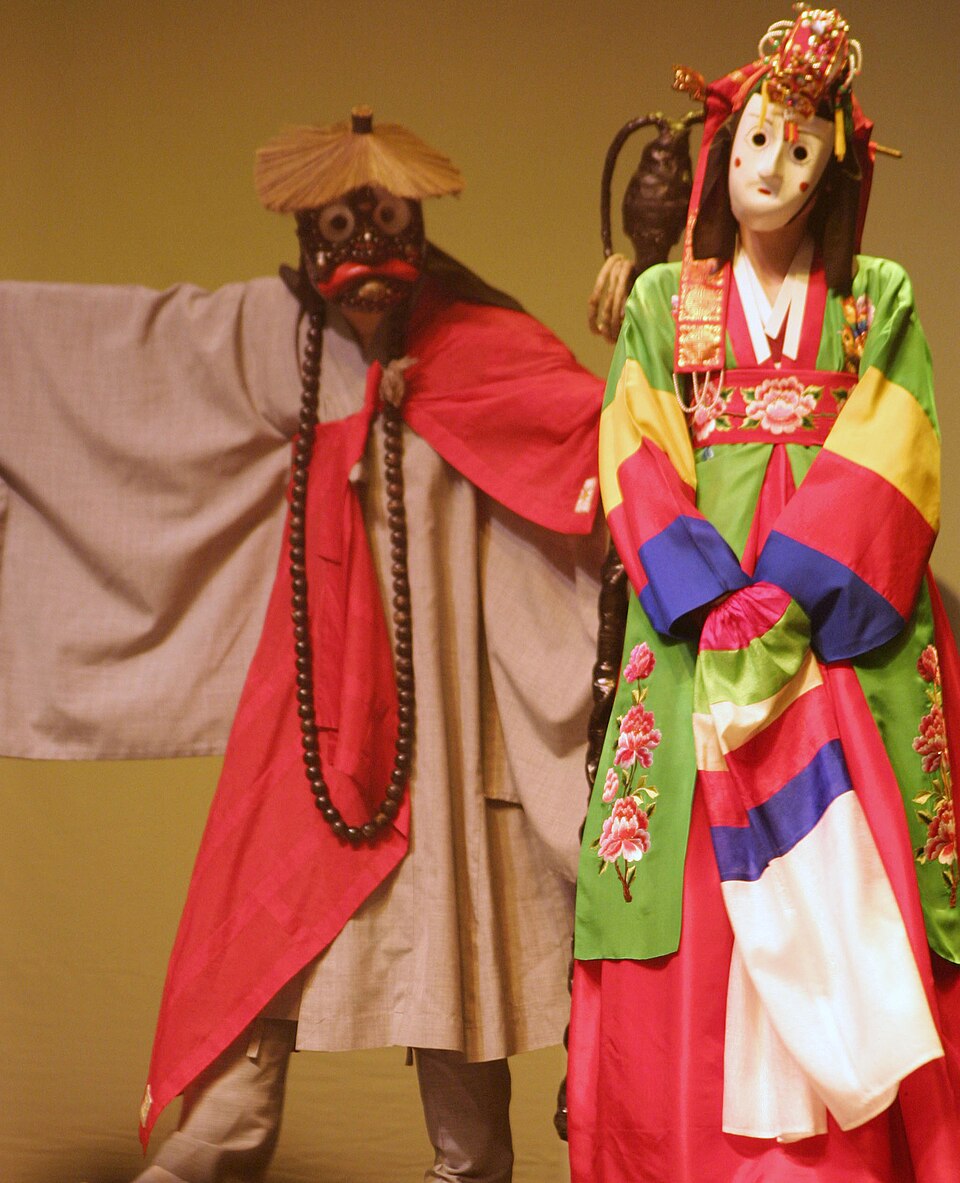
Although the term talchum is usually taken to mean all mask dance dramas by most Koreans, it is strictly speaking a regional term originally only applied to dances of Hwanghae Province in present-day North Korea. Dances from the Seoul or Gyeonggi province region are known as sandae noli, whereas dances from the southern coast are known as yayu (야유), which means "field play", or Obangsinjang, which means "dance of five gods". However, talchum is nowadays accepted as a general term for mask dance drama.
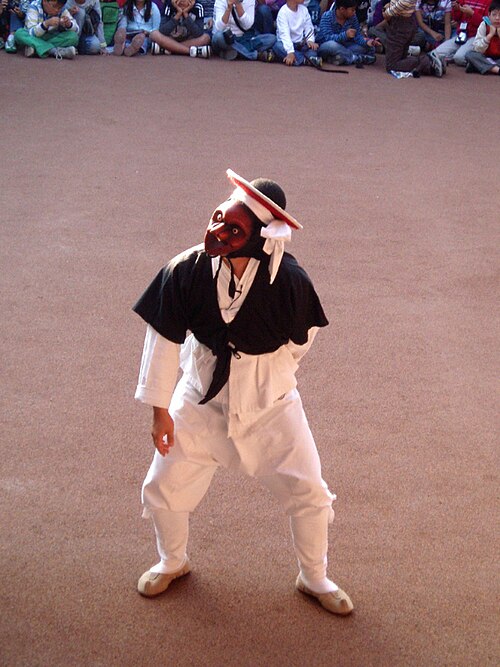
The dances also feature drama and story, as masked characters portray people, animals, and even supernatural beings. These folk dramas often reflected the frustrations felt by the lower classes towards the elite yangban.
In 2022, Talchum was inscribed on UNESCO’s Representative List of the Intangible Cultural Heritage of Humanity, highlighting both its local importance and global significance.
Further reading
- Traditional Korean theatre · Oh Kon Cho (1988)A history and criticism of Korean folk drama and traditional theatre, with English translations of plays.Find a copy: AbeBooks · Amazon · WorldCat
- Perspectives on Korean dance · Judy Van Zile (2001)Essays on the history of Korean dance, including folk dancing.Find a copy: AbeBooks · Amazon · WorldCat
Talchum Dancer is one of the 3D puzzles in World Artifacts: turn a cloud of broken pieces until it lines up. For iPhone, iPad, Apple Vision Pro and Android.

