World Artifacts › Atlas › Kazakhstan
Aport Apple
The huge red Almaty apple.
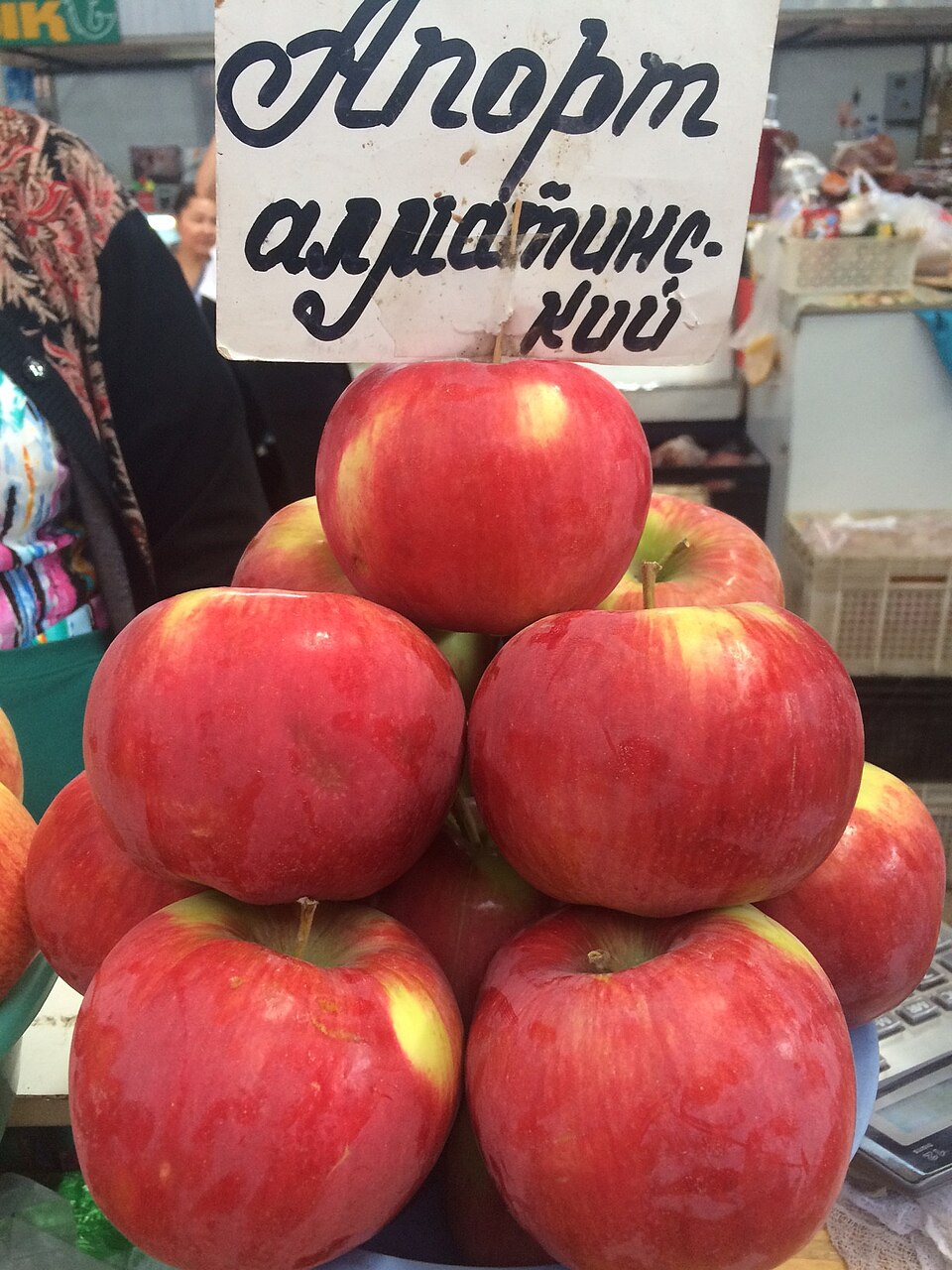
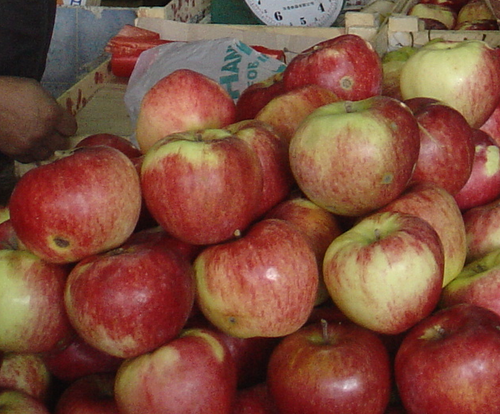
The Aport (Russian: Апорт; Kazakh: Апорт алмасы) is a cultivar group of the domesticated apple (Malus domestica) most strongly associated with the foothills of the Trans-Ili Alatau around Almaty in southeastern Kazakhstan. The fruit is unusually large for a dessert apple: typical specimens weigh between 200 and 500 grams (7.1 and 17.6 oz), and exceptional ones exceed 800 grams (28 oz). Local growers credit the soil and altitude of the Almaty foothills for its strong honey-like aroma and sweet-tart flavour.
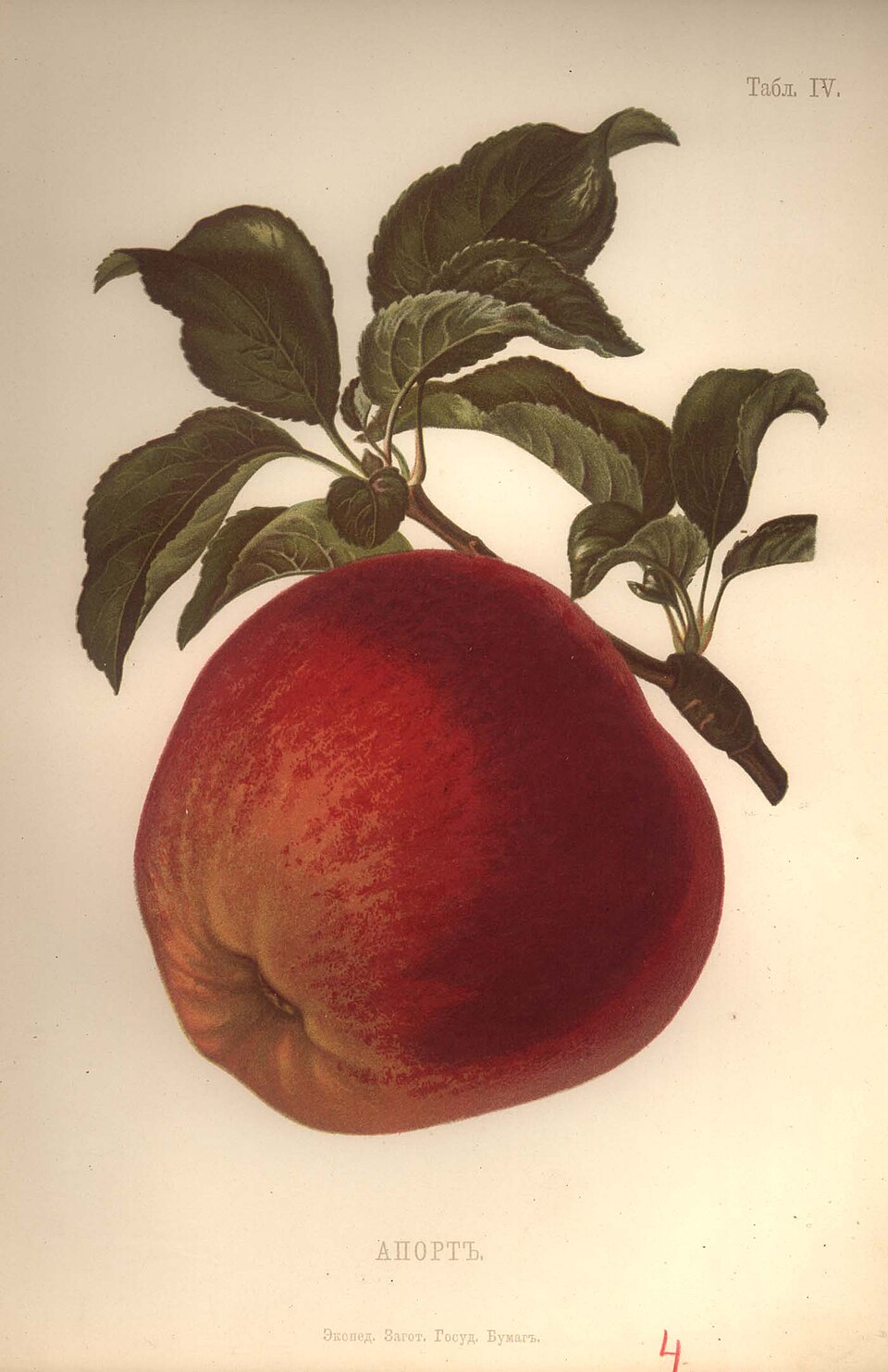
The variety's precise origin is contested. Different accounts trace it to the Balkans, to the Voronezh Governorate of the Russian Empire, or to the Almaty foothills themselves. The Aport that became famous in the late 19th and 20th centuries is generally said to have been brought to the town of Verny (modern Almaty) in 1865 and crossed in cultivation with the local wild apple Malus sieversii. It won prizes at international horticultural exhibitions in Paris in 1900 and Mannheim in 1908 and became closely identified with the city of Almaty. The area under its cultivation contracted sharply in the late 20th century; since 2012 the variety has been the subject of state and academic revival programmes in Kazakhstan. In January 2024 President of Kazakhstan Kassym-Jomart Tokayev presented the apple to the Director-General of the Food and Agriculture Organization in Rome as Kazakhstan's nominee under the FAO's "One Country One Priority Product" (OCOP) initiative.
Further reading
Aport Apple is one of the 3D puzzles in World Artifacts: turn a cloud of broken pieces until it lines up. For iPhone, iPad, Apple Vision Pro and Android.

