World Artifacts › Atlas › Kazakhstan
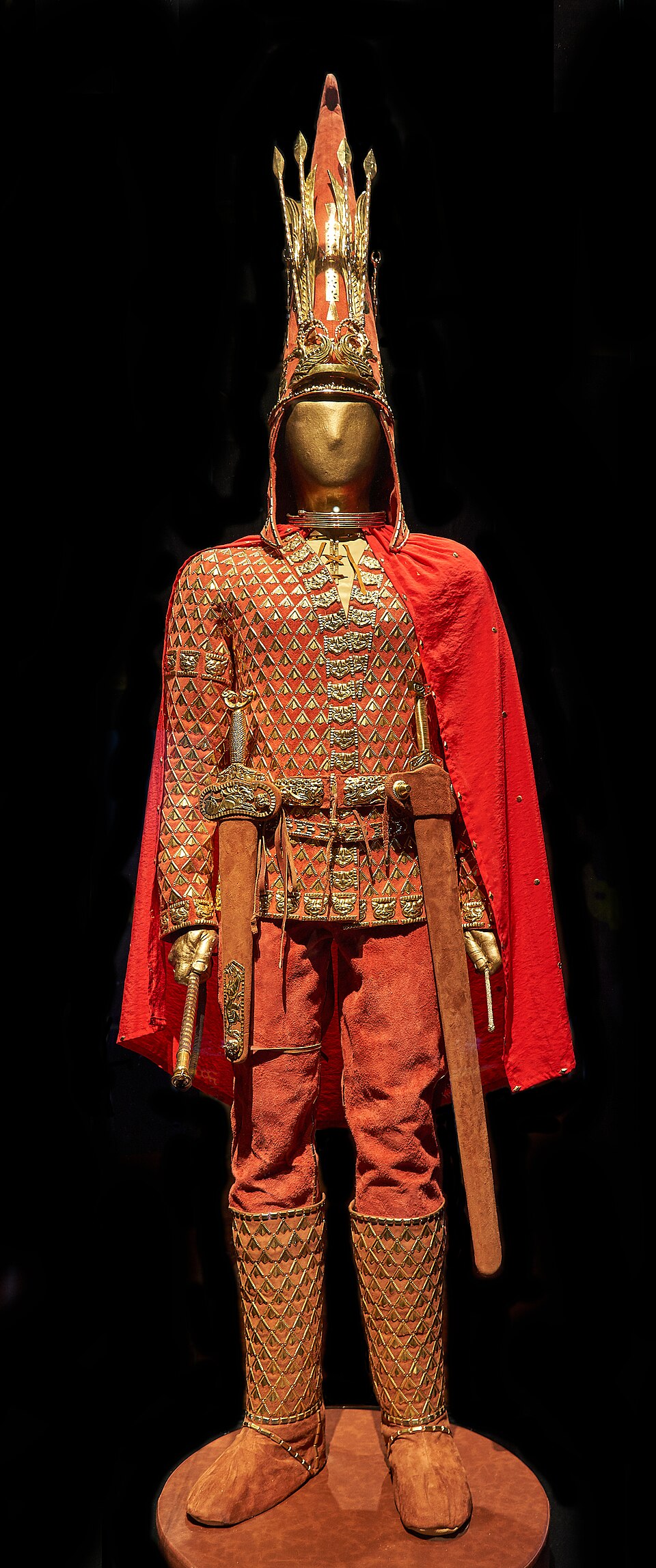
Golden Man
The gold-armoured Scythian warrior.
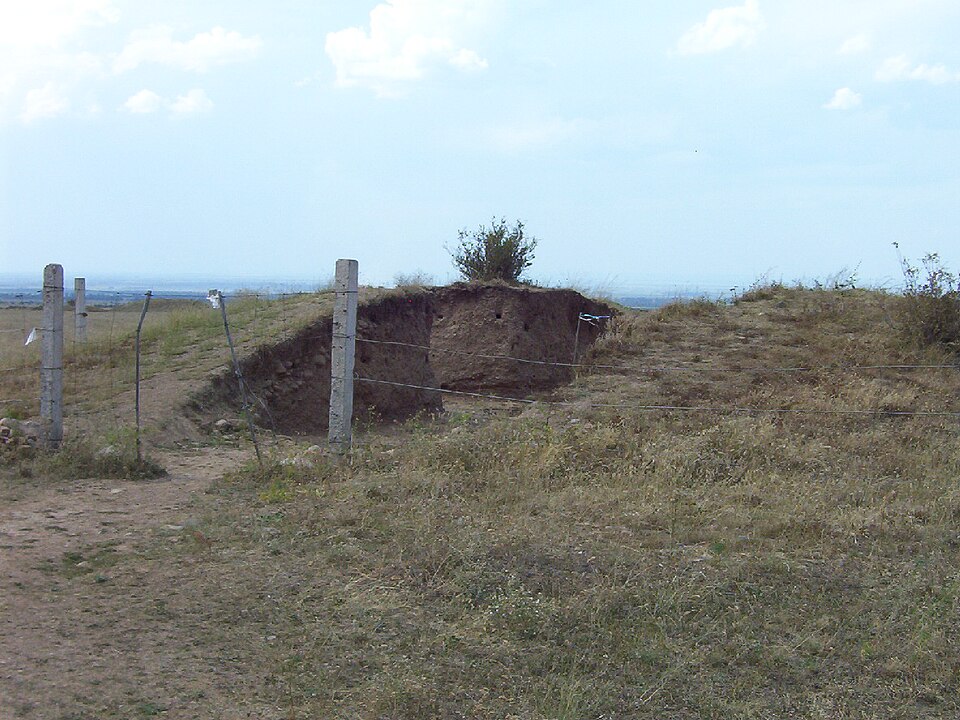
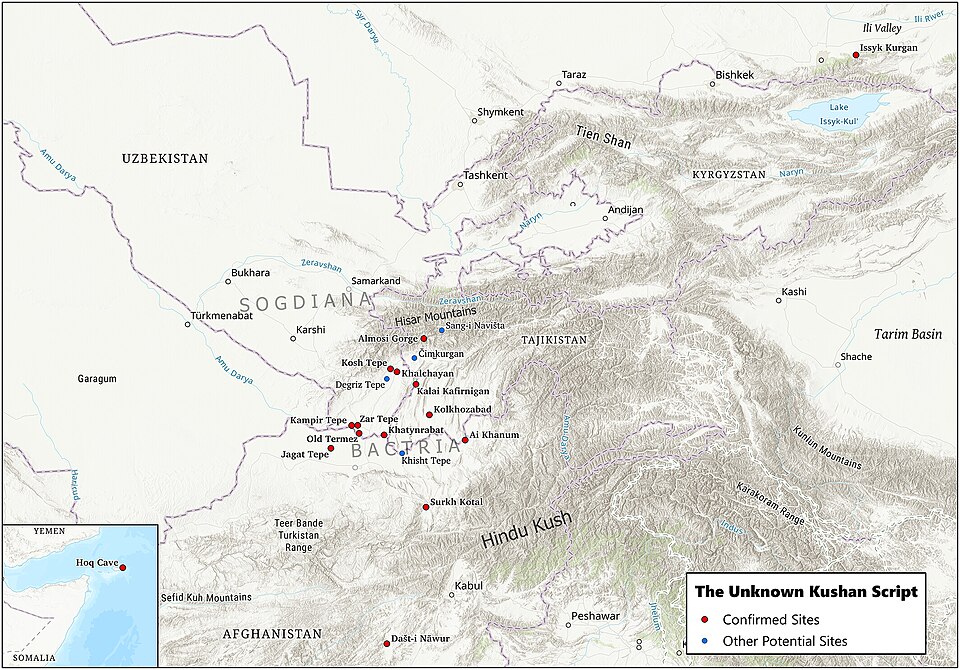
The Issyk kurgan, in south-eastern Kazakhstan, less than 20 km east from the Talgar alluvial fan, near Issyk, is a burial mound discovered in 1969. It has a height of 6 meters (20 ft) and a circumference of 60 meters (200 ft). It is dated to the 4th or 3rd century BC. A notable item is a silver cup bearing an inscription, known as the Issyk inscription. The finds are on display in Astana. It is associated with the Saka peoples.
The burial complex is located on the left bank of the Issyk Mountain River, 50 kilometers (31 mi) to the east of the city of Almaty. The unique archaeological complex found by a small group of Soviet scientists led by archaeologist Kemal Akishevich Akishev in 1969. The burial ground consists of 45 large royal mounds with a diameter of 30 to 90 and a height of 4-15 meters (13-49 ft). The Issyk barrow is located in the western half of the burial ground. Its diameter is 60 meters (200 ft), and its height is 6 meters (20 ft).
Further reading
- Rethinking Prehistoric Central Asia · Claudia Chang (2017)Covers prehistoric Central Asia, including Iron Age nomads and archaeological excavations.Find a copy: AbeBooks · Amazon · WorldCat
- History of Civilizations of Central Asia: The Development of Sedentary and Nomadic Civilizations · Janos Harmatta (1994)A history of the sedentary and nomadic civilizations of Central Asia.Find a copy: AbeBooks · Amazon · WorldCat
Golden Man is one of the 3D puzzles in World Artifacts: turn a cloud of broken pieces until it lines up. For iPhone, iPad, Apple Vision Pro and Android.

