World Artifacts › Atlas › Lebanon
Jeita Grotto
The cave with stalactites.
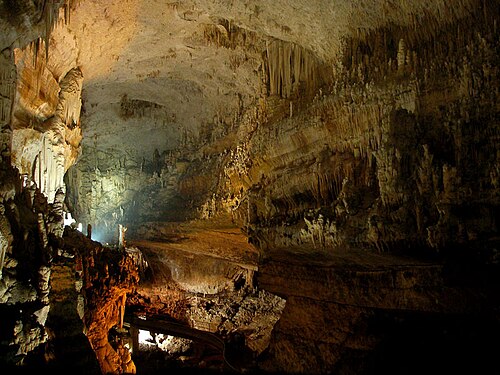
The Jeita Grotto (Arabic: مغارة جعيتا) is a system of two separate, but interconnected, karstic limestone caves spanning an overall length of nearly 9 kilometres (5.6 mi). The caves are situated in the Nahr al-Kalb river valley within the locality of Jeita, 18 kilometres (11 mi) north of the Lebanese capital Beirut. Though inhabited in prehistoric times, the lower cave was not rediscovered until 1836 by Reverend William Thomson; it can only be visited by boat since it channels an underground river that provides fresh drinking water to more than a million Lebanese.
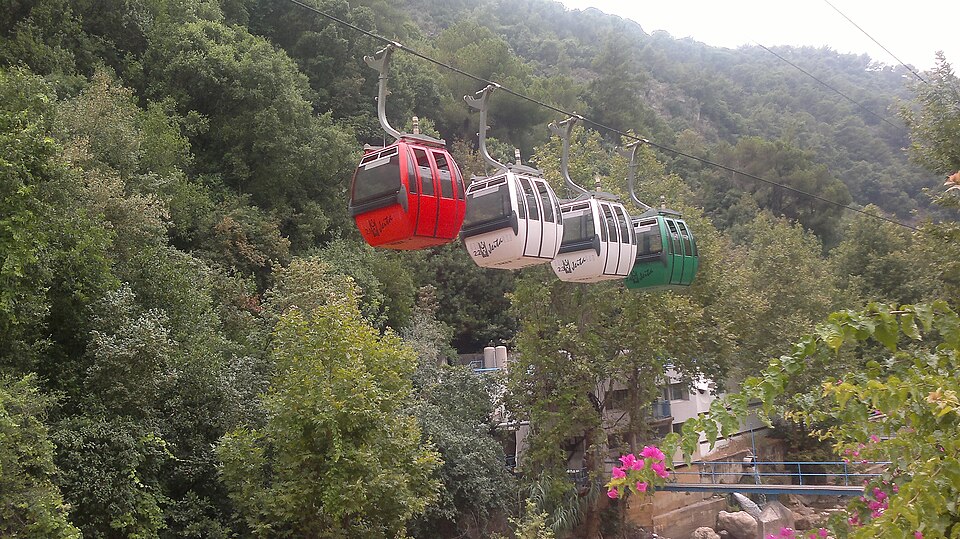
In 1958, Lebanese speleologists George Farra and Sami Karkabi discovered the upper galleries 60 metres (200 ft) above the lower cave which have been accommodated with an access tunnel and a series of walkways to enable tourists safe access without disturbing the natural landscape. The upper galleries house the world's largest known stalactite. The galleries are composed of a series of chambers the largest of which peaks at a height of 12 metres (39 ft).
Jeita Grotto is one of the 3D puzzles in World Artifacts: turn a cloud of broken pieces until it lines up. For iPhone, iPad, Apple Vision Pro and Android.

