World Artifacts › Atlas › Lebanon
Phoenician Ship
The ship with a horse-head prow.
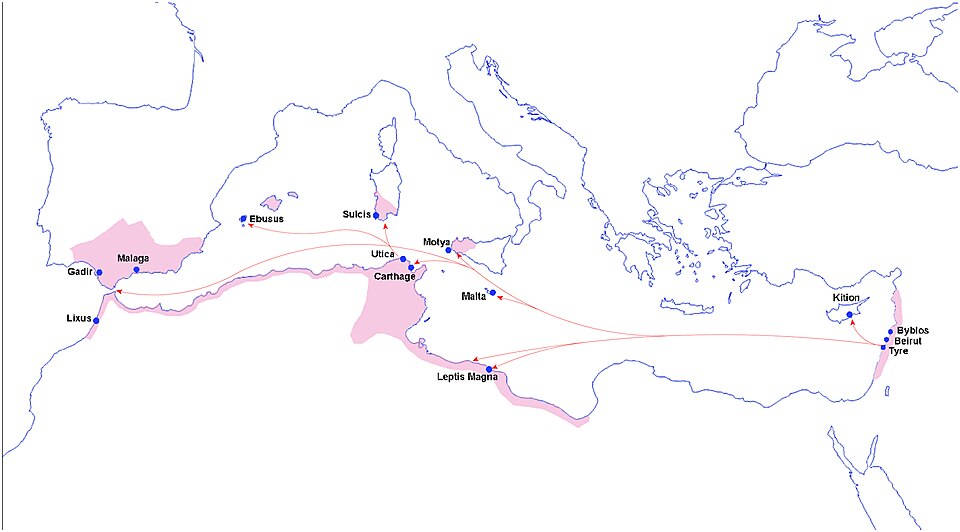
The Phoenicians were an ancient Semitic-speaking people who inhabited city-states in Canaan along the Levantine coast of the eastern Mediterranean, primarily in present-day Lebanon. Their maritime civilization expanded and contracted over time, with its cultural core stretching from Arwad to Mount Carmel. Through trade and colonization, the Phoenicians extended their influence across the Mediterranean, from Cyprus to the Maghreb and Iberian Peninsula, leaving behind thousands of inscriptions.
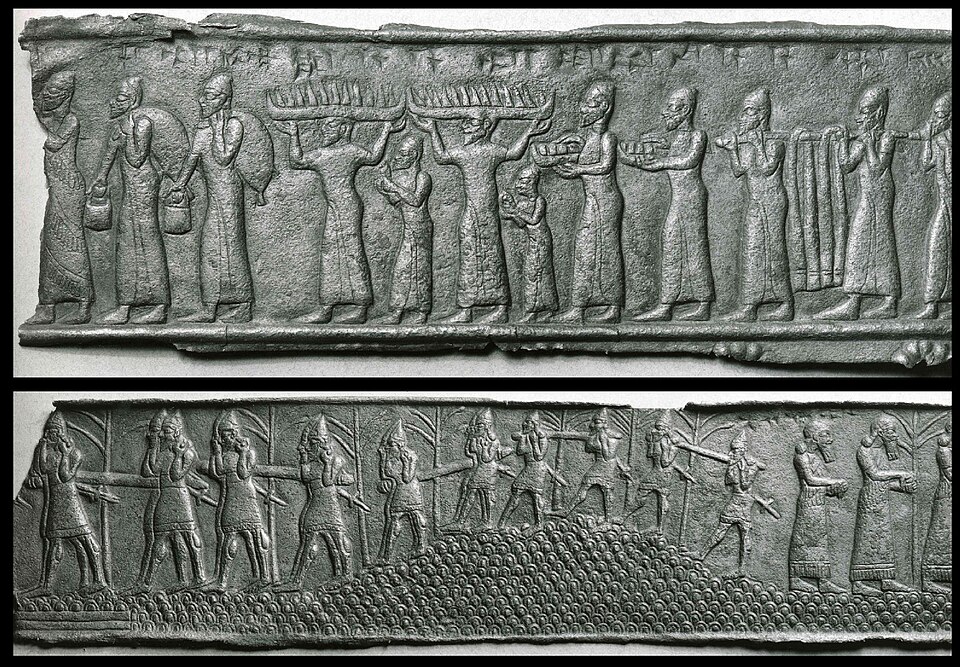
The Phoenicians emerged directly from the Bronze Age Canaanites, and their cultural traditions survived the Late Bronze Age collapse, continuing into the Iron Age with little interruption. They referred to themselves as Canaanites and their land as Canaan, though the territory they occupied was smaller than that of earlier Bronze Age Canaan. The name Phoenicia is a Greek exonym that did not correspond to a unified native identity. Modern scholarship generally views the distinction between Canaanites and Phoenicians after c. 1200 BC as artificial.
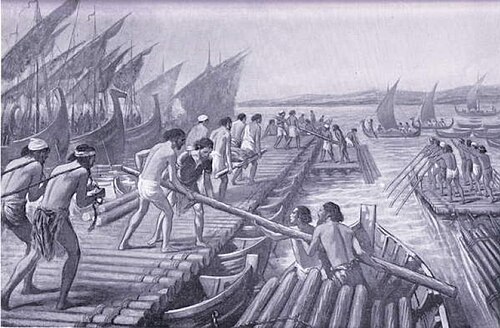
Renowned for seafaring and trade, the Phoenicians established one of antiquity's most extensive maritime networks, active for over a millennium. This network facilitated exchanges among cradles of civilization such as Mesopotamia, Egypt, and Greece. They founded colonies and trading posts throughout the Mediterranean; among these, Carthage in the Mediterranean Maghreb developed into a major power by the 7th century BC.
Further reading
- Ships and seamanship in the ancient world · Lionel Casson (1971)A history of ancient ships and seamanship.Find a copy: AbeBooks · Amazon · WorldCat
- Phoenicians (Peoples of the Past) · Glenn E. Markoe (2001)An introduction to the Phoenicians in the Peoples of the Past series.Find a copy: AbeBooks · Amazon · WorldCat
Phoenician Ship is one of the 3D puzzles in World Artifacts: turn a cloud of broken pieces until it lines up. For iPhone, iPad, Apple Vision Pro and Android.

