World Artifacts › Atlas › Morocco
Mint Tea Pot
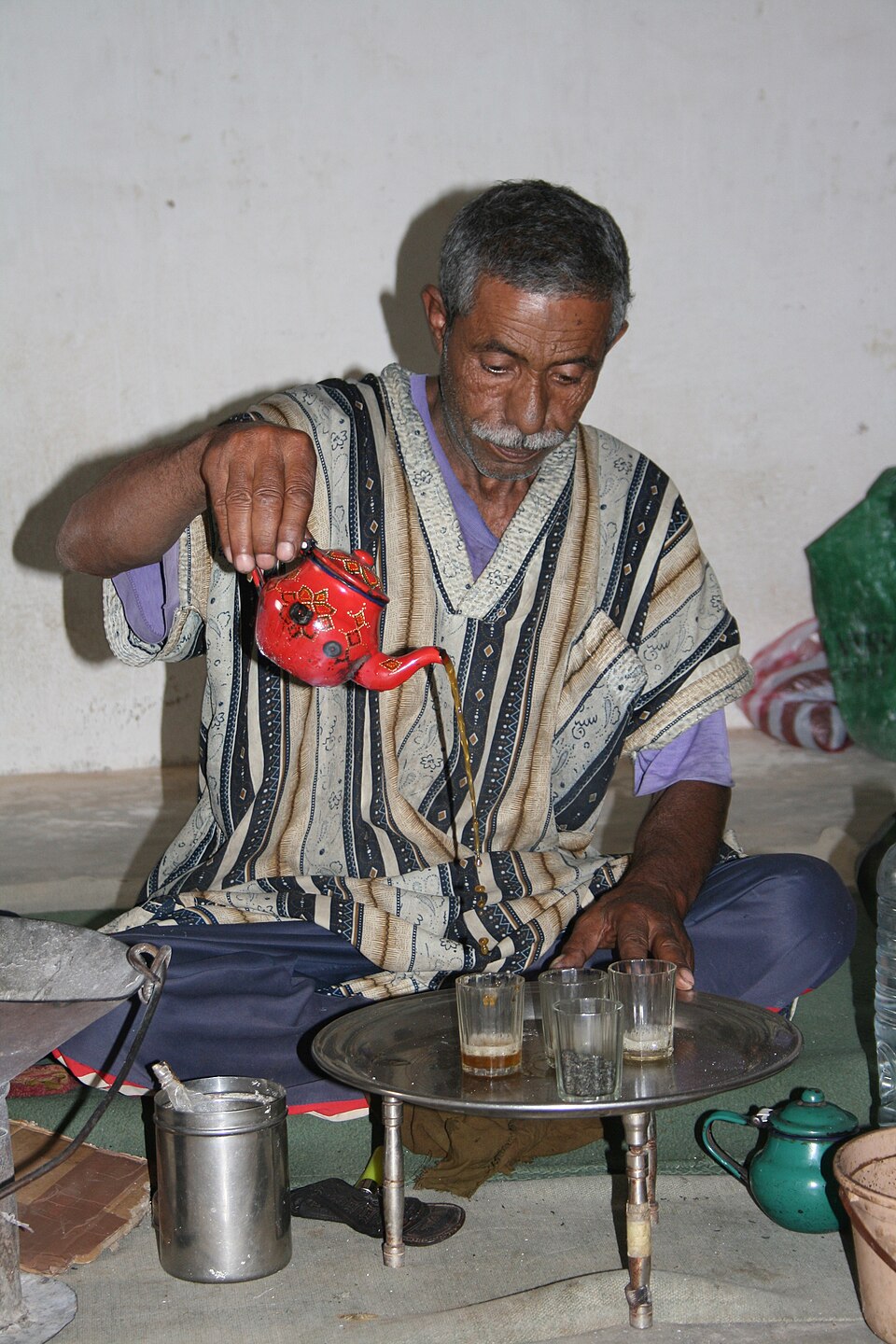
The tea is poured from a height so it aerates and builds a head of foam, and the first glass is often returned to the pot to mix it. The proverb says the first glass is gentle as life, the second strong as love and the third bitter as death.
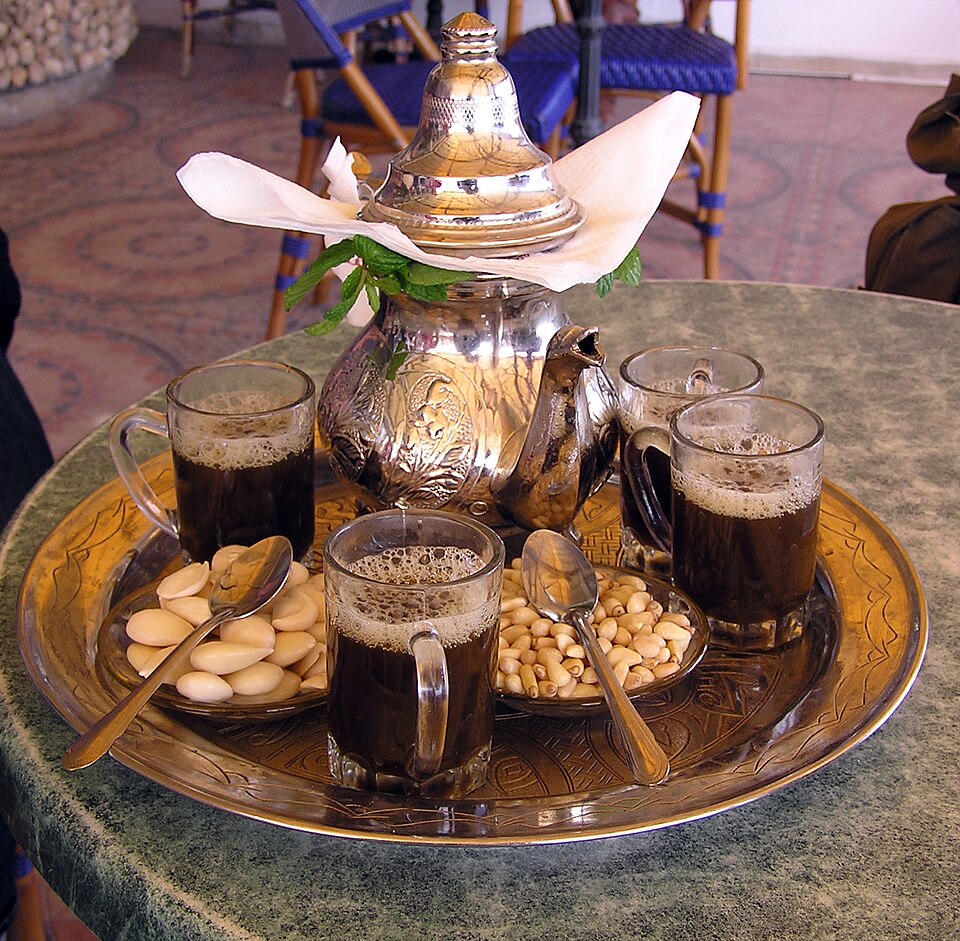
Maghrebi mint tea (Maghrebi Arabic: أتاي, ʾatāy; Arabic: الشاي بالنعناع, romanized: aš-šāy bin-naʿnāʿ), also known as Tunisian mint tea, Algerian mint tea, or Moroccan mint tea is a North African preparation of gunpowder green tea with spearmint leaves and sugar.
It is traditional to the Greater Maghreb region (the northwest African countries of Algeria, Tunisia, Morocco, Libya, and Mauritania). Its consumption has spread throughout North Africa, parts of the Sahel, France, Spain, the Arab world, and Middle East.
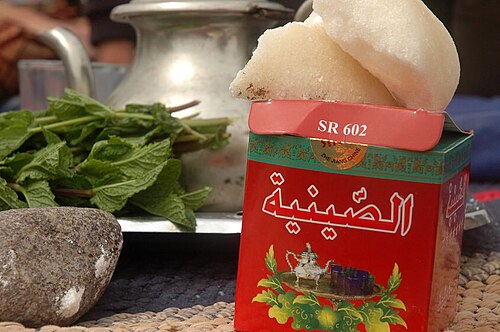
Mint tea is central to social life in the Maghreb and is very popular among the Tuareg people of Algeria, Libya, Niger and Mali. The serving can take a ceremonial form, especially when prepared for a guest. The tea is traditionally made by the head male in the family and offered to guests as a sign of hospitality. Typically, at least three glasses of tea are served. The tea is consumed throughout the day as a social activity. The native spearmint naʿnāʿ (نعناع) possesses a clear, pungent, mild aroma, and is the mint that is traditionally used in Maghrebi mint tea. Other hybrids and cultivars of spearmint, including yerba buena, are occasionally used as substitutes for nana mint. In Morocco, mint tea is sometimes perfumed with herbs, flowers, or orange blossom water. In the cold season, they add many warming herbs like marjoram, sage, verbena, and wormwood. Mint has been used as an infusion, decoction, and herbal medicine throughout the Mediterranean since antiquity.
Further reading
Mint Tea Pot is one of the 3D puzzles in World Artifacts: turn a cloud of broken pieces until it lines up. For iPhone, iPad, Apple Vision Pro and Android.

