World Artifacts › Atlas › Morocco
Rose of Kelaat M'Gouna
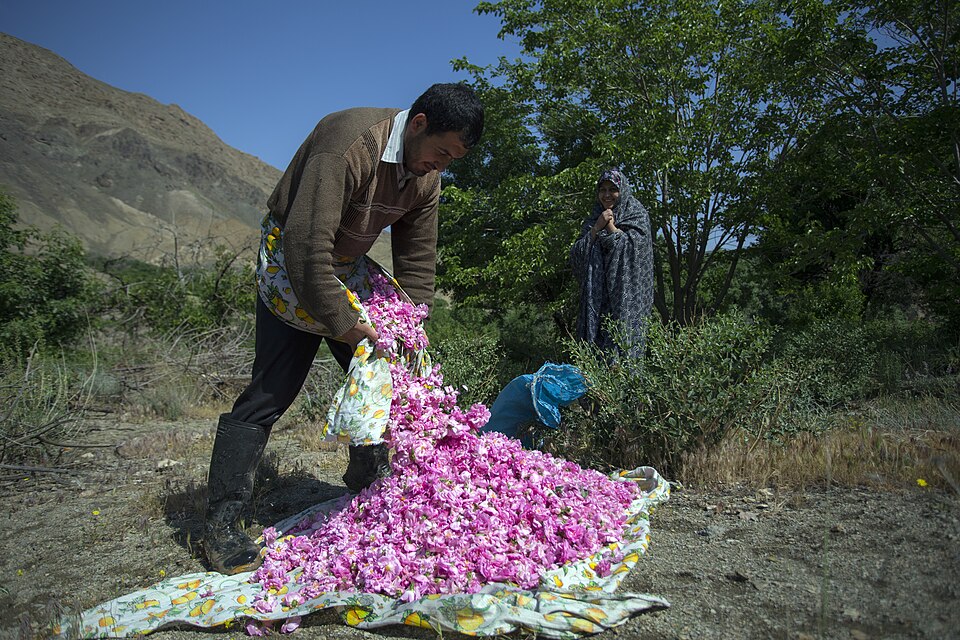
The valley harvests damask roses for a few weeks in May, picked before dawn by hand while the oil is still in the petals. It takes several tonnes of petals to make a litre of oil, which is why it costs what it does.
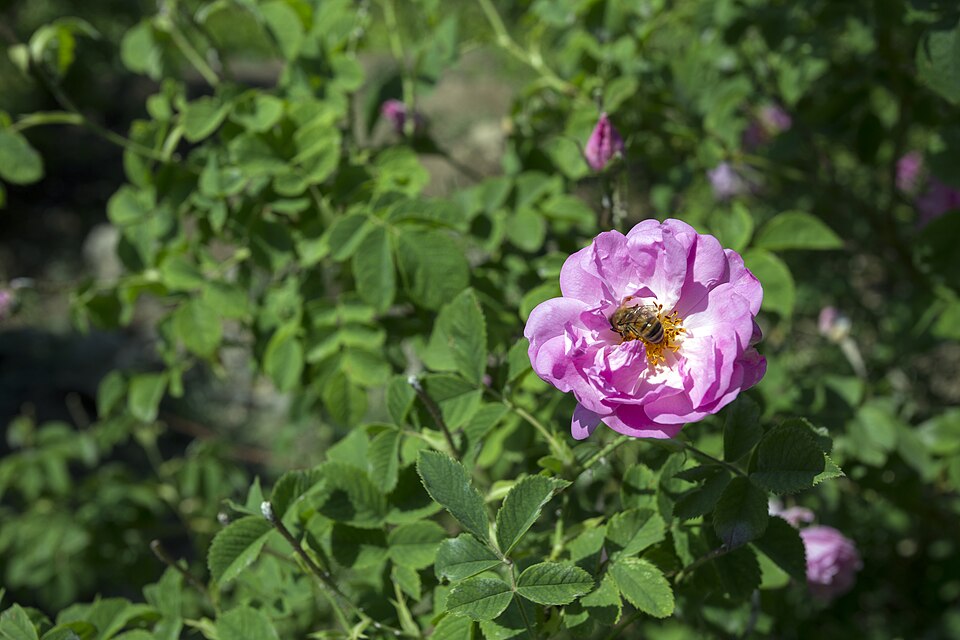
Rosa × damascena (Latin for damascene rose), more commonly known as the Damask rose, or sometimes as the Iranian Rose, Bulgarian rose, Taif rose, Emirati rose, Ispahan rose, Isparta rose, and Castile rose, is a rose hybrid derived from Rosa gallica and Rosa moschata. DNA analysis has shown that a third species, Rosa fedtschenkoana, made some genetic contributions to the Damask rose.
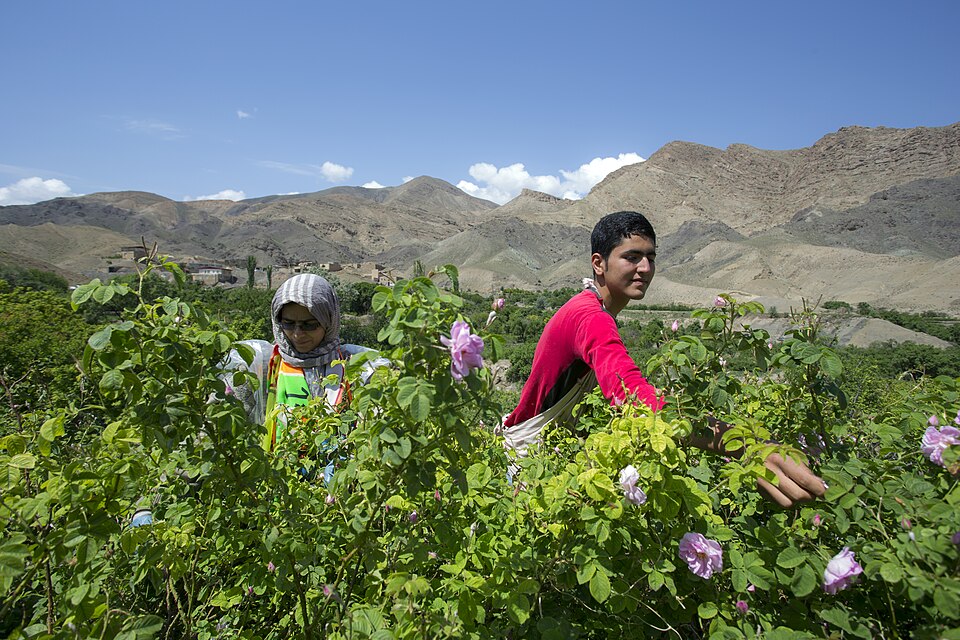
The flowers are renowned for their fine fragrance and are commercially harvested for rose oil (either "rose otto" or "rose absolute") used in perfumery and to make rose water and "rose concrete". The flower petals are also edible. They are used to flavor food, as a garnish, as herbal tea, and preserved in sugar as gulkand. The Damask rose is the national flower of Iran.
In 2019, the Damask rose was added to the UNESCO Intangible Cultural Heritage Lists as an element of Syrian cultural heritage.
Further reading
Rose of Kelaat M'Gouna is one of the 3D puzzles in World Artifacts: turn a cloud of broken pieces until it lines up. For iPhone, iPad, Apple Vision Pro and Android.

