World Artifacts › Atlas › North Macedonia
Philip II's Larnax
The gold box with the sun on its lid.
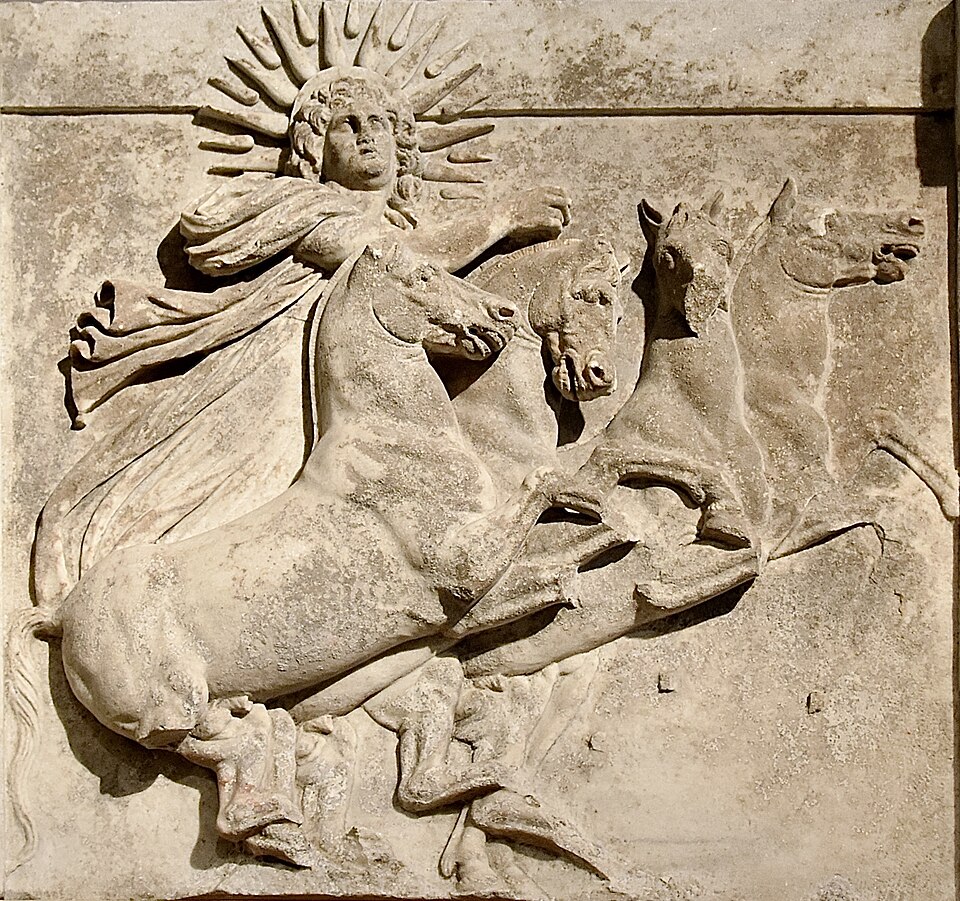
The Vergina Sun (Greek: Ήλιος της Βεργίνας, romanized: Ilios tis Vergínas, lit. 'Sun of Vergina'), also known as the Star of Vergina, Vergina Star or Argead Star, is a rayed solar symbol first appearing in ancient Greek art and architecture in the 5th century BC. The Vergina Sun proper has sixteen triangular rays, while comparable symbols of the same period variously have sixteen, twelve, eight or (rarely) six rays.
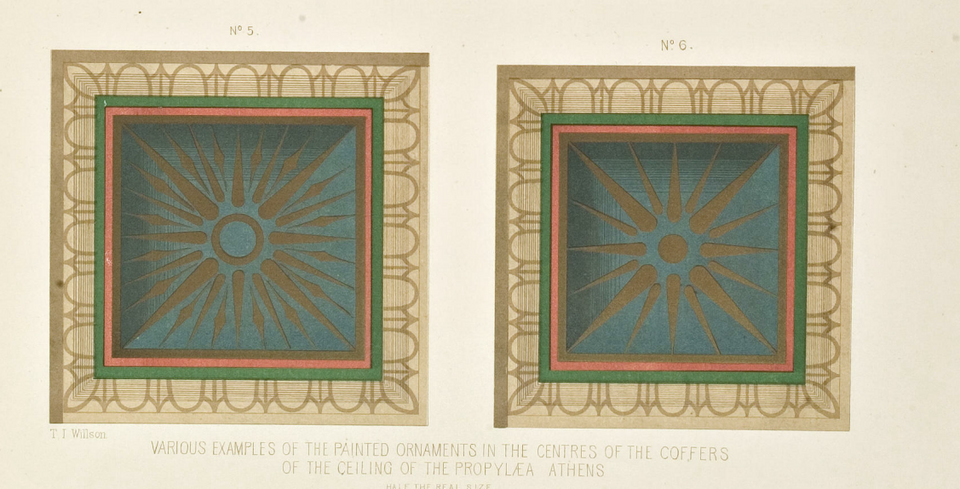
Even though the star appears in several ancient Greek temples, the name "Vergina Sun" became widely used after the archaeological excavations at the site of Aigai, in and around the small town of Vergina, in Central Macedonia, Greece, during the late 1970s. In older references, the name "Argead Star" or "Star of the Argeadai" is used for the Sun as the possible royal symbol of the Argead dynasty of the ancient kingdom of Macedonia. There it was depicted on a golden larnax found in a 4th-century BC royal tomb belonging to either Philip II or Philip III of Macedon, the father and half-brother of Alexander the Great, respectively.
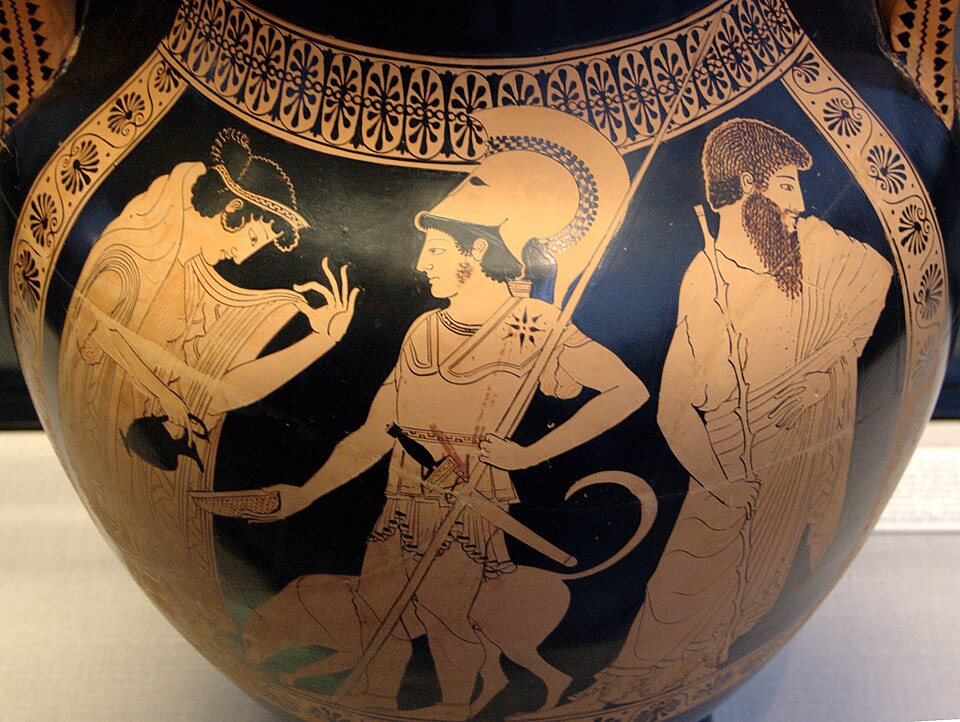
Tentatively interpreted as the historical royal symbol of ancient Macedonia, rather than just a generic decorative element in ancient Greek art, the Vergina Sun came into popular use among Macedonian Greeks since the 1980s, and became commonly used as an official emblem in the Greek region of Macedonia, and by other Greek state entities during the 1990s.
Further reading
- The finds from the royal tombs at Vergina · Manolis Andronikos (1981)Andronikos's account of the finds from the royal tombs at Vergina.Find a copy: AbeBooks · Amazon · WorldCat
- Vergina · Manolis Andronikos (1969)Covers the excavations and tombs at Vergina, including the tomb of Philip.Find a copy: AbeBooks · Amazon · WorldCat
Philip II's Larnax is one of the 3D puzzles in World Artifacts: turn a cloud of broken pieces until it lines up. For iPhone, iPad, Apple Vision Pro and Android.

