World Artifacts › Atlas › Mali
Desert Elephant
The long-legged desert elephant.
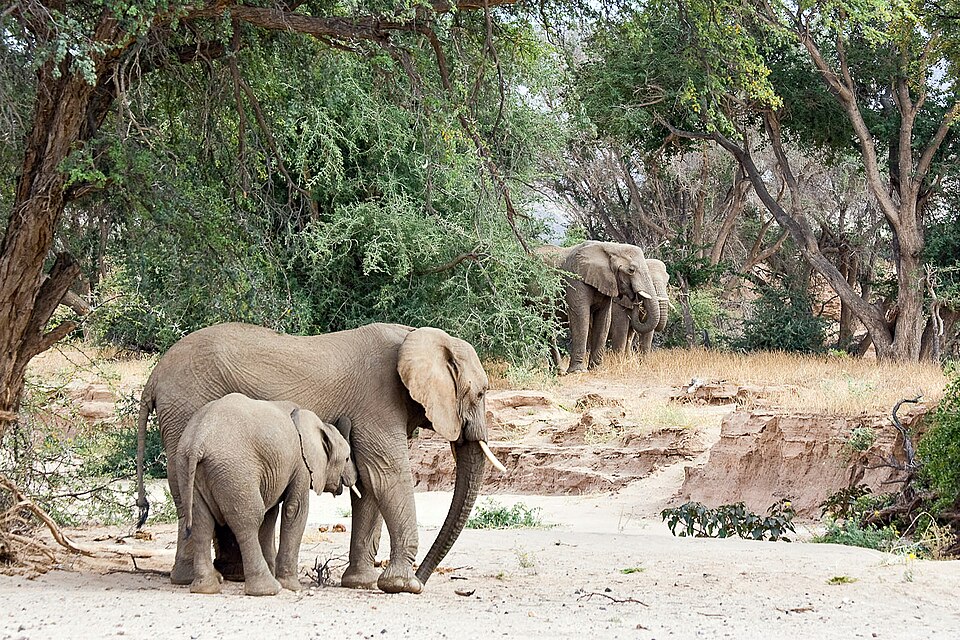
Desert elephants or desert-adapted elephants are a population of African bush elephants (Loxodonta africana), but they were once believed to be a sub-species. These elephants reside in the Namib and Sahara deserts. They are currently only found in Namibia.
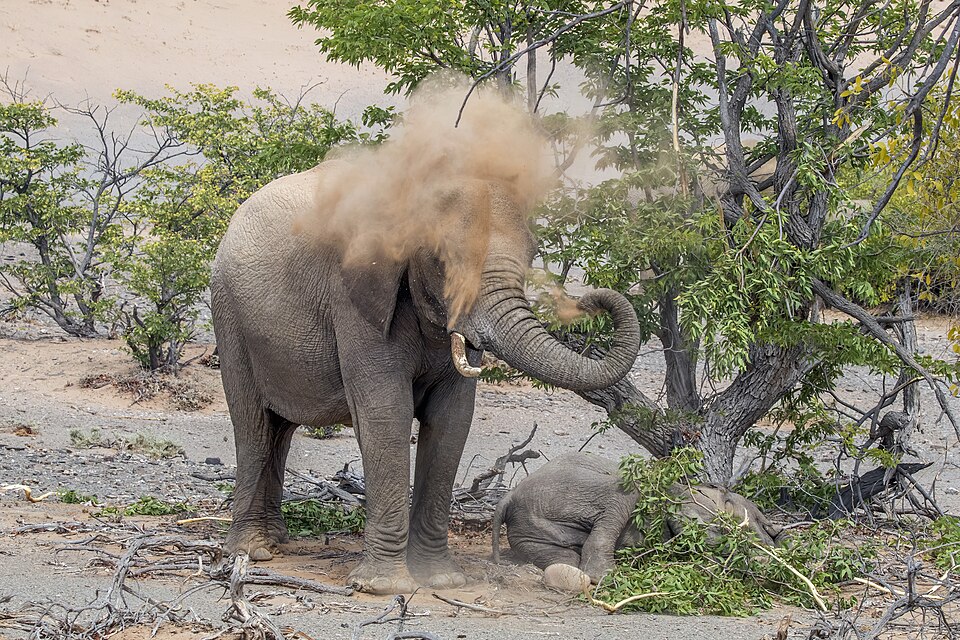
Elephants have traditionally lived in desert areas. In the early 20th century, there were approximately 3,000 elephants in the Kunene Region. By the 1980s the population had greatly diminished. Conservation measures have been put in place since then, and by 2013 the number of elephants had increased to about 600. In 1995-1996 there was an abundance of rainfall in Namibia, which revived the desert environment. Elephants then expanded southwards to the Ugab River.
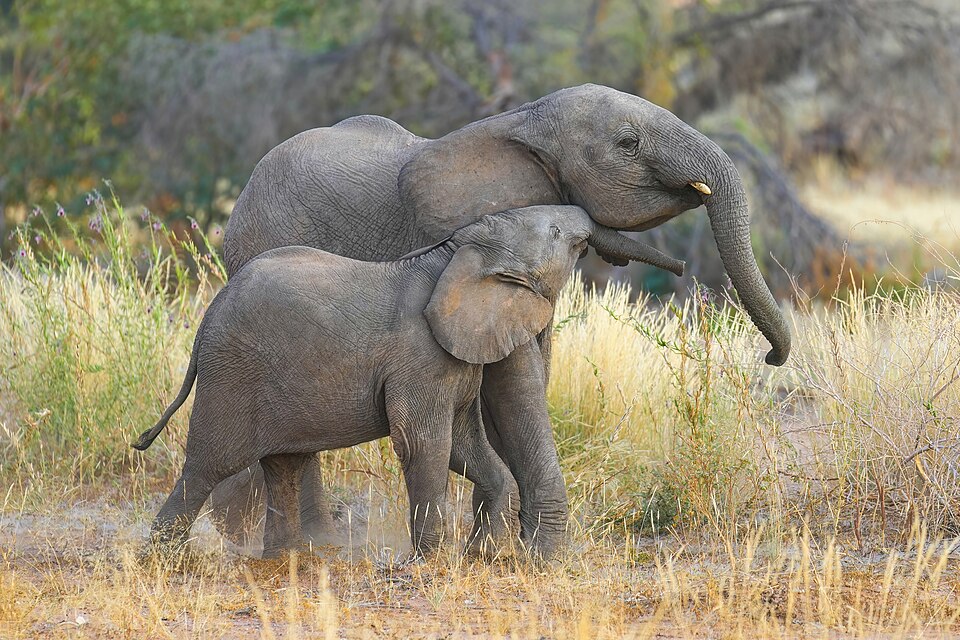
During the war for independence the desert elephants migrated north for safety, but they returned to the Ugab River in the mid 1990s. By that time many indigenous people had moved into the area following Namibia's independence. Many of these new residents had no experience living with wild elephants.
In the Hoanib River area, male elephants have tusks and a third of the female elephants are without tusks. Adult bull desert elephants usually roam over large areas alone. One was recorded travelling between the Skeleton Coast National Park and the Etosha National Park within the span of a few months. Other bulls have occasionally moved into that area from better-watered regions.
Desert Elephant is one of the 3D puzzles in World Artifacts: turn a cloud of broken pieces until it lines up. For iPhone, iPad, Apple Vision Pro and Android.

